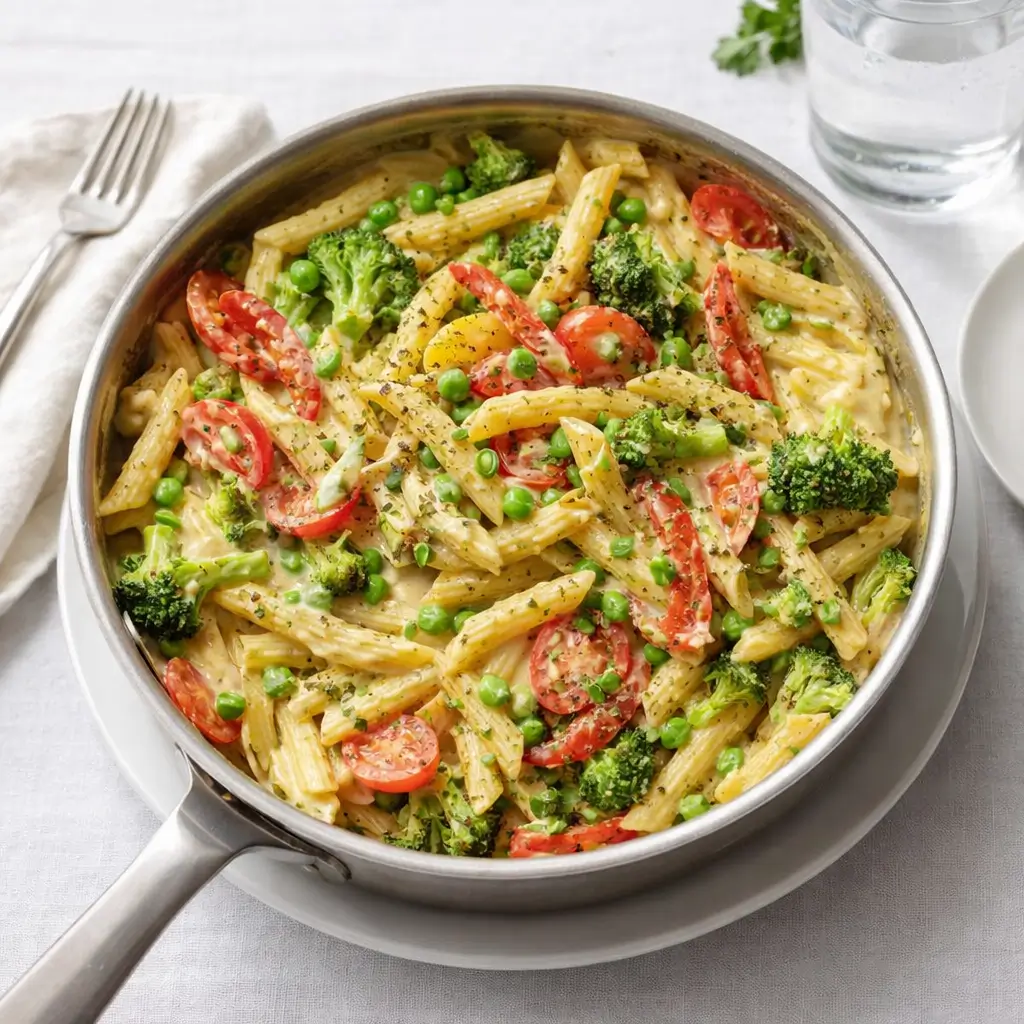
Pasta Primavera is one of those magical dishes that somehow checks all the boxes. It’s quick, cozy, colorful, and packed with flavor and feel-good veggies. If you’re tired of staring into the fridge at a bunch of produce and wondering what to do with it—this is your answer. Plus, if your kids are “allergic” to vegetables (you know, in their minds), this is the meal that might actually win them over. The creamy garlic-Parmesan sauce softens the veggie vibe just enough to make it cozy without being heavy.
Whether you’re trying to clean out the crisper drawer or just want a vibrant dinner in 30 minutes flat, Pasta Primavera is a total crowd-pleaser. Midweek dinner chaos? This one’s a lifesaver. Guests coming over and you forgot to plan? Boom—this dish. It’s the kind of comfort food that feels like it’s giving you a hug… without requiring a food coma nap after. Also, it’s beautiful. Like, make-people-think-you’re-fancy beautiful.
Table of Contents
What is Pasta Primavera?
Let’s start with what it’s not—it’s not just pasta with random veggies thrown in. Pasta Primavera is a fresh, light Italian-American dish that was originally born in the 1970s, even though it totally tastes like something your Italian nonna would whip up with whatever was growing in her garden. “Primavera” means “spring” in Italian, and the recipe lives up to its name—it’s a celebration of seasonal vegetables, gently sautéed and tossed with tender pasta in a simple, flavorful sauce.
Traditionally, it doesn’t involve heavy cream sauces or loads of butter. Instead, it leans into olive oil, garlic, broth, fresh herbs, and a touch of cheese to make everything sing. It’s not just vegetarian—it’s versatile. You can tweak it depending on what’s in your fridge or what your picky eaters will tolerate. It’s proof that when veggies and pasta work together, beautiful things happen.
Reasons to Try Pasta Primavera
There are plenty of reasons to get this Pasta Primavera recipe into your weekly rotation. First off, it’s a 30-minute meal. No marathon cooking sessions, no complicated steps—just a straightforward, delicious dinner that’ll make you feel like a kitchen hero. Second, it’s flexible. Don’t have asparagus? Skip it. Hate bell peppers? Sub in mushrooms. It’s the kind of dish that lets you be creative without feeling like you’re going off script. Third, it’s a feel-good meal. Loaded with vegetables, this pasta actually nourishes your body without skimping on comfort.
It’s light enough for a warm spring day but hearty enough to satisfy you any time of year. And let’s not forget—if you’re trying to cut down on meat or just sneak more veggies into your family’s diet, this is one of those rare “green-forward” meals that doesn’t taste like a compromise. It tastes like a reward. Also, it’s a great recipe to make when you want something meatless but still filling—check out our easy chicken spinach pasta if you’re in a meat-loving mood next time.
Ingredients Needed to Make Pasta Primavera
Here’s everything you need to create this gorgeous Pasta Primavera:
- 12 oz fettuccine or penne pasta
- 3 tablespoons olive oil, divided
- 1 medium zucchini, sliced into half-moons
- 1 yellow squash, sliced into half-moons
- 1 red bell pepper, thinly sliced
- 1 cup cherry tomatoes, halved
- 1 cup fresh asparagus, trimmed and cut into 2-inch pieces
- 1 cup broccoli florets
- 4 cloves garlic, minced
- 1/4 teaspoon red pepper flakes (optional)
- 1/2 cup vegetable broth
- 2 tablespoons fresh lemon juice
- 1/2 cup grated Parmesan cheese, plus more for serving
- 1/4 cup fresh basil leaves, thinly sliced
- Salt and freshly ground black pepper, to taste
Instructions to Make Pasta Primavera – Step by Step
Step 1: Prep the Pasta
First up in this step-by-step Pasta Primavera guide: bring a large pot of salted water to a boil. Don’t skip the salt—it’s the secret to flavorful pasta. Add your fettuccine or penne and cook just to al dente. That’s about one or two minutes shy of what the box says. Before draining, scoop out one cup of pasta water (trust me, it’s liquid gold). Drain and drizzle with a little olive oil to keep things from clumping while you prep everything else.
Step 2: Cook the Vegetables
Now it’s veggie time. Heat 2 tablespoons of olive oil in a big skillet over medium-high heat. Start with the broccoli and asparagus since they take a bit longer to get tender. Give them about 2–3 minutes, stirring occasionally. They should look vibrant, not sad and mushy. Then toss in the zucchini and yellow squash and cook for another 2 minutes. These guys soften quickly, so don’t overdo it. Finish off with the red bell peppers and sauté everything for another 1–2 minutes. You’re aiming for crisp-tender—not fully cooked—because they’ll finish cooking in the sauce.
Step 3: Build the Sauce
Scoot your veggies to one side of the pan like you’re making space for something exciting—because you are. Add the last tablespoon of olive oil to that empty space and toss in the garlic and red pepper flakes (if you like a little kick). Let it cook for about 30–60 seconds. Your kitchen should smell incredible at this point. This quick sauté brings out the garlic’s flavor without burning it. Next, pour in the vegetable broth and fresh lemon juice, and scrape up all those tasty bits from the bottom of the pan. This simple sauce gives the dish its signature lightness with just the right zing.
Step 4: Combine It All Together
Now for the big finish in our step-by-step Pasta Primavera adventure. Add the cherry tomatoes to the pan and let them soften for a minute. Reduce the heat to medium-low, then toss in the cooked pasta. Stir everything together gently, adding a splash of that reserved pasta water as needed to create a glossy, silky sauce that hugs every bite. Sprinkle in the grated Parmesan and toss again until it melts into the sauce. It shouldn’t feel heavy—just creamy enough to bring everything together. Taste it. Add salt and pepper until it tastes just right.
Step 5: Garnish and Serve
Take the skillet off the heat and gently fold in the fresh basil. Transfer everything to a big serving bowl (or plate it individually if you’re feeling fancy). Top with a little extra Parmesan and a few basil ribbons. Serve it hot, preferably with someone nearby saying, “Wow, did you make this?” Bonus points if you pair it with a glass of white wine or one of our fresh salads like this cashew crunch salad with sesame dressing.
What to Serve with Pasta Primavera
The beauty of Pasta Primavera is that it can totally stand on its own, but it also plays well with others. For a well-rounded meal, consider a side of garlic bread or a warm baguette for dipping into that dreamy sauce. Want something lighter? A crisp green salad like our winter farro and kale salad balances the pasta beautifully. If you’re feeding a bigger group or just want a protein boost, grilled chicken or shrimp makes a great topping. And if you’re like us and always want a little something sweet after dinner, you can’t go wrong with lemon blueberry muffin cookies.
Key Tips for Making Pasta Primavera
Keep these quick tips in mind when making your Pasta Primavera: First, don’t overcook the vegetables. You want that crisp bite—it makes the dish feel fresh and light. Second, always reserve pasta water. It helps create that silky sauce and gives you more control over the texture. Third, use good Parmesan. Pre-grated might save time, but the flavor of freshly grated cheese is worth the tiny bit of extra effort. Fourth, don’t skip the lemon juice. It brightens the whole dish and balances the richness of the cheese. And finally, cook the pasta just shy of done. That way, it finishes cooking with the sauce and soaks up all that flavor.
Storage and Reheating Tips Pasta Primavera
Got leftovers? Lucky you. Store your Pasta Primavera in an airtight container in the fridge for up to 3 days. When it’s time to reheat, toss it in a skillet over medium-low heat with a splash of water or broth to bring it back to life. The microwave works too—just cover it and heat in 30-second intervals, stirring in between. Heads-up: the vegetables may soften a bit more after reheating, but the flavors hold up beautifully. Want to prep ahead? Chop all your veggies the night before and store them in the fridge. You’ll have dinner on the table even faster.
FAQs
Can I use frozen vegetables for Pasta Primavera? You can, but fresh is best. Frozen veggies release more water and can make the sauce watery.
Can I make it dairy-free? Yep! Swap the Parmesan for a dairy-free cheese or nutritional yeast. It won’t be quite the same, but still tasty.
What’s the best pasta shape to use? Fettuccine and penne work great, but bowties or rotini are fun too—they hold the sauce well.
Is it okay to add protein? Absolutely. Grilled chicken, shrimp, or even white beans blend in beautifully without overpowering the dish.
Can I make this ahead? It’s best served fresh, but you can prep the veggies and cook the pasta ahead. Just combine and reheat when ready.
Final Thoughts
Pasta Primavera is the kind of dish that reminds us dinner doesn’t need to be complicated to be absolutely satisfying. With a rainbow of vegetables, a simple sauce, and just the right hit of garlic and cheese, this one-pan wonder fits right into any weeknight rotation. Whether you’re feeding a family, cooking for yourself, or entertaining a few friends, it’s the kind of meal that just works. It’s quick, comforting, and flexible—and that’s pretty much everything we want at 6 p.m. on a Tuesday. Want more dinner ideas that keep it simple and nourishing? Don’t miss our garlic butter steak bites or this BBQ chicken pasta salad for warm-weather cravings. So grab your skillet, pour a glass of something fun, and let Pasta Primavera bring a little joy to your kitchen tonight.
Follow us on Pinterest for weekly slow cooker inspiration, or join the conversation over on our Facebook page where fellow food lovers share their favorite comfort meal.
Print
Pasta Primavera: Light, Creamy, and Loaded with Veggies
- Prep Time: 15 minutes
- Cook Time: 15 minutes
- Total Time: 30 minutes
- Yield: 4 servings
- Category: Main
- Method: Stovetop
- Cuisine: Italian-American
- Diet: Vegetarian
Description
Pasta Primavera bursting with fresh veggies and herbs, tossed in a creamy garlic and Parmesan sauce. Perfect for a quick and delicious meal.
Ingredients
- 12 oz (340g) fettuccine or penne pasta
- 3 tablespoons (45ml) olive oil, divided
- 1 medium zucchini (about 8 oz/225g), sliced into half-moons
- 1 yellow squash (about 8 oz/225g), sliced into half-moons
- 1 red bell pepper (about 6 oz/170g), thinly sliced
- 1 cup (150g) cherry tomatoes, halved
- 1 cup (100g) fresh asparagus, trimmed and cut into 2-inch pieces
- 1 cup (100g) broccoli florets
- 4 cloves garlic, minced (about 4 teaspoons)
- 1/4 teaspoon red pepper flakes (optional)
- 1/2 cup (120ml) vegetable broth
- 2 tablespoons (30ml) fresh lemon juice
- 1/2 cup (50g) grated Parmesan cheese, plus more for serving
- 1/4 cup (15g) fresh basil leaves, thinly sliced
- Salt and freshly ground black pepper, to taste
Instructions
1. Prepare the Pasta: Bring a large pot of water to a rolling boil. Add 1 tablespoon of salt to the water—this is essential for flavorful pasta! Add your pasta and cook until just al dente, about 1-2 minutes less than package directions suggest. Before draining, reserve 1 cup of pasta water. Drain the pasta and toss with a small drizzle of olive oil to prevent sticking while you prepare the vegetables.
2. Cook the Vegetables: Heat 2 tablespoons of olive oil in a large skillet over medium-high heat. Add the broccoli florets and asparagus pieces first, cooking for 2-3 minutes until they begin to soften but still retain their bright color. Next, add the zucchini and yellow squash, cooking for another 2 minutes until they begin to become tender. Add the bell peppers and continue cooking for 1-2 minutes more. The vegetables should be crisp-tender—they’ll continue cooking slightly in the next steps.
3. Create the Sauce: Push the vegetables to one side of the pan and add the remaining tablespoon of olive oil to the empty space. Add the minced garlic and red pepper flakes (if using) to the oil and sauté for 30-60 seconds until fragrant but not browned. This blooms the flavors in the oil without burning the garlic. Pour in the vegetable broth and lemon juice, then stir everything together, scraping up any flavorful bits from the bottom of the pan.
4. Combine and Finish: Add the cherry tomatoes to the pan and cook just until they begin to soften, about 1 minute. Lower the heat to medium-low, then add the drained pasta to the skillet with the vegetables. Toss everything together, adding small amounts of the reserved pasta water as needed to create a light sauce that coats everything beautifully. Sprinkle in the Parmesan cheese and continue tossing until the cheese melts and helps bind the sauce. Season with salt and freshly ground black pepper to taste.
5. Garnish and Serve: Remove the pan from heat and gently fold in the fresh basil. Transfer your Pasta Primavera to a large serving bowl or individual plates. Garnish with additional Parmesan cheese and a few extra basil leaves for visual appeal. Serve immediately while still hot, passing extra Parmesan at the table for those who desire more cheese.
Notes
Fresh ingredients will always yield the best flavor results.