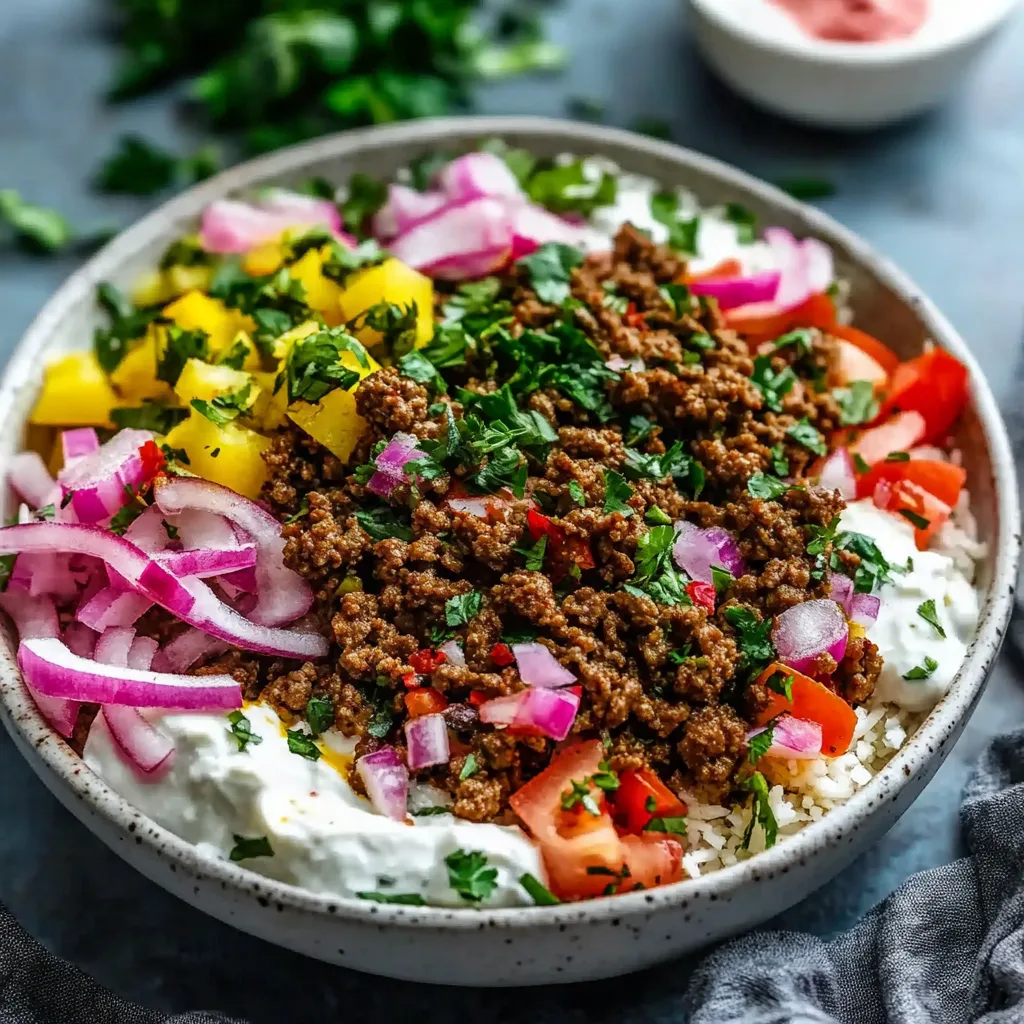
What is Ground Beef Shawarma Bowls?
Ground Beef Shawarma Bowls are a modern take on the classic Middle Eastern street food, transforming slow-roasted shawarma into a balanced, handheld meal. This dish combines tender spiced ground beef with aromatic turmeric rice, crisp fresh vegetables, and tangy hummus, creating a harmony of textures and flavors. Its roots trace back to Levantine cuisine, where thin slices of meat are grilled over charcoal, but the bowl format makes this tradition accessible to home cooks. What sets it apart is the unexpected cinnamon-and-cumin blend that awakens the palate and the way each component celebrates simplicity—meat, rice, and fresh herbs layered with purpose.
While traditional shawarma uses lamb or chicken, this version with lean ground beef offers a heartier, budget-friendly alternative without sacrificing authenticity. The turmeric rice, golden from fragrant spice, serves as a nutritious base packed with antioxidants. The addition of pickled onions and lemon juice mirrors the bright acidity found in many Mediterranean dishes, balancing richness with brightness.
Reasons to Try Ground Beef Shawarma Bowls
These bowls thrive as a weeknight hero for families craving gourmet flavors without complicated techniques. The one-pot rice preparation and quick-cooking beef make it possible to serve in 30 minutes, while the customizable toppings ensure it adapts to personal tastes and dietary preferences. Busy professionals will appreciate how neatly每一口 layers components, eliminating messy sandwiches or plates. At the same time, home cooks will enjoy the opportunity to experiment with global flavors like adding sumac or swapping tahini for Greek yogurt.
The recipe’s versatility makes it ideal for meal prepping. Leftover rice stays fresh in the fridge, and the spiced beef freezes beautifully. For mindful minds, the components align naturally with ancestral food principles—grass-fed beef, simple spices, and unprocessed grains. Whether hosting a potluck or seeking a cozy dinner with the family, these bowls satisfy both emotional and nutritional needs.
Ingredients Needed to Make Ground Beef Shawarma Bowls
1 lb lean ground beef (90/10 fat for a cleaner bowl)
2 cloves garlic, freshly minced (avoid pre-minced for fresher aroma)
1 tsp ground cumin (producer of earthiness, essential for shawarma character)
1 tsp ground coriander (adds subtle citrus warmth, complements cumin balance)
1/2 tsp smoked paprika (for depth and that “off-the-grill” aroma)
1/4 tsp ground cinnamon (the secret factor that defines Middle Eastern spice profiles)
Salt and freshly ground black pepper (adjust after tasting)
1 cup basmati rice (prefer long-grain for separation and fluff)
2 cups water or vegetable broth (broth enhances umami without overpowering)
1/2 tsp turmeric powder (provides antioxidant-rich golden hue)
1/2 tsp salt for the rice (seasons the grain from within)
Cucumber and tomato salad (diced fine with a squeeze of lemon for crunch)
Pickled red onions (store-bought or homemade, adds tang and color contrast)
Hummus or tahini sauce (velvety element to tie components together)
Fresh parsley, chopped (emerald hue and herbal brightness in the final dish)
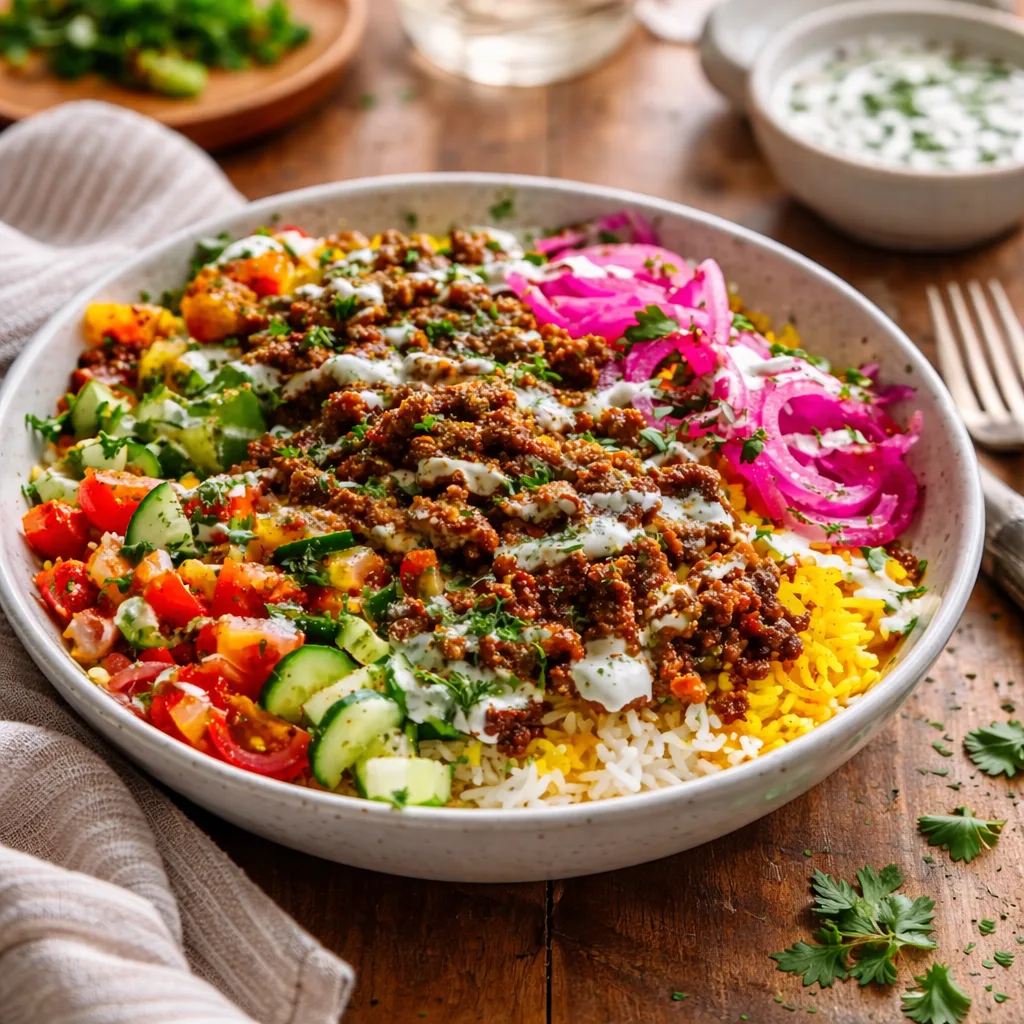
Instructions to Make Ground Beef Shawarma Bowls – Step by Step
Step 1: Prepare the Turmeric Rice
Rinse the basmati rice under cold water in a fine mesh strainer until the water runs clear. This removes excess starch, ensuring perfectly separate grains. In a medium pot, combine the rinsed rice, 2 cups water/broth, turmeric, and salt. Bring to a rolling boil over high heat while stirring to prevent clumping. Once bubbling, reduce to a low simmer, cover with a tight-fitting lid, and gently cook for 15–18 minutes. The rice should absorb all liquid but remain firm to the bite. Remove from heat and let rest, still covered, for exactly 5 minutes. This resting period allows moisture redistribute, creating fluffy grains that gather the spices’ warmth within.
Step 2: Brown the Shawarma Beef
While the rice rests, position a large skillet over medium-high heat until its surface is barely shimmering. Add the ground beef by handfuls, using a wooden spoon to break it into small, irregular pieces. Cook without constant stirring for 2–3 minutes to allow a crust to form, deepening flavor through Maillard browning. Break up any remaining clumps with the spoon, continuing to sauté until the beef is mostly browned and has released its fat. This step eliminates raw texture while building the base for spicing.
Step 3: Bloom the Spices
Once the beef is browned, add the garlic, cumin, coriander, smoked paprika, and cinnamon all at once. Stir continuously for 2–3 minutes as the spices toast in the rendered fat—this blooming process unlocked their essential oils and concentrated aromas. Add the beef back to the mixture, ensuring each grain of spice clings to the meat. Season with salt and black pepper, working in a circular motion to distribute the heat evenly. Remove from heat while the spices are still fragrant but not burnt, as overcooking could dull their brightness.
Step 4: Assemble the Bowls
To each serving bowl, add a generous base of turmeric rice, pressing it lightly to create a stable foundation. Spoon a portion of the shawarma beef over the rice, letting the earthy aromatics set the stage for the build. Arrange the lightly dressed cucumber and tomato salad in a rustic pattern along the edges. Nestle pickled red onions through the grain, their acidity piercing the richness. A final drizzle of tahini or dollop of hummus adds smoothness and savory depth that unifies the components.
Step 5: The Finishing Touch
Sprinkle chopped parsley generously over the assembly for a burst of chlorophyll and fresh color. Finish with a definitive squeeze of lemon juice, its vibrant acidity balancing the bowl’s heartiness. Serve this moment fresh, ideally within minutes of completing the rice, when every element sings at its peak texture—crisp vegetables against tender grains, warm spices with cool, tangy accents.
Chef’s Tips for a Perfect Result
- When rinsing rice, do it in a colander over the sink rather than a bowl to allow water to drain freely, reducing risk of starchy residue.
- Use a lean cut of beef when tightly monitored for fat content, looking for 90/10 (90% lean, 10% fat) for a sturdier, less juicy final result.
- Toast whole cumin and coriander seeds in a dry skillet before grinding if you get access to fresh spice—their intensity increases dramatically.
- The resting phase for rice is not optional. Skipping it leads to compacted, gummy grains. Imagine how a warm breeze would lift each slender rice strand into their ideal plumpness.
- Don’t overload with hummus—it’s meant to serve as a binding element, not a flood. A dollop spread薄 in the bowl can cover two layers, both visually and texturally.
- Add a pinch of sumac or pomegranate molasses in finishing for a subtle tang that mirrors Levantine flavor profiles without adding acid overload.
Variations and Substitutions
Vegan Option
- Replace ground beef with deeply spiced beyond beef crumbles or crumbled tofu in the marinade for protein richness. This substitution maintains the meaty texture while remaining plant-based.
- Use tahini sauce exclusively in place of animal-protein hummus for unbroken vegan integrity. Whisk it with lemon juice and water for a lighter touch.
- Omit pickled onions if avoiding acidity for gut sensitivity, swapping with alkaline avocado slices for creamy depth without tang.
Gluten-Free Alternative
- Confirm hummus is made with certified gluten-free chickpeas, as some brands use roasted barley. Or, blend minced garlic and tahini with lemon and water for a quick gluten-free drizzle.
- Check pickled onions for cider vinegar over apple cider, which occasionally contains cross-contamination from gluten grains in processing. Choose naturally labeled artisanal brands.
- Use basmati rice confirmed gluten-free, as cross-contamination in mills can occur with wheat grains. Selected organic, single-source varieties for safety.
Low-Carb Version
- Swap basmati rice with cauliflower rice made through spiralizing for a zero-carb base. Sauté it briefly with turmeric to mimic the golden hue and warm spice integration.
- Reduce cucumber content slightly to make room for extra shawarma, satisfying protein needs without overwhelming low-carb focus.
- Add a fried egg as the finishing touch—its completeness, richness with albumen, and yolky sunshine aligns perfectly with Middle Eastern eating traditions.
How to Serve and Pair
These bowls thrive in warmth—avoid chilling after assembly when possible, as cold threatens the rice’s fluffiness. Present them on a slate board surrounded by small ramekins of tahini pools and lemon wedges for customizable interactions. A warm pita pocket tucked beside the bowl invites another form of eating, letting diners build personal combinations as they desire. Accented with a handful of mint leaves for aromatic contrast, it becomes a complete presentation for a front-load health feast.
Pair with lightly sparkling water with a lemon twist for refreshing palate cleansing. For a more substantial pairing, serve alongside Middle Eastern olives or roasted red pepper dip on the side, allowing the table to feel festive yet familiar. As a social meal, these bowls find harmony on family tables and picnic blankets alike, where easy picking and filling textures please both children and guests.
Storage and Reheating
Refrigerator
Assemble components separately in air-tight containers for up to 3 days. The rice and beef should keep in glass lock containers while herbs and pickled onions tolerate fridge storage well enough. For longest freshness and most vibrant flavors, store rice in its own container and assemble bowls just before serving.
Freezer
Store spiced beef in a single layer on parchment paper in a zip-sealed bag for 2–3 months. This prevents freezer burn while preserving the texture. Cooked and cooled turmeric rice freezes less successfully due to its high moisture content but can be repurposed into breakfast meals after thawing and rehydration.
Room Temperature
Leaving assembled bowls unrefrigerated should be limited to 2 hours maximum, as raw onion and dairy in hummus create spoilage risk. For potlucks, keep in a cooler chest with an ice pack to maintain safe temperatures while preventing condensation ruin. Half the bowl fundraiser talents and serve the rest separately in larger portions per person.
Reheating
The best warming method is a 275°F oven, crisping any onions and reinstating the rice’s fluffiness by avoiding direct heat. Tuck a spoon of water beneath the bowl to plead steam recovery lost in freezing. For stovetop, rewarm 2 minutes in a non-stick skillet with olive oil to revive crunch. Microwaving works as a last resort, covering with a wet paper towel to conserve moisture and rewarm in 45-second intervals, pausing to reincorporate moisture with another splash of lemon juice rather than losing its foundation flavor.
Nutritional Values
- Calories: 480kcal
- Protein: 28g
- Carbohydrates: 42g
- Fat: 22g
- Fiber: 6g
Approximate values.
Frequently Asked Questions
Can I use ground turkey instead of beef?
Absolutely—ground turkey lightens the bowl while maintaining similar meathy structure. For best results increase smoke paprika by 1/4 teaspoon to offset turkey’s milder flavor intensity and cook until no pink remains. It pairs beautifully with the turmeric rice profile.
How do I know when the spices are perfectly bloomed?
The most aromatic moment comes when the spices begin to darken slightly and release aroma intensively under stirring. Watch the garlic closely—it should fragrance but not brown. The ideal stage is when you feel your heartbeat quicken while smelling the pan, indicating spices at their peak flavor peaks without burning.
Why is my rice gummy even after resting?
This likely indicates excess water during cooking phase or skipping the rinsing step completely. Correct by measuring liquid exactly (2 cups water/broth for 1 cup rice) and vigorous rinsing beforehand. Future batches should decrease the liquid by 1/4 cup to adjust for latitude or higher altitude cooking variations.
Can I make the rice in advance?
Definitely, and doing so improves results through post-resting development of flavor. Wet the rice with a towel in advance—or a large glass container, ensuring complete cover and no over缩减. Rewarm by adding a splash of olive oil and a few minutes in a skillet or oven until aromatic again before assembling bowls on hand.
What other vegetables can I add?
Try roasted red peppers for smoky tang or grilled zucchini for earthiness. Arugula adds peppery freshness, while grape tomatoes contribute acidity. Let the bowl function as a canvas, with toppings that bring your nutritional goals and contrasting textures to life dynamically.
Conclusion
Ground Beef Shawarma Bowls engage the hallmark of global cuisine—layers of spice, nourishment, and balance that feel deeply familiar yet excitingly new. Whether you prepare this for a busy weekday or a mindful Sunday meal, the process invites connection with both kitchen and tradition. The bright combination of cinnamon-kissed beef, golden rice, and tangy accents proves that simple ingredients can yield profound joy when assemble with intention. Let this recipe become a thread in your family’s culinary storytelling, one bite at a time.
Print
Ground Beef Shawarma Bowls
- Prep Time: 10
- Cook Time: 20
- Total Time: 30
- Yield: 4 servings
- Category: Recipes
- Method: Stovetop Cooking
- Cuisine: Middle Eastern
Description
A modern, handheld take on traditional shawarma, featuring spiced ground beef, turmeric rice, fresh veggies, and hummus for a balanced, flavorful meal with Levantine roots.
Ingredients
1 lb lean ground beef (90/10 fat)
2 cloves garlic, freshly minced
1 tsp ground cumin
1 tsp ground coriander
1/2 tsp smoked paprika
1/4 tsp ground cinnamon
Salt and freshly ground black pepper, to taste
1 cup basmati rice
2 cups water or vegetable broth
1/2 tsp turmeric powder
1/2 tsp salt for the rice
Instructions
Rinse basmati rice under cold water and drain. In a medium pot, combine rice, water or broth, turmeric, and 1/2 tsp salt. Bring to a boil, then reduce heat, cover, and simmer for 15 minutes until tender. Let rest, then fluff with a fork.
In a large skillet, cook ground beef over medium-high heat until browned. Add garlic, cumin, coriander, smoked paprika, cinnamon, salt, and pepper. Cook 5-7 minutes until spices are fragrant and meat is crumbled. Season with additional salt and pepper if needed.
Assemble bowls by layering turmeric rice, spiced beef, and garnish with pickled onions, lemon juice, and hummus.
Notes
Use 90/10 ground beef for a leaner option. Freshly minced garlic offers superior aroma. Add sumac or toasted sesame seeds for extra zing. Store leftovers in an airtight container for up to 3 days. Freeze cooked rice and beef separately for meal prepping.