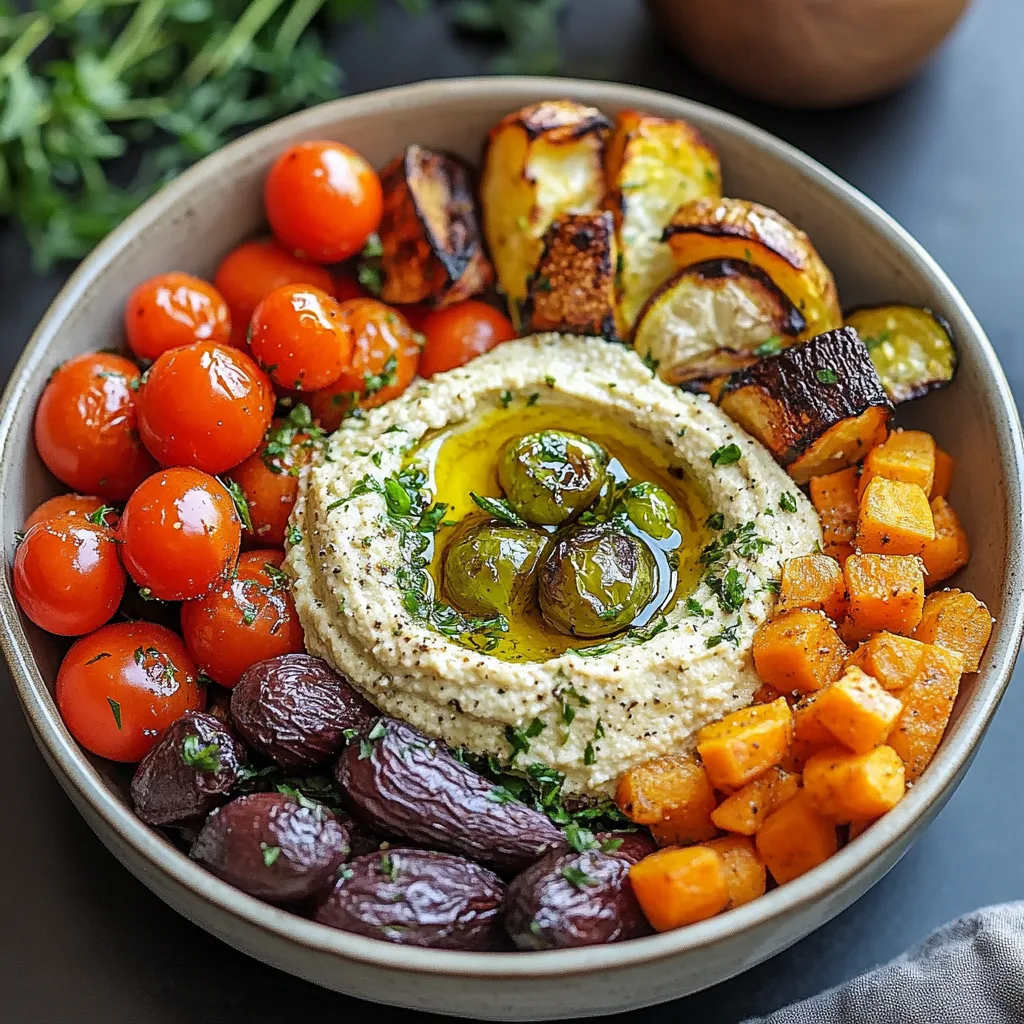
The Roasted Veggie and Hummus Bowl is more than just a meal—it’s a celebration of earthy richness and Mediterranean simplicity. This plant-based dish brings together crisp, caramelized vegetables and a velvety hummus base to create a harmonic blend of textures and flavors. Whether you’re seeking a quick lunch or a vibrant dinner, this bowl offers endless possibilities for customization. With its nourishing ingredients and easy assembly, the roasted veggie and hummus bowl has become my go-to recipe for balanced living. The roasted vegetables develop a golden crust while retaining their natural sweetness, and the hummus becomes a silky anchor that ties the whole dish together. Each bite carries whispers of smoked paprika and toasted cumin, perfected by the brightness of fresh herbs and lemon oil.
What is a Roasted Veggie and Hummus Bowl?
At its heart, a roasted veggie and hummus bowl is a plant-forward dish that marries the ancient wisdom of Mediterranean cuisine with contemporary healthy eating trends. The concept originated from the traditional Greek dolmades and Levantine hummus platters, reimagined as a portable, customizable format. This dish revolves around roasted seasonal vegetables—usually broccoli, zucchini, bell peppers, and cherry tomatoes—served over a base of creamy hummus. What makes this bowl special is its ability to balance textures and nutrients while remaining incredibly adaptable. You’ll often find a bed of grains like quinoa or couscous to add heartiness, paired with crunchy seeds and tangy feta for contrast.
The bowl’s true magic lies in the hummus. Made from chickpeas and tahini, it provides a protein-rich base that’s both indulgent and nourishing. The roasting process caramelizes the vegetables naturally, creating flavors that sing in harmony with the hummus’ earthiness. This dish bridges the gap between comfort food and wellness, offering all the satisfaction of a hearty meal with the lightness of summer fare.
Reasons to Try the Roasted Veggie and Hummus Bowl
This recipe deserves a permanent spot in your rotation for three compelling reasons. First, it’s astonishingly easy to prepare with minimal effort—just toss vegetables with spices, roast, and assemble. Second, it’s a nutritional powerhouse delivering fiber, protein, and essential vitamins all in one dish. The hummus contributes plant-based protein, while the roasted vegetables ensure a steady supply of antioxidants and minerals. Third, this bowl invites creativity. You could transform it into a protein-packed lunch by adding falafel or make it vegan by skipping the cheese and using tahini as a finishing touch.
Busy parents will appreciate how quickly this meal comes together, while health-conscious individuals will love its inherent nourishment. The versatile nature makes it equally suited for solo dining or family gatherings. Whether you need a gluten-free option, a dairy-free alternative, or a budget-friendly version, the roasted veggie and hummus bowl rewards experimentation.
Ingredients Needed to Make a Roasted Veggie and Hummus Bowl
Roasted Vegetables:
2 cups broccoli florets (cut into uniform pieces for even roasting)
1 red bell pepper, diced into 1-inch pieces
1 zucchini, sliced into half-moon shapes (about 1 1/2 cups)
1 cup cherry tomatoes (leave intact for bursts of flavor)
1 red onion, cut into wedges
2 tbsp extra virgin olive oil (for roasting and finishing drizzle)
1 tsp smoked paprika (for depth and warmth)
1/2 tsp garlic powder (use fresh garlic for a more intense flavor)
1/2 tsp ground cumin (adds earthy nuance without overpowering)
Salt and pepper to taste
Bowl Base:
1 1/2 cups hummus (store-bought or homemade with olive oil and lemon for extra brightness)
2 cups cooked quinoa, rice, or couscous (optional but recommended for heartiness)
Toppings:
1/4 cup crumbled feta cheese (optional dairy-boost option)
2 tbsp toasted pine nuts or sunflower seeds (adds texture and nutrients)
1/4 cup chopped parsley or cilantro (fresh herbaceousness)
Lemon wedges (essential for finishing acidity)
Instructions to Make a Roasted Veggie and Hummus Bowl – Step by Step
Step 1: Preheat oven and prepare vegetables. Begin by warming your oven to 400°F (200°C). While it preheats, gather all your vegetables. I find it helpful to have a large bowl with parchment paper nearby to catch any slipping veggies as I prepare them. Uniform piece sizes are crucial here—broccoli florets should be similar in size, and the zucchini slices should maintain their half-moon shape to roast evenly. A quick tip I picked up from cooking with my daughter is to sprinkle the vegetables with a bit of salt while cutting to naturally draw out some moisture and enhance caramelization later.
Step 2: Season and roast the vegetables. Line your baking sheet with parchment paper for easy cleanup. Arrange the vegetables in a single layer, ensuring they don’t overlap. When seasoning, it’s important to use a gentle hand—start with a light sprinkle of spices and adjust later. Drizzle the olive oil over the vegetables and toss until evenly coated. The spices should be scattered and not clumped—this allows them to develop differently on contact with heat. After tossing, give the edges a gentle massage with your hands to ensure the spices stick. I like to roast in batches sometimes, especially if I have a larger quantity, to maintain that golden crust.
Step 3: Roast to perfection. Place the baking sheet in the preheated oven and let it roast for 20-25 minutes, giving it a stir halfway through. You’ll know they’re done when the vegetables are tender but retain their signature shapes. Broccoli should turn bright green with slight char, zucchini should be caramelized on edges, and cherry tomatoes will plump up and burst in the mouth. During my last batch, I noticed a delightful aroma reminding me of my grandmother’s kitchen in Texas. Be careful not to overdo it—I’ve found 22 minutes is ideal for these specific vegetables to balance tenderness with retained structure.
Step 4: Assemble the bowls. While the vegetables rest, decide on your bowl components. For a basic version, simply divide the hummus between your serving bowls. If using quinoa or rice, spread it as a base first. I personally love using deep bowl-back dinnerware as the contrasting colors of red bell pepper and green broccoli look particularly inviting against the white porcelain. After adding the hummus and base, top with roasted vegetables, feta for saltiness, pine nuts for texture, and a sprinkle of fresh herbs. Finish with a lemon wedge for that critical final touch of acidity to cut through the richness of the hummus.
Chef’s Tips for a Perfect Result
- Uniform vegetable cuts ensure even cooking (aim for 1-inch consistency)
- Season with care—start with 1/2 the spice amounts and adjust post-roasting
- Use parchment paper for easier cleanup with minimal parchment waste
- Roasting occurs faster in convection ovens (try 15 minutes with a 10-minute finish)
- Dress the sauce separately and drizzle at serving time for fresher flavor
Variations and Substitutions
Vegan Option: Replace feta cheese with crumbled tofu marinated in lemon and olive oil. Substitute pine nuts with toasted hulled sesame seeds for twice the protein.
Gluten-Free Alternative: Use quinoa or rice as grain base. Ensure hummus is made without gluten-containing additives like barley malt extract.
Low-Carb Version: Skip grain base and add extra hummus portion for heartiness. Replace cherry tomatoes with roasted eggplant for fiber.
Budget Swap: Substitute broccoli with cauliflower for similar texture at lower cost. Use cherry tomatoes year-round via frozen varieties.
How to Serve and Pair
Elevate this dish by serving it on a large ceramic serving platter as family-style sharing. The roasted vegetables can be plated in a fan shape to emphasize the vibrant colors while hummus acts as natural binding element. Pair with rustic whole grain bread to mop up hummus remnants. Serve alongside a spring salad with watercress and lemon vinaigrette for refreshing contrast. The herb-infused flavors harmonize beautifully with Mediterranean-inspired meals on your plate.
Storage and Reheating
Refrigerator: Store separated components in airtight containers for up to 3 days (separate vegetable component from hummus base to preserve texture).
Freezer: Freeze cooked vegetables in oven-safe containers for up to 2 months (better results when freshly made).
Room Temperature: Keep assembled bowls at room temperature for up to 2 hours before serving (ideal for picnics).
Reheating: Rewarm vegetables in 350°F oven for 10-15 minutes. Do not microwave hummus as it becomes rubbery. Add fresh lemon juice before serving to restore brightness.
Nutritional Values
- Calories: 300 kcal
- Protein: 10g
- Carbohydrates: 25g
- Fat: 12g
- Fiber: 8g
Approximate values.
Frequently Asked Questions
Can I substitute store-bought hummus for homemade?
Yes. Look for unsweetened, all-natural options with minimal ingredients. Enhance basic hummus by adding 1 tsp lemon juice and 1/2 tsp cumin post-opening.
How do I know when the vegetables are perfectly roasted?
Perfect doneness occurs when edges show caramelization and vegetables easily pierce with a fork but still maintain structure. Broccoli should darken slightly, zucchini will soften, and tomatoes will plump up.
Why are my vegetables turning out soggy?
Overcrowding the baking sheet is the most common culprit. Use two baking sheets if roasting large quantities to maintain proper spacing for crisp edges. Pat vegetables dry before roasting to remove surface moisture.
Can I prepare components ahead of time?
Yes. Roast and store vegetables refrigerated for up to 3 days. Quinoa can be cooked and stored 3-4 days. Hummus base is best assembled fresh to avoid texture compromise.
What’s the best way to customize for family preferences?
Create a “build-your-own” option with separate bowls of components. Add grain for heartiness, protein like falafel for nutrition, and vegan cheese alternatives for inclusivity.
Conclusion
The Roasted Veggie and Hummus Bowl captures the essence of nourishing, plant-based cooking with its balance of comfort and vibrancy. This bowl offers a satisfying meal that’s versatile enough for any occasion while remaining deeply rooted in Mediterranean tradition. With its perfect blend of crisp textures, creamy richness, and herbaceous brightness, this dish has a flavor profile that invites second helpings. The golden-brown roast vegetables resting on a bed of silken hummus create a visual feast that’s just as appealing after the first bite as it was before. When you take your first spoonful, remember that this is more than a meal—it’s a mindful journey through flavor and nutrition that can become a lasting part of your culinary repertoire.
Print
Roasted Veggie and Hummus Bowl: A Wholesome, Plant-Based Creation
- Prep Time: 15
- Cook Time: 30
- Total Time: 45
- Yield: 4 servings
- Category: Recipes
- Method: Roasting
- Cuisine: Mediterranean
- Diet: Plant-Based
Description
A vibrant plant-based bowl combining roasted vegetables and creamy hummus, offering a balance of textures and Mediterranean flavors. Customize with grains, herbs, and seeds for a nutritious and adaptable meal.
Ingredients
4 cups chopped mixed vegetables (broccoli, zucchini, bell peppers, cherry tomatoes)
2 tablespoons olive oil
1 teaspoon smoked paprika
1 teaspoon ground cumin
Salt and pepper to taste
2 cups hummus (store-bought or homemade)
1 cup cooked quinoa or couscous
2 tablespoons chopped fresh herbs (parsley or cilantro)
2 tablespoons lemon oil (mix of 1 tbsp olive oil and 1 tbsp freshly squeezed lemon juice)
1/4 cup crumbled feta cheese (optional)
2 tablespoons sunflower seeds or pumpkin seeds
Instructions
Preheat oven to 400°F (200°C)
Toss chopped vegetables with olive oil, smoked paprika, cumin, salt, and pepper. Spread on a baking sheet
Roast for 25-30 minutes until vegetables are golden and tender
In a large bowl, spread hummus as the base. Top with cooked quinoa or couscous
Layer roasted vegetables over the hummus. Drizzle with lemon oil and sprinkle with herbs, feta (if using), and seeds
Mix gently or serve as is
Notes
Substitute feta with crumbled tofu or omit for vegan option
Season with additional lemon juice or chili flakes for extra brightness
Prep assembled bowls ahead of day and refrigerate up to 4 hours before serving