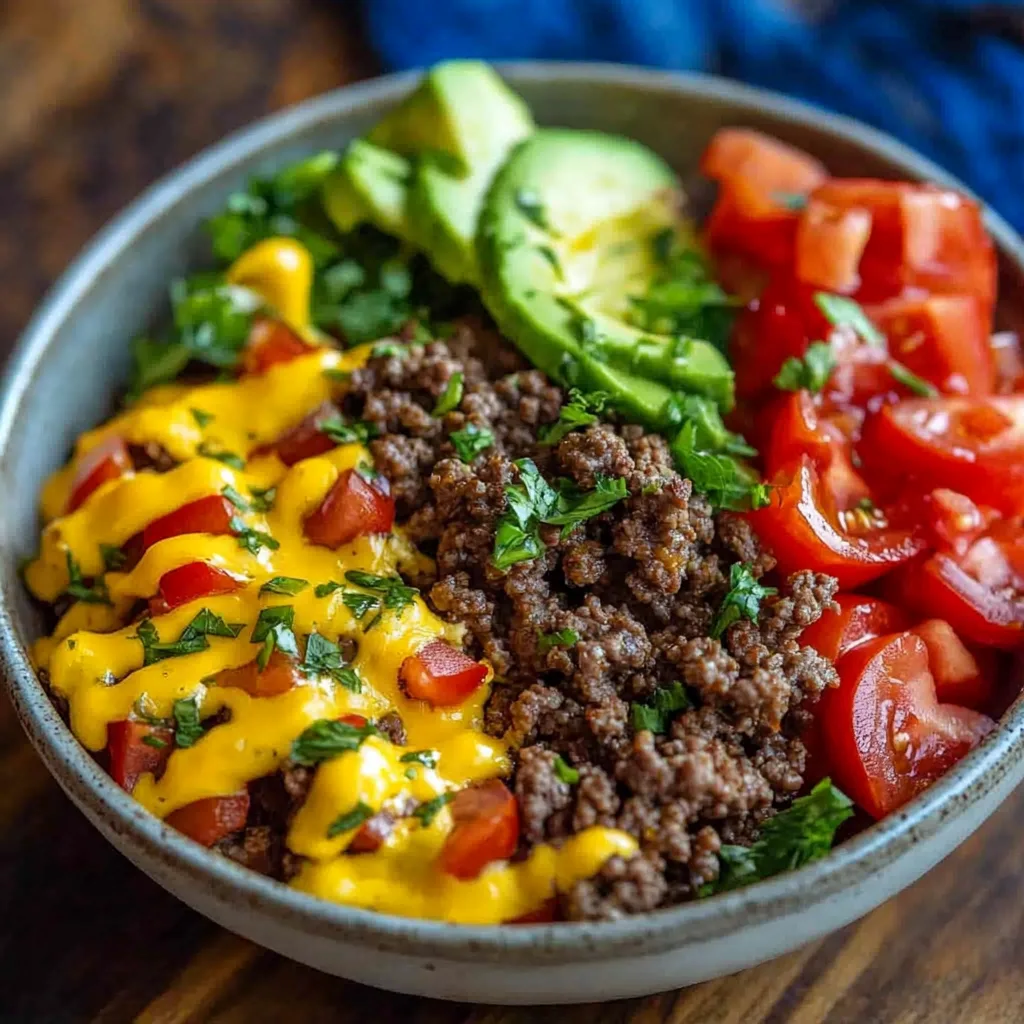
High-Protein Cheeseburger Bowls offer all the hearty satisfaction of a classic burger without a single crumb of bread. These vibrant, nutrition-packed bowls replace the bun with crisp lettuce, seasoned ground beef, and a zesty homemade sauce that ties it all together. Whether you’re prepping meals for the week or craving a protein boost, this recipe delivers 30+ grams of protein per serving while respecting keto, paleo, and low-carb lifestyles. Swap the usual burger stand for a bowl that’s easy to customize, deeply satisfying, and naturally nourishing.
What makes these bowls truly special is their flexibility—swap turkey for beef, add fried eggs for extra richness, or go Southwest with avocado and chipotle mayo. Each bite balances bold burger flavors with fresh acidity from pickles and tomatoes, creating a satisfying contrast that keeps your taste buds engaged. The secret lies in the homemade burger sauce: Tangy Greek yogurt depthens the ketchup and mustard brightness, while garlic and paprika resurrect the soul of a drive-thru classic.
Let’s explore why this modern adaptation of a comfort food icon deserves a regular spot in your meal rotation—stacked with protein, customizable for dietary needs, and ready in under 30 minutes from stove to plate.
What is High-Protein Cheeseburger Bowls?
At their core, these bowls reinterpret the American cheeseburger for health-conscious eaters. Instead of the traditional flour-frosted burger, they use crisp lettuce as the base—creating a refreshing crunch beneath the juicy patties. The dish originated as a creative solution for low-carb dieters who wanted to maintain burger flavors without the bread, and now it’s evolved into a go-to meal prep format.
What makes these bowls unique is their macro balance. With lean beef as the foundation, they avoid the meat-heavy heaviness of traditional bunless burgers by resolving with fresh vegetables and a smart sauce. It’s a modern shortcut to restaurant-quality satisfaction without sacrificing nutritional goals.
Reasons to Try High-Protein Cheeseburger Bowls
These bowls solve multiple modern cooking dilemmas at once. For busy households, they offer a weeknight dinner solution you can customize each night—throw extra bacon strips on one bowl, jalapeños on another, and fried eggs on a third. For fitness routines, the 30g+ protein shake ensures you stay full hours after eating without scrolling through burger menus for midnight grazes. And for stalled routine chefs, the no-fuss preparation time—just 15 minutes active with a 30-minute clock—means you can meet your dietary goals without becoming a sous chef.
Novice cooks will love how intuitive the assembly is. No tricky plating or unfamiliar ingredients—everyone understands meat, vegetables, and cheese. Meal preppers gain 4 days of portable lunches that beat store-bought salad boxes. And for families looking to simplify healthy eating, this format makes “innovation nights” feel effortless: swap the base between quinoa, brown rice, and cauliflower rice to rotate textures and tastes each week.
The true magic lies in the unapologetic joy of eating. These bowls deliver that classic burger satisfaction through strategic layering: crisp textures, savory richness, and cooling acidity all work together to mimic the nostalgic perfection of late-night drive-thru stops—without the regret morning after. It’s comfort food with conscientious flair.
Ingredients Needed to Make High-Protein Cheeseburger Bowls
1 lb lean ground beef or turkey (90% lean)
Tablespoon of table salt and freshly ground pepper
1 tsp garlic powder
½ tsp onion powder
4 cups chopped romaine or iceberg lettuce (for keto/base-free bowls)
2 cups cooked quinoa, brown rice, or cauliflower rice (for fiber/carb options)
1 cup halved cherry tomatoes
½ cup sliced dill pickles
½ red onion, thinly sliced
1 cup shredded cheddar, American, or vegan cheese
1 tbsp olive oil for sautéing (optional for roasted onions)
1 avocado or 4 strips cooked bacon (optional protein boost)
4 fried eggs, poached, or hard-boiled (optional superfood addition)
For the signature sauce:
½ cup low-fat Greek yogurt
1 tbsp Dijon mustard
1 tbsp ketchup
½ tbsp apple cider vinegar
½ tsp garlic powder
½ tsp smoked paprika
Juice of ½ lemon or lime
Salt and pepper to taste.
Add in a pinch of cayenne pepper for extra heat if desired.
Instructions to Make High-Protein Cheeseburger Bowls – Step by Step
Step 1: Prepare your base and prep toppings. If using quinoa or rice, cook it in advance using 1:2 water ratios for fluffy results. For lettuce cups, wash and roughly chop the leaves—no need for perfect dicing. While the base rests, thinly slice red onions and let them sit with the vinegar in the sauce to mellow sharpness. Halve cherry tomatoes and slice jalapeños for heat lovers while the meat cooks.
Step 2: Brown the lean beef in a skillet over medium heat. The key here is to avoid the sinkhole effect: keep the meat moving with a spoon to create tender, not stringy, bits. Once it loses its red center (about 8 minutes), drain excess fat with your hands or drain directly unless you need extra moisture for meatball-style bowls. Season liberally with salt, pepper, garlic powder, and onion powder—this trio builds depth without artificial flavor packets.
Step 3: Make the sauce while the meat cools. Whisk Greek yogurt to loosen it before adding ketchup and mustard. The acid from vinegar or lemon juice will emulsify the mixture into a smooth, bong instead of separate streaks. Taste for balance—add smoked paprika to darken flavor tones if needed. This sauce should mimic that tangy-ketchup kick of drive-thru ketchup packets with actual complexity.
Step 4: Assemble with restaurant plating principles. Start with bases in bowls: for visual impact, layer dark leafy greens on the bottom or mix colorful quinoa to create contrast. Distribute uniform meat mounds for even protein distribution, then arrange toppings for texture contrast—crisp lettuce next to juicy tomatoes to maintain freshness in storage. Top with cheese slices for melting magic, and finish with sauce drizzles that pool at the edges to add wetness without drowning the bowl.
Step 5: Add premium finishing touches thoughtfully. Fried egg yolk creates a sauce substitute that also deletes the need for excess oil. Crisp bacon adds halo saltiness that melts into the cheese, while avocado introduces creamy richness that softens the acidity. The secret here is to maximize layer variety while maintaining clean flavors without overpowering the core alchemy of meat, cheese, and sauce.
Chef’s Tips for a Perfect Result
- For juicier meat, sauté 1 bule of finely chopped onion in the skillet before adding beef to release moisture and build flavor foundations.
- Chill salad bases for 30 minutes first—they crisp up sunken leaves and stay fresh longer in meal prep containers.
- Meat seasoned too early becomes chewy. Add herbs and spices in the final 2 minutes of cooking for brighter flavor retention.
- Use olive oil when cooking onion slices—they emulate roasted garlic sweetness when browned properly, adding depth()
- For vegan/nut-free bases, substitute cauliflower rice with defrosted frozen spinach (squeezed dry)
- Store sauce separately—it intensifies across time and dries out leafy greens when added early.
Variations and Substitutions
Vegan Option: Swap beef for lentil-walnut “meat,” use nutritional yeast instead of cheese, and substitute Greek yogurt with coconut yogurt. The swap maintains the meaty texture with black beans giving calineum for a satisfying mouthfeel.
Gluten-Free Alternative: Quinoa is naturally gluten-free, but ensure your ketchup and mustard have no hidden gluten. Use coconut flour for any breadcrumbs in the recipe to maintain binding power without introducing grains.
Low-Carb Version: Opt for romaine lettuce as the base and pile on cucumbers for crunch. Replace quinoa about toasted pecans for fiber, and add a fried egg for satiety. The keto adaptations become a decadent meal with far fewer carbs than traditional recipes.
Budget Swap: Substitute lean beef with ground turkey which costs up to 30% less while retaining lean protein perks. Add frozen corn or canned black beans to stretch budgets without sacrificing flavor or fiber.
How to Serve and Pair
For a weekend feast, pair these bowls with sweet potato fries (oven-baked with rosemary and garlic). The crispy edges and fluffy interiors contrast nicely with the rejuven❀ acidity of the bowls. Add a slice of crusty sourdough on the side for keto busters needing carb flexibility.
Presentation-wise, think of each bowl as a mini garden of textures. Alternate red and green tomatoes for color, layer dark lettuces beneath, and crisscross avocado slices into edible knives. A drizzle of available Legacy Filet dressing across the top will simplify the radiant stream of flavor.
While these make excellent singleton meals, consider doubling the recipe for family dinners. Rotate bases weekly while keeping core components consistent: add kimchi pickles one night, fermented hot sauce another. The secret to long-term consistency is embracing that each bowl becomes divinely yours—flavors that evolve while retaining signature structure.
Storage and Reheating
Refrigerator: Store component parts separately in airtight containers for up to 4 days. Meat keeps best in glass containers with parchment paper lined bottoms to prevent sticking. Cooler lettuce bases should be used within 2 days to prevent sogginess.
Freezer: Cooked meat freezes excellently when separated into singles and placed in zip-top bags((). Label with recipe name and date. Freezing more than one serving cuts prep time for weekday lunches; just thaw in the fridge overnight.
Room Temperature: Assembled bowls stay fresh at room temperature for up to 3 hours. For potlucks, keep bases and toppings separate until serving to retain crispness. Use instant-read thermometers to ensure meats stay safe for screw-top thermos transport.
Reheating: For best texture, reheat meat in a non-stick skillet until warmed through (2-3 minutes). Avoid microwave(‘s drying effects by using a bain-marie sous vide technique: seal in bags and submerge in warm water. Sauce keeps best when added fresh to avoid over-thinning.
Nutritional Values
- Calories: 350 kcal
- Protein: 32 g
- Carbohydrates: 18 g
- Fat: 20 g
- Fiber: 4 g
Approximate values.
Frequently Asked Questions (FAQ)
Q1: Can I substitute eggs for beef in this recipe?
Yes, replace ½ lb beef with 4 large eggs, poached or fried. The nutrients stay comparable while becoming more paleo friendly. Pair with avocado to maintain richness.
Q2: How to tell if the ground beef is cooked through?
Use a meat thermometer( internal temp of 160°F. Clear juices and loss of all red tones indicator safety. Brown manually with a spoon to ensure uniform cooking.
Q3: Why is my homemade sauce separating?
Emulsification failed. Whisk continuously for 30 sec more. To stabilize, add 1 tsp mustard the very time to rebuild the bond between oil and water phases naturally.
Q4: Can I make these 2 days in advance for meal prep?
Absolutely, but store meat and detonating separately. Cheese softens and coagulates most when added fresh last-minute. FIFO system keeps all components texturally perfect.
Q5: What’s the best side for keto followers?
Mini zucchini fries seasoned with seasoned salt. Simply mix with cassava flour and coconut oil, then oven fry until crisp. They provide crunch without the grain aftereffects.
Conclusion
High-Protein Cheeseburger Bowls transform a lazy afternoon snack into a nutritious powerhouse of flavor and satisfaction. With customizable layers, balanced macros, and nostalgic burger flavors, this recipe bridges classic comfort with modern wellness. The zesty homemade sauce alone justifies the cook-off sessions—layered richness and acidity that’ll have you reincarnating the soul of a Saturday role burger with clean ingredients. Try it this week, and discover how a single bowl can become your new favorite mealtime ritual.
Print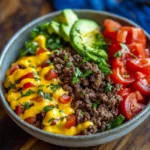
High-Protein Cheeseburger Bowls
- Prep Time: 10
- Cook Time: 8
- Total Time: 18
- Yield: 4 servings
- Category: Recipes
- Method: Cooking/Grilling
- Cuisine: American
- Diet: Low-Carb, High-Protein, Gluten-Free, Halal
Description
Crisp lettuce-crusted bowls packed with lean ground beef, tangy homemade sauce, and fresh veggies. Perfect for low-carb, keto, or paleo diets with 30+ grams of protein per serving.
Ingredients
2 lbs lean ground beef
1/4 cup ketchup
2 tbsp Dijon mustard
1/4 cup plain Greek yogurt (full-fat or non-fat)
1 tsp garlic powder
1 tsp smoked paprika
1 tsp sea salt
dash black pepper
4 cups shredded romaine lettuce
1 cup diced tomato
1/2 cup sliced pickles
1 cup diced avocado (optional)
4 oz cheddar cheese slices or shreds (optional)
Instructions
Preheat oven to 375°F (190°C)
Heat 1 tbsp oil in a skillet, cook beef with garlic powder, paprika, salt, and pepper until browned
Set beef aside to rest
Mix ketchup, mustard, and Greek yogurt for sauce
Assemble bowls with lettuce base, beef, cheese, veggies, and sauce
Optional: Bake 10 minutes for melted cheese
Notes
Swap beef for ground turkey or lamb
Use cauliflower rice instead of lettuce for paleo
Add fried eggs for extra protein
Store leftovers airtight up to 2 days
Keto: Increase fat with olive oil or avocado