
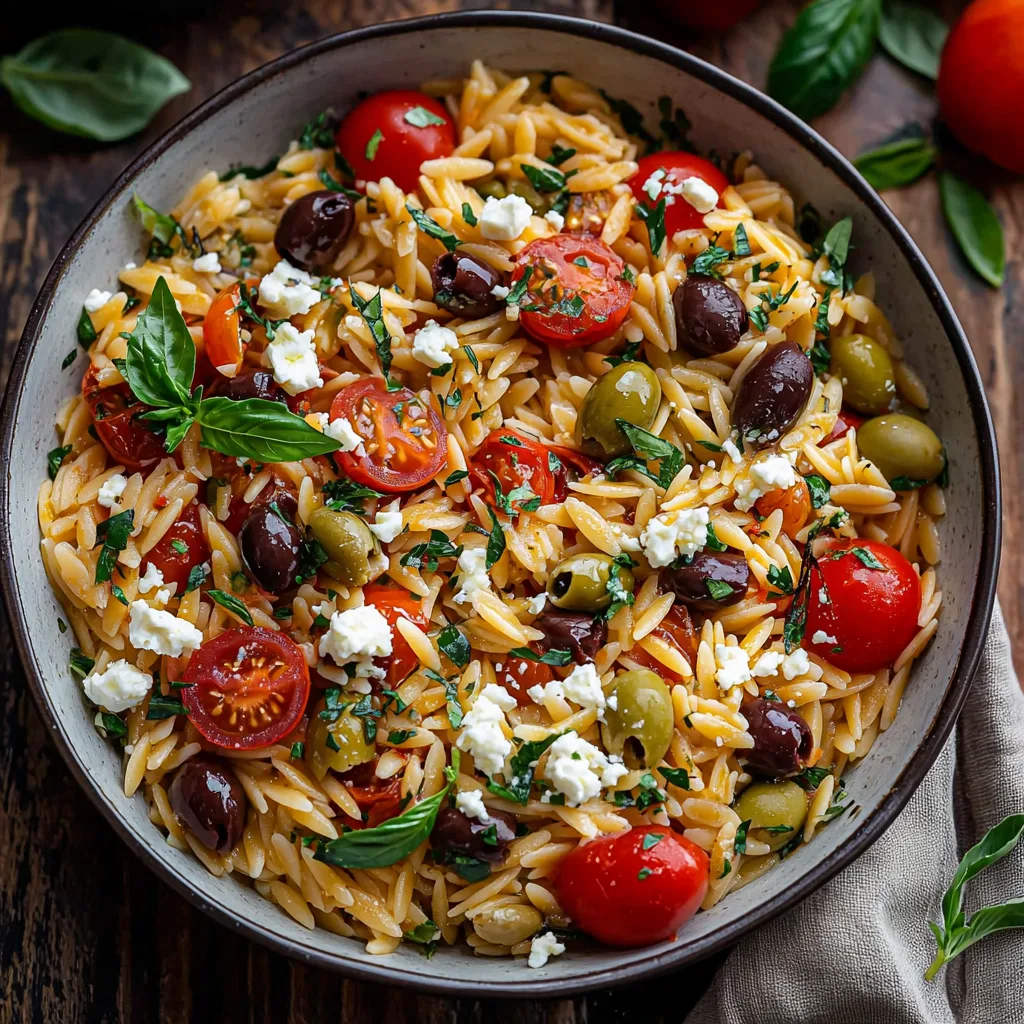
Greek Orzo with Tomatoes, Feta, Olives, and Fresh Basil is a simple yet transformative dish that brings the flavors of the Mediterranean to your table. Bursting with tangy tomatoes, briny olives, herbed feta, and aromatic basil, this orzo salad marries freshness and simplicity in every bite. Whether you’re seeking a refreshing side or a no-meat main, this recipe feels like a warm embrace from the shores of Greece. As someone who often turns to recipes that nourish both body and spirit, I find this salad to be a joyful balance of rustic charm and mindful eating—a dish that feels like it was made by hand for moments of calm in the kitchen.
What makes Greek orzo unique is its ability to hold its shape while soaking up the bold flavors of the olive oil, lemon, and herbs. It’s a grain-like pasta perfect for salads, absorbing each zestful ingredient like a canvas. This recipe works wonders with seasonal produce, and the tang of feta against the slight smokiness of kalamata olives creates a flavor profile that’s both grounding and uplifting. You’ll never underestimate a simple bowl of orzo again when it’s this tender, fragrant, and alive with taste.
What is Greek Orzo with Tomatoes, Feta, Olives, and Fresh Basil?
This vibrant dish is a reinterpretation of traditional Mediterranean orzo salads, where tiny pasta pearls become a vehicle for bold, bright flavors. Originating from the Greek islands, orzo is often used to craft quick, no-cook salads, but this version offers a warm, cook-in-one-pan approach that’s perfect for home cooks. The combination of juicy cherry tomatoes, sun-dried tomatoes for depth, and a medley of green and kalamata olives creates a textural contrast that dances on the tongue. Fresh basil adds an herbal brightness, while crumbled feta ties everything together with its mild saltiness.
What sets this recipe apart is its adaptability—you can adjust the ingredients to seasonal availability. For instance, swapping out cherry tomatoes for heirloom varieties or using locally grown olives enhances the dish’s character. Its no-fuss preparation and ability to feel both rustic and refined make it a staple for picnics, dinner parties, or even a solo weeknight meal.
Reasons to Try Greek Orzo with Tomatoes, Feta, Olives, and Fresh Basil
This orzo recipe is a shortcut to wholesome, flavorful eating without sacrificing ease. Ready in 25 minutes flat, it requires only one pan and minimal chopping, making it ideal for busy weeknights or gatherings where guests appreciate no-fuss food. The absence of meat or added sugars makes it a guilt-free option for families, while the protein-rich feta ensures it’s satisfying for both kids and adults. Plus, the inclusion of fresh herbs and olive oil—components lauded in Mediterranean diets—means you’re getting a nutrient-dense meal with a bright, energizing flavor.
Beginners will love how the ingredients “make themselves” as the orzo cooks, while seasoned cooks can experiment by adding roasted eggplant, grilled shrimp, or a squeeze of oregano-infused lemon juice. Its versatility as a side or main course (simply add grilled chicken or salmon) makes it a kitchen hero. Think of it as a recipe that invites you to personalize it while staying rooted in tradition.
Ingredients Needed to Make Greek Orzo with Tomatoes, Feta, Olives, and Fresh Basil
- 1.5 cups orzo (for a gluten-free option, use gluten-free pasta)
- 3 cups vegetable stock or water
- 8 oz cherry tomatoes, halved
- 1/3 cup sun-dried tomatoes, chopped
- 1/3 cup kalamata olives, sliced
- 1/4 cup green olives, sliced
- 6 oz feta cheese, crumbled or cubed
- 2 tbsp extra virgin olive oil
- 2 tbsp fresh lemon juice (or lime juice)
- 1/4 tsp smoked paprika
- 1/2 tsp Italian seasoning
- 1/4 cup fresh basil, finely chopped
- Salt and pepper to taste
Instructions to Make Greek Orzo with Tomatoes, Feta, Olives, and Fresh Basil – Step by Step
Step 1: Sauté the base. In a large non-stick skillet (12-inch works well), combine the orzo and vegetable stock. Bring to a gentle simmer over medium heat, then reduce the heat to low. Cover the pan and let the orzo sit for 10 minutes. Check the orzo halfway through—gently stir to prevent sticking, especially if you notice a crust forming at the bottom. The orzo is done when the liquid is absorbed and the pasta is tender but hearty. If the orzo still feels firm, add a splash of water and continue cooking uncovered, stir-fry style, until al dente.
Step 2: Add the star ingredients. Once the orzo is cooked, spread the half cherry tomatoes, chopped sun-dried tomatoes, kalamata olives, and green olives across the pan. Use a spatula to gently lift the orzo and nestle it into the vegetables. The residual heat will start to warm the tomatoes and olives, ensuring a cohesive dish. Sprinkle in the crumbled feta, but leave a bit of cheese for plating later. At this stage, the feta softens slightly, releasing its saltiness into the orzo and melding with the briny olives.
Step 3: Finish with flavors. Remove the lid and drizzle in the olive oil and lemon juice, followed by the smoked paprika and Italian seasoning. Stir continuously to coat the ingredients evenly. The paprika adds a subtle smoky warmth, while the herbs brighten the dish. Taste and adjust the seasoning—feel free to add more lemon juice if bitterness is needed or a pinch of sugar to balance the feta’s salt.
Step 4: Plate with care. Serve warm, garnished with the reserved feta and freshly chopped basil. The basil’s minty aroma lifts the dish, making each bite feel fresh. For a cooling contrast, pair it with a slice of chilled cucumber or a glass of water infused with mint and lemon.
Chef’s Tips for a Perfect Result
- Use room-temperature stock: It distributes more evenly around the orzo, reducing the risk of clumping or undercooking.
- Balance the salt: If using particularly salty olives, reduce the added salt or consider upgrading to an aged feta for a creamier, less briny profile.
- Let the orzo rest post-cooking: If the mixture is too liquidy, uncover the pan for 5 minutes to allow excess moisture to evaporate.
- Enhance the lemon pop: Zest the entire lemon before juicing—it adds a floral brightness that’s worth the extra minute.
- Let flavors meld: Allow the salad to sit for 10 minutes at room temperature before serving. The salty feta and briny olives will infuse more flavor into the orzo.
Variations and Substitutions
- Vegan Option: Replace feta with cashew-based feta or crumbled tofu drizzled with olive oil. Use agar-agar as a binder for creaminess.
- Gluten-Free Alternative: Substitute traditional orzo with gluten-free rice or quinoa. Cook quinoa according to package instructions and mix it with the vegetables and herbs.
- Low-Carb Version: Swap orzo for spiralized zucchini or cauliflower rice. Cook the zucchini briefly to reduce moisture, then mix it into the other ingredients.
- Winter Twist: In off-season, replace cherry tomatoes with roasted butternut squash or paneer cubes for a smoky, creamy twist.
- Budget Swap: Use canned chickpeas or lentils for added protein and texture. Drain and rinse them before mixing into the salad.
How to Serve and Pair
Serve this dish as a warm, herbed side with grilled lamb, roasted chicken, or seared salmon. It also pairs beautifully with soft-ripened cheeses like burrata and crusty whole-grain bread. For a complete meal, ladle it into pita pockets or serve it as a tapas-style platter. Presentation-wise, use a wide, shallow bowl to showcase the vibrant colors of the tomatoes, greens, and feta. A final drizzle of olive oil adds a luxurious finish.
Storage and Reheating
Refrigerator: Store in an airtight container for up to 4 days. The feta may become drier, so add a splash of water when reheating.
Freezer: Not recommended for short-term use—freeze for only 1–2 weeks. Thaw in the refrigerator and reheat gently to avoid a mushy texture.
Room Temperature: Keep it covered at room temperature for up to 3 hours. The feta piece may soften, but the dish remains safe to eat.
Reheating: Gently reheat in a skillet on medium heat until warmed throughout (5–7 minutes), stirring often. For a stovetop alternative, steam over a pan of water 1 inch deep for 5 minutes. Microwave usage is discouraged—the dish loses its textural balance.
Nutritional Values
- Calories: 545 kcal
- Protein: 20 g
- Carbohydrates: 59 g
- Fat: 26 g
- Fiber: 4 g
Approximate values.
Frequently Asked Questions
Q1: Can I substitute veggie stock for chicken stock?
Absolutely. The recipe uses vegetable stock to keep it vegan-friendly, though it’s equally delicious with chicken or water. The stock’s salt content may slightly alter the seasoning balance—taste and adjust accordingly.
Q2: How do I know the orzo is cooked without tasting it?
The orzo is done when the liquid is fully absorbed and the pasta feels tender but firm, with no chalky core. A gentle press of the grain between your fingers should leave it pliable without disintegrating.
Q3: Why does the feta sometimes become dry in the pan?
Feta can lose moisture during cooking, so reserve 1–2 tablespoons at the end to top the finished plate. If added earlier, the cheese may firm up but will still hold its flavor well throughout the dish.
Q4: Can I prepare this in advance for a picnic or potluck?
Yes—mix all ingredients except the feta and basil, then refrigerate for up to 24 hours. Add the final garnishes just before serving to maintain freshness and color.
Q5: What wine or drink pairs best with this dish?
Opt for a crisp white wine like Assyrtiko or a sparkling water with lemon slices. For a non-alcoholic pairing, try a tart hibiscus iced tea to echo the tomato’s acidity.
Conclusion
Greek Orzo with Tomatoes, Feta, Olives, and Fresh Basil is more than a meal—it’s a celebration of simple, sun-drenched flavors that nourish both body and soul. With its vibrant colors and balanced textures, this dish invites you to savor each bite mindfully. Give it a try, and you’ll soon discover that the harmonious blend of fresh basil, tangy tomatoes, and briny feta might become your new signature taste.
Print
Greek Orzo with Tomatoes, Feta, Olives, and Fresh Basil – A Flavorful Mediterranean Delight
- Prep Time: 15
- Cook Time: 10
- Total Time: 25
- Yield: 4-6 servings
- Category: Recipes
- Method: Stir-frying/Combining
- Cuisine: Greek / Mediterranean
- Diet: Vegetarian
Description
This vibrant Greek Orzo salad combines the tangy sweetness of tomatoes, the salty brine of olives, and the fresh herbaceous notes of basil, all tied together with creamy feta and lemony olive oil. A bright, no-meat Mediterranean dish perfect for summer, picnics, or weeknight meals.
Ingredients
1 cup orzo pasta
2 cups cherry tomatoes, halved
1/2 cup sun-dried tomatoes, chopped
1/4 cup kalamata olives
1/4 cup green olives
1/2 cup crumbled feta cheese
1/4 cup extra virgin olive oil
2 tablespoons fresh lemon juice
1/4 cup fresh basil leaves, chopped
2 cloves garlic, minced
1 teaspoon dried oregano
Salt and freshly ground black pepper to taste
Instructions
Bring a large pot of salted water to a boil.
Add the orzo and cook according to the package instructions until al dente, usually 7-8 minutes.
Drain the orzo and rinse under cold water to stop the cooking process.
In a large mixing bowl, combine cooked orzo, cherry tomatoes, sun-dried tomatoes, kalamata olives, green olives, and half of the feta cheese.
In a separate small bowl, whisk together olive oil, lemon juice, garlic, oregano, salt, and pepper.
Pour the dressing over the salad mixture and toss gently to coat.
Fold in the chopped basil leaves.
Transfer to a serving bowl and top with the remaining crumbled feta before serving.
Notes
The salad can be made ahead and refrigerated for up to 2 days; the flavors will deepen. Adjust seasoning before serving. Serve chilled or at room temperature.