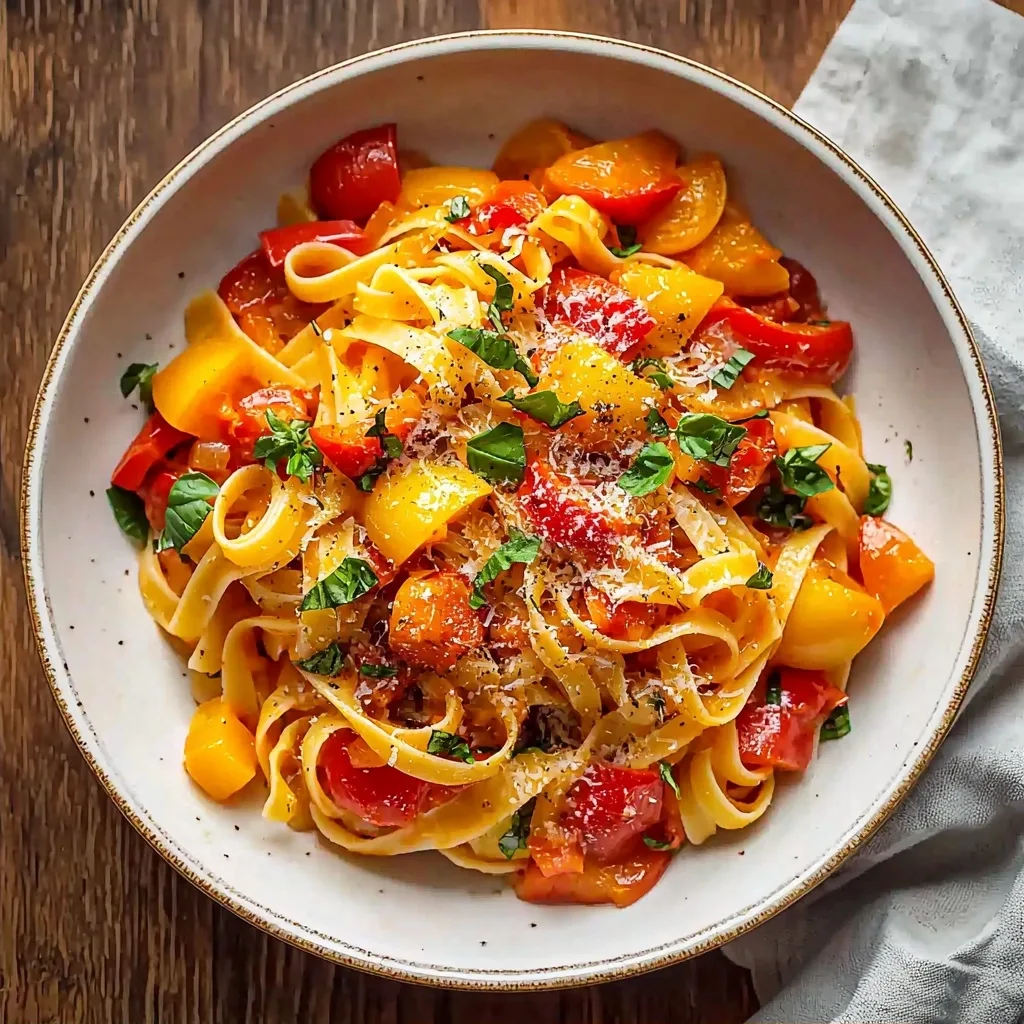
Homemade bell pepper pasta is a wonderfully simple yet incredibly satisfying dish that brings a burst of color and fresh flavors to your table. It’s the kind of meal that feels both comforting and invigorating, perfect for those evenings when you want something wholesome without spending hours in the kitchen. The natural sweetness of the bell peppers, gently softened and melded with aromatic garlic and onion, creates a beautiful base that perfectly coats tender strands of spaghetti. This recipe is a testament to how humble ingredients, prepared with intention, can create something truly special.
As a mother who cherishes mealtime as a moment of connection and nourishment for my family, I’m always looking for recipes that are both healthy and joyfully received. This vibrant pasta dish fits that bill perfectly. It’s a gentle reminder that deliciousness doesn’t need to be complicated, and that feeding ourselves and our loved ones can be an act of self-care and a celebration of nature’s bounty. The simplicity of the ingredients allows the inherent goodness of each component to shine through, bringing a sense of calm clarity to your plate.
What is Homemade Bell Pepper Pasta?
Homemade bell pepper pasta is a delightful pasta dish where the star is a vibrant sauce crafted primarily from bell peppers, often combined with other fresh aromatics like onions and garlic. Unlike traditional tomato-based sauces, this version leans into the natural sweetness and slight crunch of bell peppers, creating a lighter, brighter flavor profile. It’s a dish that celebrates seasonal produce and offers a refreshing alternative to more common pasta preparations. The result is a harmonious blend of tender pasta enveloped in a luscious, vegetable-forward sauce.
The beauty of this dish lies in its simplicity and versatility. It can range from a light sauté with just olive oil and herbs to a more creamy concoction, always highlighting the bell peppers in their various colors and flavors. It’s a dish that speaks to the warmth of home cooking, evoking the feeling of a cozy kitchen filled with comforting aromas. This recipe is less about strict tradition and more about embracing fresh ingredients and creating a meal that nourishes body and soul.
Reasons to Try Homemade Bell Pepper Pasta
This homemade bell pepper pasta is an absolute joy to make and eat, offering a delightful combination of ease and incredible flavor. It’s perfect for busy weeknights because it comes together remarkably quickly, often in under 30 minutes, proving that a wholesome and delicious meal doesn’t require a lot of time. The vibrant colors alone are enough to lift your spirits and make mealtime feel like a celebration. Plus, it’s a fantastic way to encourage picky eaters to enjoy more vegetables, as the peppers become delightfully sweet when cooked.
Furthermore, this recipe is incredibly forgiving and adaptable, making it ideal for cooks of all levels, from beginners to seasoned home chefs. It’s a wonderful canvas for creativity, allowing you to adjust seasonings and add your favorite herbs or even a lean protein. It’s a nourishing meal that feels light yet satisfying, providing essential vitamins and fiber from the bell peppers. Trying this recipe means embracing a meal that is as good for you as it is delicious, fostering a sense of well-being with every bite.
Ingredients Needed to Make Homemade Bell Pepper Pasta
-
8 ounces spaghetti (or your favorite pasta shape)
-
1.5 tablespoons extra virgin olive oil
-
1 medium yellow onion, thinly sliced
-
6 cloves garlic, minced
-
4 large bell peppers (a mix of colors like red, yellow, and orange is lovely), sliced into strips
-
3/4 teaspoon salt (or to taste)
-
1/2 teaspoon freshly cracked black pepper (or to taste)
-
1 ¼ cups diced tomatoes (fresh or canned, drained if canned)
-
1/2 cup fresh parsley, chopped
-
1/4 teaspoon crushed red pepper flakes (optional, for a touch of warmth)
-
1 teaspoon fresh lemon juice
-
Grated Parmesan cheese, for garnish (optional)
-
1/2 cup reserved pasta water
Instructions to Make Homemade Bell Pepper Pasta – Step by Step
Step 1: Begin by bringing a large pot of generously salted water to a rolling boil. Add your spaghetti and cook it according to the package instructions until it reaches that perfect ‘al dente’ stage – tender with just a slight bite. Before you drain the pasta, remember to carefully scoop out and reserve about half a cup of the starchy pasta water. This liquid gold is key to creating a silky, cohesive sauce that clings beautifully to the pasta. Once reserved, drain the spaghetti and set it aside.
Step 2: While your pasta is cooking, take this quiet time to prepare all your other ingredients, known as ‘mise en place’. This ensures a smooth cooking process. Thinly slice your yellow onion, mince the garlic cloves, and slice the bell peppers into uniform strips. Chop your fresh parsley and measure out your diced tomatoes and seasonings. Having everything prepped and within reach makes the sautéing process much more relaxed and enjoyable, allowing you to focus on building those lovely flavors.
Step 3: Place a large skillet over medium-high heat and pour in the extra virgin olive oil. Once the oil is shimmering, add the thinly sliced onions. Sauté them for about 2 minutes, stirring gently, until they start to soften and become translucent. This step is crucial for developing a sweet, fragrant foundation for our bell pepper sauce, softening their bite and bringing out their natural sugars.
Step 4: Add the sliced bell peppers to the skillet with the softened onions. Sprinkle in the salt and the freshly cracked black pepper. Continue to cook, stirring occasionally, for about 3-5 minutes. You want the peppers to begin softening and to develop just a hint of beautiful caramelization around the edges. The salt will help them release their moisture and season evenly as they cook.
Step 5: Now, stir in the minced garlic and the crushed red pepper flakes, if you’re using them, for about 30 seconds. Cook just until the garlic becomes fragrant – this quick bloom of flavor awakens the aromatics without allowing them to burn, which could make them bitter. This moment is a lovely cue that the sauce base is coming together beautifully.
Step 6: Add the drained spaghetti, the diced tomatoes, and the chopped fresh parsley directly into the skillet with the softened vegetables. Gently toss everything together, ensuring the pasta is evenly coated with the pepper mixture and tomatoes. Let this mixture cook for another 1-2 minutes, allowing the flavors to meld.
Step 7: Gradually add the reserved pasta water, a little at a time, stirring continuously. You’re looking for a luscious, silky consistency where the sauce lightly coats every strand of pasta, rather than being too watery or too dry. Add just enough water to achieve this beautiful texture. Finally, stir in the fresh lemon juice for a touch of brightness, and taste the pasta. Adjust the salt and pepper as needed to perfectly balance the flavors before serving.
Chef’s Tips for a Perfect Result
-
Color Variety: Use a mix of red, yellow, and orange bell peppers for a visually stunning dish and a wider range of subtle sweetness.
-
Pepper Prep: Slice the bell peppers into roughly uniform strips so they cook evenly and integrate nicely with the pasta.
-
Don’t Burn the Garlic: Keep the heat moderate when adding garlic and cook for the shortest time needed until fragrant; burnt garlic turns bitter.
-
Pasta Water is Key: Always reserve pasta water; its starch content is essential for emulsifying the sauce into a smooth, glossy coating for the pasta.
-
Taste and Adjust: Seasoning is personal. Always taste at the end and adjust salt, pepper, or lemon juice to suit your preference.
-
Fresh Herbs Matter: Finish with fresh parsley for a pop of color and vibrant, herbaceous flavor that lifts the entire dish.
Variations and Substitutions
-
Vegan Option: Omit the Parmesan cheese garnish or replace it with a sprinkle of nutritional yeast for a cheesy flavor. This will maintain the dish’s richness without dairy.
-
Gluten-Free Alternative: Substitute the spaghetti with your favorite gluten-free pasta. Ensure it’s cooked according to its specific package directions, as gluten-free varieties can vary in texture.
-
Add Protein: For a more substantial meal, add grilled chicken breast, sautéed shrimp, or pan-fried tofu (marinated in herbs and lemon) towards the end of cooking. This makes the dish a complete, satisfying entree.
-
Creamy R ichness: For a richer sauce, stir in a splash of heavy cream or a dollop of plain Greek yogurt (ensure yogurt is tempered gently to avoid curdling) at the very end. This adds a luxurious velvety texture and a delightful tang.
-
Extra Veggies: Feel free to add other quick-cooking vegetables like zucchini ribbons, spinach, or cherry tomatoes (halved) along with the diced tomatoes for added nutrition and texture.
Low-Carb Version: Replace spaghetti with zucchini noodles (zoodles) or hearts of palm pasta. Cook the ‘pasta’ very briefly to retain a slight bite, and toss with the sauce. This offers a lighter, nutrient-dense meal.
How to Serve and Pair
Serve your beautiful Homemade Bell Pepper Pasta piping hot, divided into shallow bowls. A generous sprinkle of freshly grated Parmesan cheese adds a delightful salty, umami finish, though it’s perfectly delicious without it. For a lovely presentation, garnish with a little extra fresh parsley, perhaps a drizzle of good quality olive oil, or a few extra slivers of colorful bell pepper. This dish shines as a comforting weeknight dinner, a lovely option for a casual lunch, or even a vibrant potluck contribution.
This pasta pairs wonderfully with light, crisp side dishes. Consider a simple green salad dressed with a bright lemon vinaigrette, or some steamed asparagus drizzled with olive oil. A crusty whole-grain bread is also fantastic for soaking up any delicious remnants of sauce. For beverages, a chilled sparkling water with a slice of lemon or a light-bodied white wine (if you were using alcohol, but we are keeping it alcohol-free) would be wonderfully refreshing.
Storage and Reheating
Refrigerator
Store leftover Homemade Bell Pepper Pasta in an airtight container in the refrigerator for up to 3-4 days. Ensure the pasta has cooled completely before sealing the container to prevent steam buildup and condensation, which can make the pasta mushy.
Freezer
While pasta dishes can be frozen, the texture of the spaghetti might change slightly upon thawing, potentially becoming softer. If you wish to freeze leftovers, cool them completely, store in freezer-safe airtight containers or heavy-duty freezer bags, and use within 1-2 months for best quality. It’s best to freeze the pasta without the Parmesan garnish.
Room Temperature
It’s best to consume pasta dishes within two hours of cooking if left at room temperature, especially in warmer environments. This is mainly for food safety. For optimal flavor and texture, refrigerating leftovers promptly is always recommended.
Reheating
To reheat on the stovetop, add a splash of water or vegetable broth to a skillet over medium heat. Add the pasta and stir gently until warmed through, being careful not to overcook or dry it out. If reheating in the microwave, place the pasta in a microwave-safe dish with a tablespoon or two of water, cover loosely, and heat in 30-60 second intervals, stirring in between, until heated through.
For oven reheating, place the pasta in an oven-safe dish, add a small amount of liquid (water or broth), cover with foil, and bake at around 350°F (175°C) for 10-15 minutes, or until heated through. This method can help maintain a better texture.
Nutritional Values
-
Calories: Approx. 975 per serving (this includes suggested Parmesan garnish)
-
Protein: 30g
-
Carbohydrates: 160g
-
Fat: 25g
-
Fiber: 15g
Approximate values.
Frequently Asked Questions (FAQ)
Can I use different types of bell peppers for this pasta?
Yes, you can absolutely use any color of bell pepper you prefer. Red, yellow, and orange peppers tend to be sweeter, while green peppers have a slightly more robust, earthy flavor. A mix provides the most delightful balance.
How do I know when the bell peppers in the pasta are perfectly cooked?
The bell peppers should be tender when pierced with a fork, but still retain a slight bite and vibrant color. They shouldn’t be mushy; aim for a tender-crisp texture that offers a pleasant chew.
My pasta sauce seems a bit dry, what can I do?
If your sauce seems dry, it usually means you need a little more of the reserved pasta water. Add it gradually, stirring constantly, until you achieve a glossy, cohesive sauce that coats the pasta beautifully. Don’t be afraid to use the full amount reserved, or even a little more if needed.
Is it possible to prepare some components of this dish ahead of time?
You can chop the vegetables (onions, garlic, peppers) a day in advance and store them in an airtight container in the refrigerator. Slicing the parsley and dicing tomatoes can also be done ahead. However, cooking the pasta and sautéing the vegetables is best done just before serving for optimal texture and flavor.
What are some creative ways to customize this bell pepper pasta?
You can add a pinch of smoked paprika for a smoky depth, a squeeze of lime juice instead of lemon for a different citrus note, or a handful of baby spinach stirred in at the end until wilted. For a heartier meal, consider adding cooked chickpeas or white beans.
Conclusion
Homemade bell pepper pasta is more than just a quick weeknight dinner; it is a celebration of simple, vibrant ingredients brought together with care. In less than 30 minutes, a handful of humble vegetables transforms into a luscious, sweet, and comforting meal that nourishes both the body and the soul. Its adaptability makes it a joyful addition to any weekly rotation, whether you are catering to picky eaters, looking for a light plant-based option, or fueling a busy family with wholesome goodness.
Ultimately, this dish serves as a beautiful reminder that delicious, memorable meals don’t require hours in the kitchen or a long list of complex ingredients. By embracing nature’s bounty and cooking with intention, you can bring a sense of calm, clarity, and pure delight to your dinner table. Gather your loved ones, twirl up a forkful of colorful spaghetti, and savor the warm comfort of a truly thoughtful home-cooked meal.
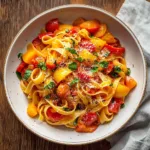
Homemade Bell Pepper Pasta: A Vibrant and Nourishing Weeknight Delight
- Prep Time: 10
- Cook Time: 20
- Total Time: 30
- Yield: 4 servings
- Category: Dinner
- Method: Stovetop
- Cuisine: Italian-inspired
- Diet: Vegetarian
Description
A quick, colorful pasta dish featuring sweet bell peppers, garlic, and herbs. Features tender spaghetti coated in a light, vegetable-forward sauce for a wholesome, 30-minute meal.
Ingredients
2 medium bell peppers (mixed colors), chopped
12 oz spaghetti
1 medium yellow onion, finely chopped
4 cloves garlic, minced
2 tbsp olive oil
1 tsp salt
1/2 tsp black pepper
1/2 cup freshly grated Parmesan cheese (or nutritional yeast for vegan)
1/4 cup fresh basil, chopped
2 tbsp unsalted butter (optional for creaminess)
Instructions
Bring a large pot of salted water to a boil. Cook spaghetti according to package instructions; drain, reserving 1 cup pasta water.
Heat olive oil in a large pan over medium heat. Sauté onions until translucent, about 3 minutes.
Add garlic and bell peppers; sauté 8–10 minutes until tender.
If using butter, add and stir until melted.
Toss cooked pasta into the pan, adding reserved pasta water as needed to create a cohesive sauce.
Season with salt, pepper, and Parmesan/nutritional yeast.
Sprinkle with fresh basil before serving.
Notes
Use a variety of bell pepper colors for visual appeal
Omit Parmesan for vegan version
Add a splash of vegetable broth to loosen sauce if needed
Serve immediately for optimal texture