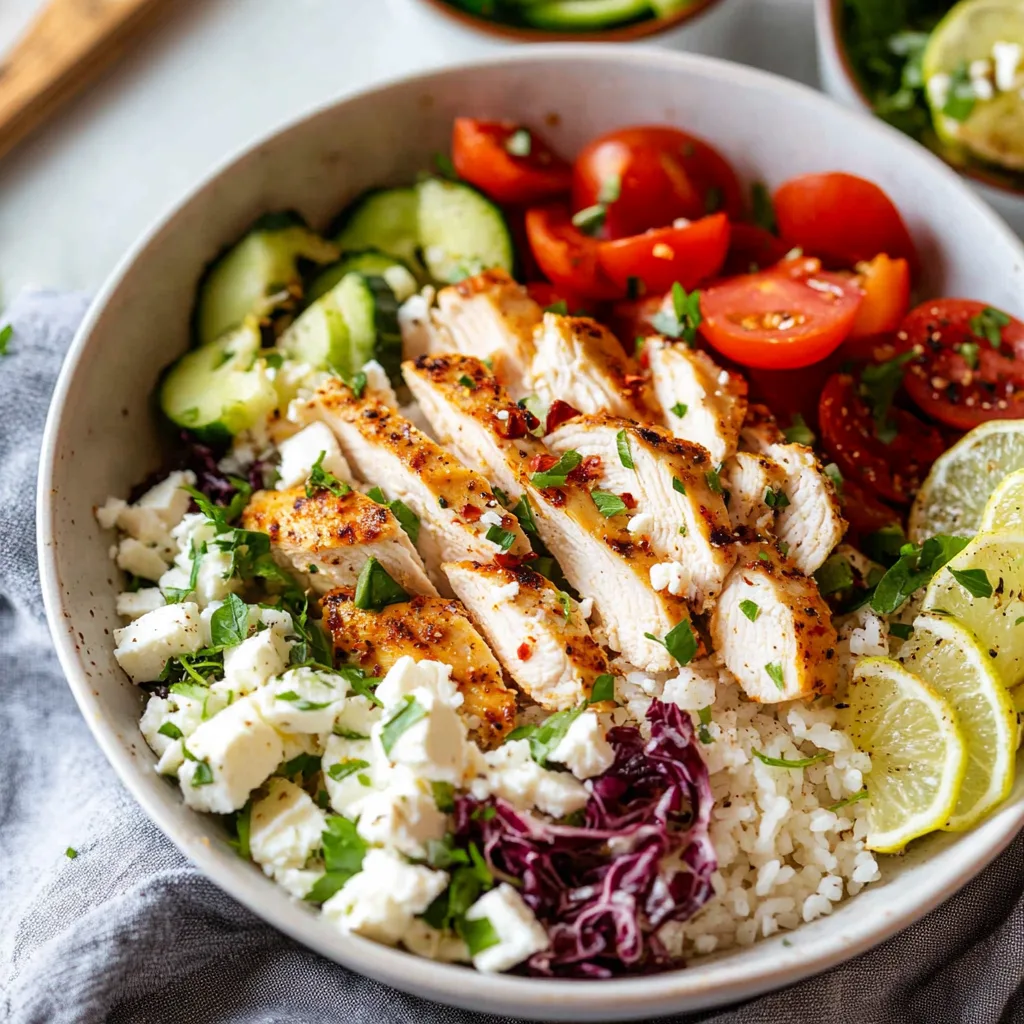
Greek Chicken Bowls are a celebration of crisp, zesty flavors where tender chicken mingles with bright vegetables and cool, creamy tzatziki. It’s a dish that feels like a warm breeze on a summer patio—a modern twist on Mediterranean classics that fits into today’s fast-paced lives without sacrificing soul. Whether you’re meal-prepping for busy workdays or craving something fresh after a long afternoon, these bowls satisfy both practicality and palate. What makes this recipe shine is how it balances bold citrus with herby brightness and crisp textures, creating a harmony that’s easy to assemble yet hard to forget. Think of it as your kitchen’s answer to a relaxed dinner party: no need for a fancy menu, just the right mix of ingredients.
Each bite offers a medley of crunch from romaine and cucumber, a tangy kick from the tzatziki, and a subtle sweetness in the marinade. The chicken, perfectly seared or air-fried, is more than tender—it’s a canvas for Mediterranean flavors. These bowls are also beautifully customizable, so whether you prefer quinoa’s heartiness, rice’s comforting warmth, or even a grain-free base, your creativity can shine. Let’s explore how these bowls weave tradition with convenience and why they’re a staple for any kitchen seeking balance and joy.
What is Greek Chicken Bowls?
Greek Chicken Bowls are a modern fusion creation that reimagines classic Greek taverna dishes for the home cook. At their core, they combine marinated chicken, vibrant vegetables like tomatoes and cucumbers, and a refreshing tzatziki sauce in a single-serving bowl. This format is both practical and poetic: a way to deliver nourishment while honoring the Mediterranean emphasis on simplicity and bold flavors. The chicken is often seasoned with fragrant herbs such as oregano and basil, sweetened with honey and kissed by lemon, reflecting the bright palette of Greek cuisine.
Though rooted in traditional Greek elements—think of souvlaki skewers or gyros—the bowlish format is a clever adaptation. It arranges components like a charcuterie board, letting each layer stand out: the crunch of romaine lettuce as a base, the burst of juicy tomatoes, the cool cucumber slices, and the creamy tzatziki as both garnish and sauce. What makes it unique is how it turns a handful of ingredients into a layered experience. The tzatziki here isn’t just a condiment; it’s a textural contrast and a source of brightness that ties everything together.
Reasons to Try Greek Chicken Bowls
These bowls are your shortcut to a nourishing meal that feels celebratory yet requires no kitchen heroics. If you’re navigating a packed schedule or cooking for a family that craves healthy variety, this recipe fits seamlessly. The components can be prepped ahead with minimal effort—marinated chicken cools in the fridge while you slice vegetables and whip up the tzatziki. By the time the chicken is done, everything is ready to assemble. Think of it as a weeknight answer to “What’s for dinner?”
The flexibility of the bowl format is another reason these dishes thrive. Substitute rice with quinoa for extra protein or trade feta for halloumi for a smoky twist. It’s forgiving and inviting, making it ideal for beginners who want to experiment and seasoned cooks who seek efficiency. Plus, the combination of grilled chicken, herbed yogurt sauce, and fresh vegetables offers a nutrient-dense mix that aligns with mindful eating principles. Each ingredient adds purpose: omega-rich olive oil, fiber-packed greens, and tangy probiotic-rich tzatziki to support digestion and vitality.
Lastly, the sensory rewards are unmatched. The sizzle of chicken in a skillet, the tang of lemon hitting warm grains, and the creamy crunch of the tzatziki in every bite make this meal feel alive. It’s a recipe that invites you to slow down, savor textures, and create a moment of calm in the chaos of daily life.
Ingredients Needed to Make Greek Chicken Bowls
Chicken:
- 1 ¼ pounds boneless skinless chicken breasts (cut into 4 pieces if using a single breast)
- ¼ cup olive oil (extra virgin for depth of flavor)
- 1 tablespoon lemon zest (grated zest adds a floral perfume)
- 2 tablespoons fresh lemon juice (store in a glass bottle with fresh lemons for longer freshness)
- 2 tablespoons honey (local raw honey for a subtle earthy note)
- 1 teaspoon garlic powder (or finely minced fresh garlic if possible)
- 1 ½ teaspoons dried oregano (Greek variety preferred)
- 1 ½ teaspoons dried basil (tease apart leaves before adding to avoid clumping)
- 1 teaspoon salt (fine sea salt for balanced seasoning)
- ¼ teaspoon black pepper
- ½ teaspoon red pepper flakes (crushed for warmth, omitted for sensitivity]
Base Layer:
- 2 cups cooked rice or quinoa (quinoa can be prepared in 15 minutes; rice uses chicken broth for extra savor)
- 2 cups halved grape or cherry tomatoes
- 2 cups diced or chopped cucumber (leave on green speckles for visual appeal)
- 4 cups shredded romaine lettuce (washed and dried thoroughly for crispness]
- 1 cup sliced red onion (thin slices to prevent overpowering
- ½ cup crumbled feta (store-bought or freshly crumbled from a block)
Tzatziki:
- 1 cup plain Greek yogurt (full-fat for richness, or unsweetened yogurt for vegan option]
- ½ cup grated cucumber (seed removed for less moisture)
- 1 tablespoon fresh lemon juice
- 1 tablespoon olive oil (emulsion keeps the sauce thick]
- 1 teaspoon minced garlic
- ¼ teaspoon salt (adjusted based on yogurt’s tang)
- 1 tablespoon fresh chopped dill (use parsley if dill is unavailable
Instructions to Make Greek Chicken Bowls – Step by Step
Step 1: Whip up your marinade. In a medium bowl, whisk together ¼ cup olive oil, 1 tablespoon lemon zest, 2 tablespoons lemon juice, 2 tablespoons honey, 1 teaspoon garlic powder, 1 ½ teaspoons oregano, 1 ½ teaspoons basil, and a pinch of salt. Swirl the ingredients until the honey dissolves completely, creating a smooth, fragrant blend. This mixture isn’t just seasoning—it’s a marriage of citrus and herbs meant to penetrate the chicken. Think of it as a warm hug for the protein before it hits the heat.
Step 2: Prepare the chicken. Trim any excess fatty trim and gently pound the chicken breasts to ½-inch thickness using a meat mallet wrapped in a towel (to avoid splattering). Transfer to a shallow dish or large ziplock bag, then press the marinade into the flesh. Cover and let it sit in the fridge. For best results, let the chicken marinate for at least an hour; the longer it rests, the more vibrant the flavors will feel.
Step 3: Craft your tzatziki sauce. While the chicken marinates, peel and grate the cucumber (use the fine side of a grater), then add it to a colander. Squeeze out excess moisture with paper towels to avoid waterlogging the sauce. In a separate bowl, combine 1 cup Greek yogurt, 1 tablespoon fresh lemon juice, 1 tablespoon olive oil, 1 teaspoon minced garlic, and a pinch of salt (check yogurt label to avoid over-salting). Stir gently until the dill is evenly distributed. Let the sauce chill briefly to mellow the garlic bite.
Step 4: Cook your chicken. For air fryers: Preheat to 380°F. Place chicken in a single layer and air fry for 7 minutes. Flip gently using tongs and cook 3-4 more minutes until internal temperature hits 165°F. For stovetops: Heat 1 tablespoon olive oil in a skillet over medium heat. Cook each side for 7-8 minutes until golden and slightly charred at the edges. Regardless of method, let the chicken rest for 5 minutes (drizzle with a touch of extra lemon juice during this time if you like).
Step 5: Assemble the bowls. Divide 2 cups prepped rice/quinoa and heap them into bowls. Layer the shredded romaine, halved tomatoes, and cucumber slices on top of the grains. Crumble feta over the greens—it adds a salty, crumbly contrast. Arrange the cooked chicken slices across the bowl like petals in a flower. Dollop spoonfuls of tzatziki sauce to bridge the layers. For a finishing burst, drizzle extra olive oil and lemon juice into the bowl or swirl the lemon tahini dressing I mention in the recipe notes. Every serving is a mini fiesta of textures and flavors.
Chef’s Tips for a Perfect Result
- Test the marinade early: Dip a small chicken piece in the marinade during the first 10 minutes to catch any overly acidic or sweet imbalances. Adjust honey, lemon juice, or salt as needed.
- Grate with purpose: Use a microplane for lemon zest to maximize surface area and release its citrus oils. These oils carry a floral note that elevates the marinade beyond mere lemon juice.
- Drain the cucumber thoroughly: Squeeze it in the colander for 5 minutes before mixing with yogurt. A dry tzatziki stays thick and luxurious, avoiding a runny sauce that dilutes flavors.
- Add room temperature quinoa/rice: Cold grains can cool off the chicken’s warmth when assembling. Reheat gently in the microwave for 30 seconds (or skip the tzatziki addition if you prefer room-temperature bowls).
- Use a non-stick surface: Whether air frying or stovetop cooking, a well-lubricated non-stick prevents over-charred edges and ensures even browning. If sticking occurs, add a teaspoon more oil mid-cook.
Variations and Substitutions
Vegan Option
Replace chicken with marinated tofu or tempeh (firm for texture) and substitute Greek yogurt with coconut yogurt or a cashew-based sauce. Use agave syrup instead of honey. This swap maintains the bright herb profile while catering to plant-based needs.
Gluten-Free Alternative
Ensure quinoa is certified gluten-free and skip rice if avoiding grains. Serve on a base of massaged kale or spinach. Swap regular feta (often rind-pressed) for a feta block crumbled manually. The tang and texture remain intact without grain compromise.
Low-Carb Version
Omit rice/quinoa and use cauliflower rice for a base. Substitute regular feta with a low-carb cheese like goat cheese. The tzatziki stays low-carb with ½ cup plain yogurt—it’s satisfying without grains, perfect for keto or paleo diets.
Budget Swap
Replace fresh dill with dried herbs like oregano or mint (1 teaspoon in the tzatziki gives a similar brightness). Use plain white rice instead of quinoa for bulk-friendly nutrition. These tweaks keep costs low while preserving the bowl’s essence.
Personal Flair
Infuse extra flavor by toasting quinoa or rice before boiling for a nuttier base. Add sun-dried tomatoes for a sun-kissed twist or fresh herbs like parsley and mint in the marinade. Experiment with grain alternatives like couscous for a Mediterranean-inspired shortcut.
How to Serve and Pair
Greek Chicken Bowls pair beautifully with simplicity. A glass of iced herbal tea with mint and lemongrass cools the palate and complements the lemon notes in the dish. For a heartier combo, serve with a warm pita wrapped in parchment and brushed with olive oil. Place extra tzatziki on the plate in a small ramekin for dipping.
Presentation is key. Layer ingredients in a wide bowl so each component shines—red onion wedges for a vibrant pop, feta scattered like jewels. A final drizzle of olive oil and lemon juice adds a glisten that feels as joyful as the first bite. For an elegant touch, set bowls in a tiered tray with a dollop of fresh dill on the side.
This dish feels at home at weeknight dinners, backyard gatherings, or packed lunches. It’s perfect for families needing fast but wholesome meals and busy professionals who crave a midday reset. When you customize it with seasonal veggies, it becomes a year-round favorite—roasted bell peppers for late summer or shredded kale for fall stews.
Storage and Reheating
Refrigerator: Store leftover bowls in airtight containers for up to 2 days. Keep tzatziki in a separate container to prevent sogginess. Layer vegetables (especially tomatoes) on top of the rice and place chicken in a single layer. The freshness holds well if sealed promptly after assembly.
Freezer: Freeze raw marinated chicken in its own container for up to 3 months. The tzatziki, veggies, and grains should be prepared separately, freezing the tzatziki for 1-2 weeks in an ice cube tray. Reassemble bowls by heating the chicken first, then layering cooked grains and fresh veggies on top. Avoid adding tzatziki until serving to prevent wateriness.
Room Temperature: These bowls are best assembled fresh, but a marinated chicken breast can be left out for 1 hour max. Always refrigerate leftovers to preserve texture and avoid food safety risks, especially with dairy in tzatziki.
Reheating: Use an oven at 350°F for 5-10 minutes to regain chicken crispiness. A skillet is ideal for warming chicken gently in olive oil, avoiding overcooking. Avoid microwaves—it softens the chicken and risks creating a rubbery mess. For tzatziki-heavy bowls, add fresh drizzles after reheating instead of using stored sauce.
Nutritional Values
Per bowl:
- Calories: 603
- Protein: 40g
- Carbohydrates: 38g
- Fat: 27g
- Fiber: 2g
Approximate values. The balance of complex carbs from quinoa/rice and lean protein supports sustained energy, while the herbed tzatziki adds probiotics and antioxidants for digestive balance.
Frequently Asked Questions
Can I substitute honey with agave syrup?
Yes, agave replaces honey equally but adds a milder sweetness. If using maple syrup instead, cut it to 1 tablespoon to avoid overpowering the herbs in the marinade.
How to know when the tzatziki is ready?
Look for a smooth, custard-like consistency when mixing. If it feels too thick, whisk in 1 teaspoon of water. If too thin, let it rest in the fridge for 30 minutes to firm up naturally.
Why does the chicken sometimes stick to the air fryer?
Sticking occurs if the air fryer isn’t preheated adequately. Ensure it’s heated to 380°F for 5 minutes first. Avoid overcrowding the basket by working in batches—this ensures even air flow and prevents sogginess.
Can I make the marinade a day ahead?
Store the finished marinade in a sealed jar in the fridge for 24 hours. Let it reach room temperature before using, and stir to reincorporate separated oils for even flavor distribution.
What’s the healthiest way to serve these bowls?
Choose quinoa over white rice for extra fiber, pair with avocado or Greek yogurt drizzles (unsweetened for vegan). Use minimal honey in the marinade and maximize raw veggies for crunch. This combo boosts nutrients without sacrificing flavor.
Conclusion
Greek Chicken Bowls are a testament to how mindful layering creates meals that nourish body and soul. They balance the crispy, lemon-kissed chicken with cool tzatziki and vibrant vegetables to deliver a sensory symphony in every bite. For those who crave quick but meaningful food, this recipe is a gateway to kitchen confidence and joyful meal prep.
Next time you’re short on time but long on intention, let this dish be your answer. It’s not just a meal—it’s a chance to celebrate how simplicity can satisfy. The signature zing from lemon and herbs will bring you back bowl after bowl.
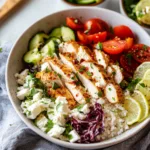
Greek Chicken Bowls
- Prep Time: 30
- Cook Time: 25
- Total Time: 55
- Yield: 2 servings
- Category: Recipes
- Method: Baking
- Cuisine: Greek
Description
A vibrant and healthy dish featuring tender marinated chicken, crisp romaine and cucumbers, juicy tomatoes, and tangy tzatziki sauce. A perfect balance of fresh herbs, citrus, and creamy textures for a satisfying, Mediterranean-inspired bowl.
Ingredients
2 boneless, skinless chicken breasts
2 tbsp olive oil
2 tbsp lemon juice
3 garlic cloves, minced
1 tbsp dried oregano
1 tbsp dried basil
1 tbsp honey
1 tsp salt
1/2 tsp black pepper
1 head romaine lettuce, chopped
1 medium cucumber, sliced
1 cup grape tomatoes, halved
2 cups cooked quinoa (optional)
For tzatziki: 1 cup Greek yogurt, 1/2 cucumber (grated and drained), 1 garlic clove, 2 tbsp fresh dill, 2 tsp lemon juice, 1 tsp salt
Instructions
Marinate chicken breasts with olive oil, lemon juice, garlic, oregano, basil, honey, salt, and pepper. Refrigerate for 30 minutes.
Preheat oven to 400°F (200°C). Bake marinated chicken for 20-25 minutes, or air-fry at 375°F (190°C) for 12-15 minutes until cooked through.
In a large bowl, layer chopped romaine, cucumber slices, and halved tomatoes. Top with cooked quinoa if desired.
Add tender baked chicken on top of the salad base.
Drizzle homemade tzatziki (mix yogurt, drained cucumber, garlic, dill, lemon juice, and salt) over the bowl and serve.
Notes
For grain-free option, skip quinoa. Marinate chicken longer (up to 4 hours) for deeper flavor. Store leftovers in an airtight container for 2-3 days.