Hibachi Vegetables are the unsung heroes of the Japanese steakhouse experience—and guess what? You can bring that same sizzling skillet magic right into your own kitchen. Whether you’re trying to sneak more veggies onto your dinner plate or just craving that crispy-tender, soy-glazed bite that makes everything else taste better, this Hibachi Vegetables recipe is your new go-to. It’s packed with colorful zucchini, onions, mushrooms, and broccoli that go from raw to restaurant-worthy in 15 minutes flat.
(Yes, really!) Best of all, you don’t need a teppanyaki grill or chef’s hat—just a hot pan, a splash of oil, and a pinch of kitchen confidence. Trust me, if you’ve ever stared at your fridge and wondered what to do with that lone zucchini or half a head of broccoli, this is it. Hibachi Vegetables to the rescue. It’s fast, it’s fabulous, and even your picky eaters might fight for seconds.
Table of Contents
What are Hibachi Vegetables?
Hibachi Vegetables are a classic side dish served at Japanese hibachi restaurants, typically sizzling right alongside steak, chicken, or shrimp on those giant flat-top grills. But at their core, they’re really just a simple combo of seasonal vegetables flash-cooked over high heat with garlic, butter, and soy sauce until tender but still bright and crisp. Zucchini, mushrooms, onions, and broccoli usually steal the show, but there’s plenty of room to riff.
The name “hibachi” refers to the cooking style—high heat, fast cooking, and bold flavor from a few everyday ingredients. You’re not slow-roasting or stewing these veggies into mush. Nope. Hibachi cooking is all about texture and timing. You want caramelized edges and a bit of bite left in the center. That’s the secret sauce, even before the actual sauce gets drizzled on. Whether you’re eating them as a veggie-forward main or using them to round out a steak dinner, they’re equal parts satisfying and fuss-free.
Reasons to Try Hibachi Vegetables
There are a dozen reasons why Hibachi Vegetables should be on your weekly dinner lineup, but let’s start with the obvious: it’s fast. Like, “the kids are hangry and you’re out of ideas” fast. We’re talking 15 minutes from chopping board to dinner plate. Another reason? It’s versatile. You can serve these veggies with rice, noodles, grilled meat, tofu, or even fold them into a wrap for a veggie-forward lunch. They’re like the trusty sidekick who somehow becomes the star of the show.
And if you’re trying to eat more vegetables but hate bland or soggy broccoli, this recipe’s for you. The quick sear gives everything a crisp-tender bite and that golden, slightly charred flavor we all crave from restaurant veggies. Bonus: it’s pretty. The bright green broccoli, deep brown mushrooms, and golden zucchini slices look like a rainbow on a plate—which is great if you’re cooking for someone who eats with their eyes first. And if you’re trying to cut back on sodium or sugar, making this at home means you control what goes in.
Ingredients Needed to Make Hibachi Vegetables
To make Hibachi Vegetables, you’ll need:
- 1 medium zucchini, cut into thick coins
- 1 small yellow squash (optional), sliced
- 1 small onion, sliced into strips
- 1 cup cremini or white mushrooms, quartered
- 1 cup broccoli florets
- 2 tablespoons neutral oil (canola or avocado oil works great)
- 2 tablespoons unsalted butter, divided
- 2 cloves garlic, minced
- 1 teaspoon freshly grated ginger (optional, but adds a great kick)
- 2 tablespoons low-sodium soy sauce (or tamari for gluten-free)
- 1 teaspoon honey or sugar
- 1/4 teaspoon kosher salt
- 1/4 teaspoon black pepper
- Toasted sesame seeds and sliced green onion for garnish
Instructions to Make Hibachi Vegetables – Step by Step
Step 1: Heat Things Up
Start by grabbing your largest skillet, wok, or griddle—anything with enough surface area to let the veggies breathe. Crank the heat to high. This is not a gentle sauté situation. We’re looking for high-heat action that sizzles. Add your neutral oil and wait until it shimmers. Not sure what that looks like? Flick a little water into the pan—if it sizzles and vanishes instantly, you’re golden.
Step 2: Start with the Onion
Toss in the onion strips and let them do their thing for about 1-2 minutes. You’re not trying to caramelize them into oblivion—just enough time to take off that raw edge and coax out some sweetness. Stir occasionally to keep them from sticking or burning. Think of this as the aromatic foundation to your hibachi party.
Step 3: Mushrooms and Broccoli Join the Party
Next up, add the quartered mushrooms and broccoli florets. Sauté for 2 minutes, stirring now and then. Let them get those flavorful brown spots, a little sear that screams, “yes, I cooked this like a pro.” Don’t rush it. Letting the veggies sit undisturbed for a few seconds at a time helps them caramelize properly. If you’re working with a smaller pan, you might want to do this part in batches to avoid crowding—which leads to steaming, not searing.
Step 4: In Goes the Zucchini (and Squash if Using)
Time to add the sliced zucchini and optional yellow squash. Sauté for another 2 minutes. You’re flipping and stirring to make sure every piece gets that nice golden edge without turning soggy. At this point, your kitchen smells amazing and it’s hard not to sneak a bite. Stay strong.
Step 5: Make a Flavor Pocket
Push the veggies to the side of the pan (or make a well in the center if using a wok). Drop in 1 tablespoon of butter, your minced garlic, and freshly grated ginger (if using). Stir that little flavor pocket for about 30 seconds, just until everything gets fragrant. The garlic should smell nutty, not burned—keep an eye on it.
Step 6: Time to Glaze
Add your soy sauce and honey to the pan. Stir to coat the veggies evenly. Let the sauce bubble for about 1 minute. This is where the glaze magic happens—everything gets shiny, slightly sticky, and totally irresistible. If you’re gluten-free, use tamari instead of soy sauce for the same umami payoff without the wheat.
Step 7: Butter Finish
Toss in the last tablespoon of butter, along with the salt and pepper. Stir it all together until the butter melts and gives the veggies a silky sheen. Taste a piece—adjust seasoning if you need to. More salt? A splash more soy sauce? Go for it. This is your dinner, not a chemistry experiment.
Step 8: Garnish and Serve
Slide everything onto a serving platter. Top with toasted sesame seeds and sliced green onions for a little crunch and color. Serve hot with rice, noodles, or even on their own with a side of yum-yum sauce. Want more ideas? These pair beautifully with this easy street corn chicken rice bowl or our garlic butter steak bites if you’re craving that full hibachi vibe at home.
What to Serve with Hibachi Vegetables
These Hibachi Vegetables are the ultimate team player. They’re amazing alongside teriyaki chicken, grilled shrimp, or any of your favorite proteins. Feeling casual? Serve them with steamed jasmine rice and a drizzle of yum-yum sauce for a simple weeknight dinner. Want something lighter? Try pairing them with our white bean and veggie salad or wrap them up in a whole grain tortilla for a plant-based lunch wrap. You can even toss them into a bowl with cilantro lime slaw and some grilled tofu for a fun taco night twist. Seriously, they’re like the leggings of dinner—they go with everything.
Key Tips for Making Hibachi Vegetables
Want those veggies to taste like they just came off a Japanese restaurant grill? Here’s what to keep in mind: First, don’t overcrowd the pan. Work in batches if you need to. This helps everything sear instead of steam. Second, high heat is your friend. If your pan’s not hot enough, you’ll miss out on that signature hibachi char. Third, don’t skimp on the butter—it’s what makes these veggies so glossy and rich. And finally, taste as you go. Sometimes a pinch of extra salt or a splash more soy sauce makes all the difference. And if you love heat, toss in a pinch of red pepper flakes or sriracha for a spicy kick.
Storage and Reheating Tips for Hibachi Vegetables
Got leftovers? Lucky you. Hibachi Vegetables keep well in the fridge for up to 4 days in an airtight container. To reheat, use a hot skillet (not the microwave) for the best texture. Just toss them in with a splash of water or soy sauce to wake things up. If you’re in a pinch, the microwave works too, but they may lose a little of that signature sear. These also make great meal prep options—just store them alongside cooked rice and a protein like grilled chicken or tofu for an easy grab-and-go lunch.
FAQs
Can I use frozen vegetables? Sure, but thaw and pat them dry first to avoid a watery pan.
What’s the best oil to use? Stick with a neutral high-heat oil like avocado or canola. Save your olive oil for salads.
Can I make this vegan? Absolutely. Just use plant-based butter and swap honey for maple syrup or agave.
Do I need a wok? Nope. A large skillet or griddle works just fine—just give everything space to cook.
Can I add protein? Yes! Add tofu, shrimp, or chicken to make it a full meal. Just cook it first, then add veggies.
Can kids eat this? Most love it! It’s savory, colorful, and not too spicy. A fun way to get veggies in their bellies.
Final Thoughts
Hibachi Vegetables are that rare dinner side that checks all the boxes: quick, colorful, flavorful, and foolproof. They’re perfect for busy weeknights, great for meal prepping, and always a hit at the dinner table. Whether you’re pairing them with rice, grilled steak, or enjoying them on their own with a splash of soy sauce, these veggies are here to remind you that fast food can still feel nourishing. For more fresh and simple dishes, check out our family-favorite macaroni salad or rainbow orzo salad. So next time you’re standing in front of the fridge wondering what’s for dinner, remember: Hibachi Vegetables might just be the unsung hero you’ve been waiting for.
Follow us on Pinterest for weekly slow cooker inspiration, or join the conversation over on our Facebook page where fellow food lovers share their favorite comfort meal.
Print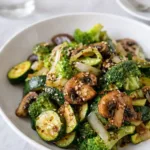
Hibachi Vegetables – Quick & Easy Japanese-Inspired Side
- Prep Time: 7 minutes
- Cook Time: 8 minutes
- Total Time: 15 minutes
- Yield: 4 servings
- Category: Side Dish
- Method: Sautéing
- Cuisine: Japanese-Inspired
Description
You’ll master crispy-tender zucchini, onions, mushrooms, and broccoli in just 15 minutes. Craving that Japanese steakhouse vibe for dinner? This is your go-to veggie party.
Ingredients
- 1 medium zucchini, cut into thick coins
- 1 small yellow squash (optional), sliced
- 1 small onion, cut into strips
- 1 cup cremini or white mushrooms, quartered
- 1 cup broccoli florets
- 2 tbsp neutral oil (canola or avocado)
- 2 tbsp unsalted butter, divided
- 2 cloves garlic, minced
- 1 tsp freshly grated ginger (optional)
- 2 tbsp low-sodium soy sauce (or tamari for gluten-free)
- 1 tsp honey or sugar
- 1/4 tsp kosher salt
- 1/4 tsp black pepper
- Toasted sesame seeds and sliced green onion, for topping
Instructions
1. Heat a large skillet, wok, or flat griddle over high until oil shimmers (flick in water—it should sizzle and vanish).
2. Add oil, then onion. Sauté for 1–2 minutes to let it sweeten.
3. Stir in mushrooms and broccoli. Sauté 2 minutes, letting the veggies caramelize and edges brown.
4. Add zucchini (and squash, if using). Cook another 2 minutes, flipping with a spatula for even searing. Don’t crowd the pan—work in batches if needed!
5. Push veggies aside; add 1 tbsp butter, garlic, and ginger. Stir for 30 seconds until fragrant.
6. Splash in soy sauce and honey. Toss all veggies to coat. Let sauce bubble and glaze for 1 minute.
7. Add remaining butter, salt, and pepper. Toss to melt and gloss the veggies. Taste and adjust seasoning if needed.
8. Transfer to a platter. Top with sesame seeds and green onions. Serve hot with your favorite rice, noodles, or dipping sauces.
Notes
For best results, use high heat and avoid overcrowding the pan to keep the vegetables crisp and caramelized.
Tamari makes this dish gluten-free.
Serve immediately for optimal texture.