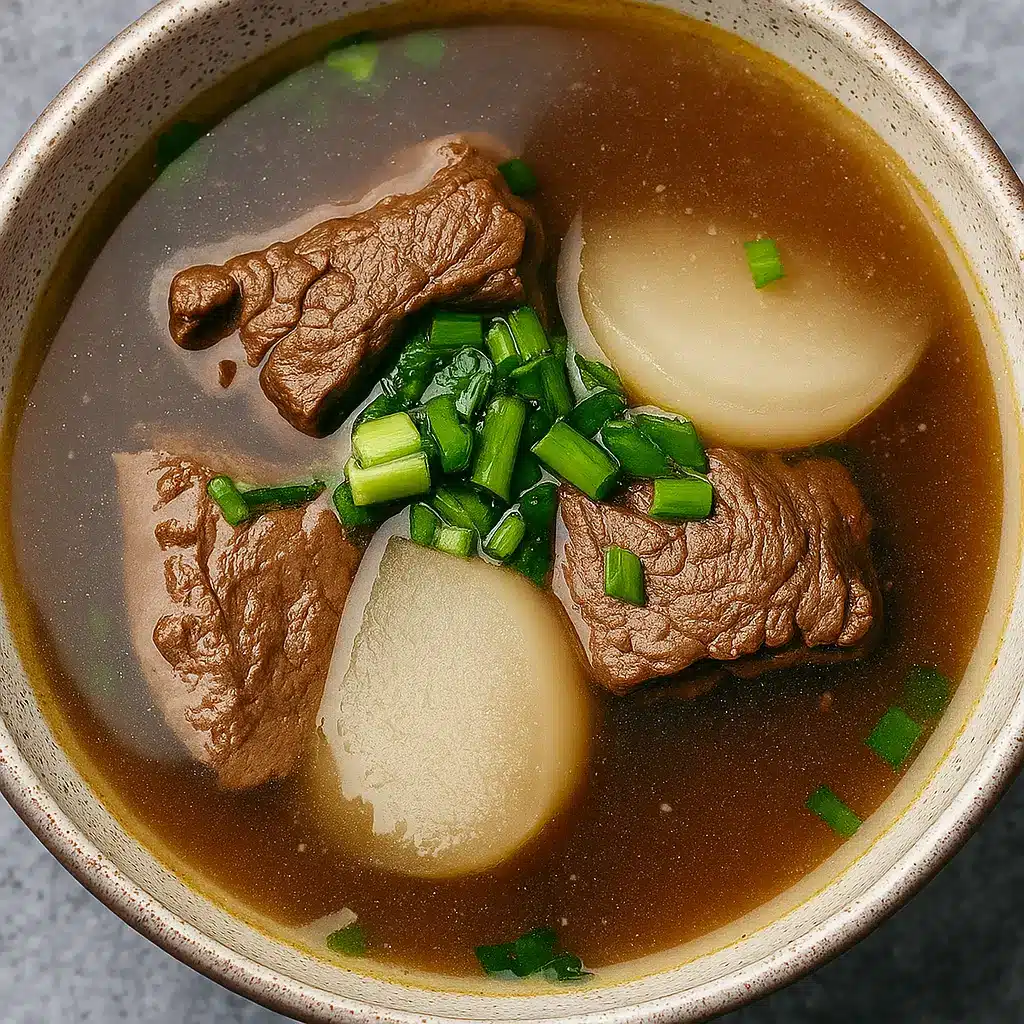
There’s something deeply soothing about a warm bowl of soup simmering on a chilly winter evening. This Korean Winter Soup Recipe—a halal twist on the traditional Galbitang—is pure comfort food at its finest. Made with tender beef short ribs, nourishing broth, and just the right touch of aromatics, this dish fills your kitchen with a gentle, savory fragrance that feels like a warm hug from the inside out.
As a mom of three and a proud Texas girl, I’ve learned that when the weather dips, my family starts craving something hearty yet wholesome. This soup has become one of our go-to dinners when life slows down a bit after the holidays. It’s not flashy or complicated, but it’s deeply satisfying—the kind of meal that lingers in memory long after the last spoonful.
Table of Contents
Why You’ll Love This Korean Winter Soup Recipe
Here’s why this recipe earns a permanent spot in your winter rotation:
- It’s simple but soulful. Every ingredient serves a purpose, from the onions that sweeten the broth to the ginger that adds gentle warmth.
- It’s family-friendly. Mild enough for little ones, yet rich enough to impress any guest.
- It’s nourishing. This broth is packed with protein, minerals, and that slow-cooked depth that only comes from love and time.
- It’s fully halal. This version uses halal beef short ribs and avoids any alcohol-based sauces or non-permissible ingredients.
What Does Korean Winter Soup Taste Like?
Imagine the tenderness of slow-simmered beef, floating in a clear, slightly salty broth layered with hints of garlic and ginger. The radish melts into silky softness, and every spoonful feels comforting without heaviness. It’s like a lighter cousin of beef stew—deeply flavorful but refreshingly clean.
This soup is traditionally served with steamed rice, and I can’t recommend that pairing enough. The rice soaks up the broth beautifully, making it a wholesome meal even on the busiest weeknight.
Ingredients You’ll Need for Korean Winter Soup Recipe
Before diving into the stove magic, let’s talk ingredients. When it comes to making a rich, clear, and comforting Korean Winter Soup Recipe, each ingredient has a specific role to play. This dish is built on simple, wholesome components that come together to create deep flavor and warmth—perfect for cozy evenings or those days when your body just needs a little extra care.
This recipe stays fully halal, so it’s made using halal beef short ribs and traditional seasonings that are gentle, nourishing, and family-approved. If you’ve ever enjoyed one of my hearty soups like Broccoli Potato Cheese Soup or Chickpea Potato Soup, you’ll love how this one blends comfort with clean simplicity.
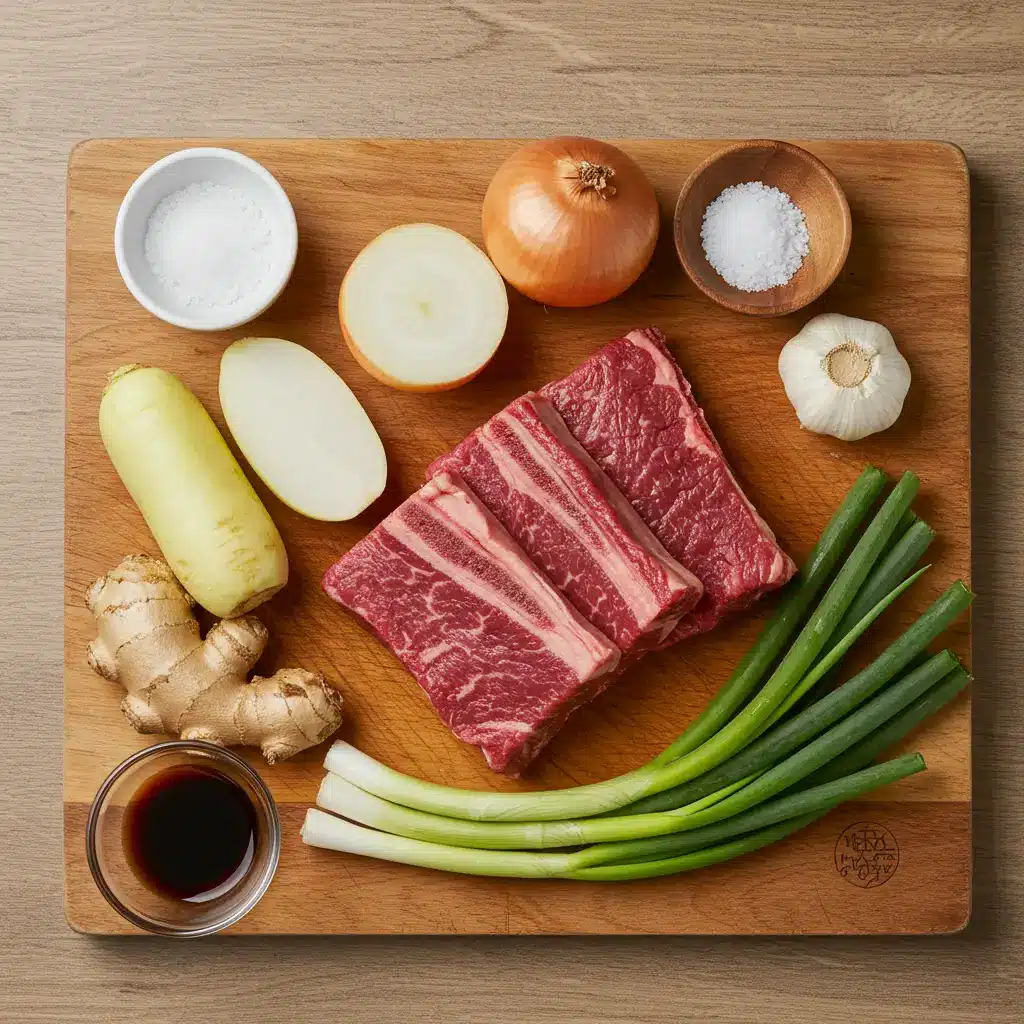
Here’s What You’ll Need:
1.5 lbs halal beef short ribs
The heart of this Korean Winter Soup Recipe. Choose meaty, well-marbled short ribs—they’ll give the broth body, richness, and a slightly buttery depth that no other cut can match. Make sure they’re halal-certified, and if possible, ask your butcher to cut them into smaller pieces for even simmering.
10 cups water
The base of your broth. You’ll want enough water to cover the ribs fully as they simmer down. This long simmer extracts all the natural collagen and flavor, turning plain water into a soul-warming elixir.
1 whole yellow onion (with skin, if organic)
Keeping the skin on adds a subtle golden tint and a touch of sweetness to your broth. I learned this trick years ago while testing clear soup bases—it’s one of those “grandma-level” kitchen secrets that makes all the difference.
2 green onions or 1 Korean leek (for broth)
Green onions lend freshness to balance the richness of the beef. Korean leeks, if you can find them, bring an earthy, slightly peppery note that deepens the overall flavor.
2 green onions or 1 Korean leek, sliced (for topping)
You’ll use this as a garnish at the end for a crisp, vibrant pop. It adds a burst of color and that signature Korean soup aroma that makes the first bite irresistible.
2 thick slices of ginger
A quiet but powerful player. Ginger provides warmth without overwhelming spice—it’s the kind of ingredient that makes your kitchen smell like comfort itself.
3–4 dried or fresh green onion roots (optional)
If you’ve got them, toss them in. They enrich the broth with subtle sweetness and a rustic touch that many traditional Korean home cooks swear by.
½ medium Korean radish, quartered and thinly sliced
Radish is a defining element in a traditional Korean Winter Soup Recipe. It soaks up the broth beautifully, softens as it cooks, and gives the soup its signature clean taste. If you can’t find Korean radish, daikon works well too.
2 tablespoons chopped garlic or 5–6 whole cloves
Garlic builds the flavor backbone of the soup—it’s savory, aromatic, and utterly comforting. Whole cloves add a mellow undertone, while chopped garlic creates a sharper kick.
1 tablespoon soy sauce for soup (guk ganjang)
This is a Korean-style soy sauce specifically for soups. Make sure it’s halal-certified (many brands are). It adds saltiness and umami without darkening the broth. Regular soy sauce can overpower the flavor, so if you can, go authentic here.
1½ teaspoons sea salt
Finish the seasoning with fine sea salt to bring out all the natural depth from the beef and vegetables. Taste and adjust to your preference—some like it a touch more savory.
Optional Add-Ins for Extra Nourishment
If you want to make your Korean Winter Soup Recipe even more filling, try adding:
- A few glass noodles (added during the last 5 minutes of simmering).
- Thinly sliced carrots or mushrooms for texture.
- A soft-boiled egg for protein and richness.
These additions are completely optional but work beautifully if you’re serving this soup as a standalone meal instead of a side dish.
Ingredient Tips
- Always soak your short ribs before boiling. This removes blood and keeps your broth beautifully clear.
- For the best aroma, use fresh ginger and garlic—powdered versions don’t do this soup justice.
- Don’t skip the onion skin (if organic). It’s an age-old Korean method that gives the broth a gentle golden hue.
- If you love creamy soups, try my Pumpkin Turmeric Ginger Soup next—it shares the same warming soul but with a sweet-spicy twist.
How to Make Korean Winter Soup Recipe
There’s something special about taking the time to make a slow-simmered soup from scratch. This Korean Winter Soup Recipe is one of those dishes that fills your home with warmth and comfort long before it reaches the table. The key is patience—letting the flavors mingle, the broth deepen, and the beef become melt-in-your-mouth tender.
This version is 100% halal, made with care and simplicity, just like a traditional Galbitang you’d find in a cozy Korean kitchen—but without any non-halal ingredients. Follow these easy steps, and you’ll have a pot of pure, nourishing comfort ready to serve.
Step 1: Prepare and Soak the Short Ribs
Start by placing your halal beef short ribs in a large bowl and covering them with cold water. Let them soak for about an hour to draw out any blood and impurities. This step is essential for achieving that beautifully clear, golden broth that makes this Korean Winter Soup Recipe so authentic.
If you’re short on time, you can flash-boil the ribs instead: place them in a pot of boiling water for 5 minutes, then discard the liquid, rinse the ribs, and start fresh.
While the ribs soak, get your aromatics ready:
- Slice the yellow onion in half (keep the skin on if it’s organic—it adds color and depth).
- Cut ginger into thick slices.
- Chop garlic, or keep whole cloves for a milder flavor.
- Gather green onions or Korean leeks for the broth base.
This prep stage is where the flavor foundation begins, so take a moment to appreciate the aromas—you’re already halfway to something special.
(For another deeply soothing option that starts with simmering aromatics, try my Three Sisters Stew Recipe next—it’s equally grounding and wholesome.)
Step 2: Build the Broth
Transfer the soaked ribs to a large stockpot and add:
- 10 cups of water
- The prepared onion halves
- Ginger slices
- Green onions or Korean leek
- Optional green onion roots (if you have them)
Bring the pot to a gentle boil over medium-high heat. Once it reaches a boil, you’ll notice foam rising to the top—use a ladle to skim it off. This keeps your broth light and crystal-clear.
Lower the heat to medium and let it simmer for about 15 minutes, continuing to remove any excess fat or residue. This process is what gives the soup its clean, beautiful finish.
Step 3: Slow Simmer to Build Depth
Reduce the heat to medium-low and let the broth simmer uncovered for 60 minutes.
This is where the transformation happens. The beef releases its richness, the aromatics infuse their delicate flavors, and your kitchen fills with that cozy, savory aroma that signals “something good is coming.”
You don’t need to hover over the pot, but peek in every now and then to skim any foam or oil from the top.
Here’s a tip I’ve learned from making countless winter soups—like my Broccoli Potato Cheese Soup—clear soups need gentle care. Rushing or over-boiling makes the broth cloudy, while patience rewards you with clarity and depth.
Step 4: Add the Radish for Sweetness and Balance
After an hour of simmering, it’s time to introduce one of the quiet heroes of this Korean Winter Soup Recipe—Korean radish.
Add the quartered, thinly sliced radish to the pot. This humble vegetable does more than add bulk—it subtly sweetens the broth and balances the richness of the beef. Simmer for another 20 minutes, until the radish softens and turns slightly translucent.
You’ll notice the broth taking on a gentle golden hue, with an aroma that’s clean, slightly sweet, and utterly inviting.
Step 5: Remove the Aromatics and Season
Using tongs or a slotted spoon, carefully remove all the aromatics: the onion halves, ginger slices, and green onion stalks. You’ll be left with a clear, fragrant broth and tender beef short ribs ready to fall off the bone.
Now comes the flavor adjustment. Add:
- 1 tablespoon guk ganjang (soy sauce for soup) — it’s lighter in color and saltier than regular soy sauce, ideal for this dish.
- 1½ teaspoons sea salt — start small and taste as you go.
- 1 tablespoon chopped garlic (optional, for extra depth).
Let everything simmer together for 10 more minutes, allowing the seasonings to fully integrate. The flavor should feel balanced—light yet savory, with a gentle warmth from the ginger and garlic.
(If you enjoy soups with layered flavor notes, you’ll also love my Spicy Butternut Squash and Sweet Potato Soup. It shares that same warmth but with a playful hint of spice.)
Step 6: Serve and Garnish
Now for the best part—serving your masterpiece.
Ladle the hot broth and tender beef ribs into deep bowls. Top each with freshly sliced green onions and a light sprinkle of black pepper. The contrast of the clear broth with the green onion garnish looks beautiful and adds just the right kick.
This Korean Winter Soup Recipe is traditionally served with steamed white rice, which helps soak up the broth and turns the meal into a comforting, complete experience.
If you want to take it a step further, serve with a small side of kimchi or pickled radish for that authentic Korean balance of flavors.
Step 7: Store, Reheat, and Enjoy Again
This soup gets even better the next day—the flavors deepen and mellow overnight.
- To store: Cool completely and refrigerate in an airtight container for up to 3 days.
- To freeze: Divide into freezer-safe containers and freeze for up to 3 months.
- To reheat: Warm slowly on the stove over low heat. Avoid boiling too long after seasoning to preserve that clean, clear flavor.
If you’ve ever enjoyed reheating something like my Chicken Noodle Soup with Egg Noodles, you’ll know soups like these tend to taste even richer the next day—almost as if the ingredients took time to get acquainted overnight.
Tips and Tricks for Perfect Korean Winter Soup
- Soaking makes the difference. Don’t skip the soaking step—it keeps your broth clean and clear.
- Use quality beef. The better the cut, the richer the broth. Look for well-marbled halal short ribs.
- Don’t rush it. A good Galbitang takes time; that’s where the magic happens.
- Skim often. Removing foam ensures a light, golden broth instead of a cloudy one.
- Store smart. This soup tastes even better the next day. Just refrigerate overnight and reheat gently.
Storage Tips
- Refrigerate: Up to 3 days in an airtight container.
- Freeze: Store in freezer-safe containers for up to 3 months.
- Reheat: Warm slowly on the stovetop—avoid boiling after seasoning to maintain the delicate flavor.
FAQs
Can I use another cut of beef?
Yes, but short ribs offer the best texture and flavor. If needed, use beef shank or oxtail for a similar richness.
Is this soup spicy?
Not at all. It’s mild and comforting, but you can add a pinch of chili flakes if you want heat.
Can I make this in a slow cooker?
Absolutely. Combine everything except the radish and seasoning, cook on low for 7–8 hours, then finish as directed.
What should I serve it with?
Steamed jasmine or sticky rice pairs beautifully. For a full Korean-inspired meal, try kimchi or sautéed spinach on the side.
Conclusion
This Korean Winter Soup Recipe brings warmth, nourishment, and comfort to your table. It’s the kind of dish that slows down the evening, filling your kitchen with the scent of simmering goodness and care. Whether you’re fighting off the chill or simply craving a taste of cozy tradition, this halal version of Galbitang is sure to become a family favorite.
Follow us on Pinterest for weekly slow cooker inspiration, or join the conversation over on our Facebook page where fellow food lovers share their favorite comfort meal.
Print
Korean Winter Soup Recipe: Hearty, Nourishing Comfort in Every Spoonful
- Prep Time: 15-30 minutes
- Cook Time: 90-100 minutes
- Total Time: 105-130 minutes
- Yield: 4 servings
- Category: Soup
- Method: Stove Top
- Cuisine: Korean
Description
This Korean Winter Soup Recipe is a hearty and nourishing dish made with tender beef short ribs, radish, and a deeply flavorful broth. It’s the perfect warming meal to enjoy during cold weather.
Ingredients
- 1.5 lbs beef short ribs
- 10 cups water
- 1 whole yellow onion, with skin (if organic)
- 2 green onions or 1 Korean leek (for broth)
- 2 green onions or 1 Korean leek, sliced for topping
- 2 thick ginger slices
- 3–4 dried or fresh green onion roots (optional)
- 1/2 medium radish, quartered into thin slices
- 2 tablespoons chopped garlic or 5–6 whole cloves
- 1 tablespoon soy sauce for soup (guk ganjang)
- 1 1/2 teaspoons sea salt
Instructions
1. Soak the short ribs in cold water for 1 hour to draw out excess blood. Alternatively, flash boil and discard the first liquid, then rinse and set aside.
2. While the ribs soak, prepare the aromatics: whole yellow onion with skin, ginger slices, chopped garlic, green onions, and optionally green onion roots.
3. In a large stock pot, combine the soaked ribs, prepared aromatics, and 10 cups of water. Bring to a boil over medium-high heat.
4. Once boiling, reduce heat to medium and skim off any foam that rises to the top to ensure a clear broth.
5. Lower heat to medium-low and simmer the broth uncovered for 1 hour. Continue to skim foam as needed.
6. Add the radish slices and continue simmering for an additional 20 minutes, until the radish is soft and infused with flavor.
7. Remove and discard all aromatics from the broth. Add soy sauce, sea salt, and additional chopped garlic. Simmer for 10 more minutes.
8. Serve hot, garnished with sliced green onions and freshly ground black pepper. Pair with rice for a complete meal.
Notes
Soaking or flash boiling the ribs removes impurities for a clearer, cleaner-tasting broth.
Use organic onion with skin for enhanced color and nutrients in the broth.
Radish adds a subtle sweetness and balances the richness of the ribs.
For a stronger flavor, let the soup sit overnight and reheat gently before serving.
Garnishing with black pepper and fresh green onions just before serving adds a fresh final touch.
Serve with steamed rice and kimchi for a traditional Korean meal experience.