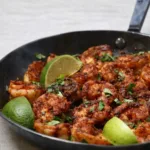
Description
In this flavor-packed recipe, fresh shrimp are coated with a spicy blackening seasoning and pan-seared in butter in a cast iron skillet until they are tender, juicy, and simply amazing. It’s the perfect main course or appetizer and takes just minutes to make.
Ingredients
- 1.5 pounds extra-large shrimp, peeled, deveined, tails removed
- 5 tablespoons unsalted butter, divided
- 2 teaspoons paprika
- ½ teaspoon cayenne pepper
- ½ teaspoon ground black pepper
- ½ teaspoon dried oregano
- ½ teaspoon ground dried thyme
- ½ teaspoon ground cumin
- 1 teaspoon garlic powder
- 1 teaspoon onion powder
- 1 teaspoon brown sugar
- 2 teaspoons kosher salt
- Optional garnishes: 1 tablespoon chopped parsley, juice of ½ lime
Instructions
1. Combine all seasonings and spices in a small bowl and stir well to make the blackening seasoning. Set aside.
2. Place the shrimp in a large shallow dish and blot dry with paper towels.
3. Melt two tablespoons of butter and use a pastry brush to coat the shrimp generously. Sprinkle half the seasoning mix over the shrimp, flip, and repeat with remaining butter and seasoning.
4. Preheat a cast-iron or non-stick skillet over medium-high heat. Add the remaining three tablespoons of butter.
5. When the butter is melted and skillet hot, add shrimp in a single layer. Cook undisturbed for 1 minute.
6. Flip shrimp and cook for another minute or until opaque and seasoning is blackened and crusty.
7. Remove skillet from heat and quickly transfer shrimp to a serving dish to prevent overcooking.
8. Optional: garnish with chopped parsley and a splash of lime juice. Serve immediately with your favorite sauce.
Notes
Adjust the cayenne pepper to control the heat level.
Use extra-large shrimp (21–24 per pound) for best results; smaller shrimp may overcook.
Don’t crowd the skillet—cook in batches if needed to ensure a good sear.
This recipe creates smoke; use proper ventilation or try making it on the grill.
Olive oil can be used in place of butter, though butter adds more flavor.
Cook shrimp just until they form a loose “C.” A tight “C” means they are overcooked.