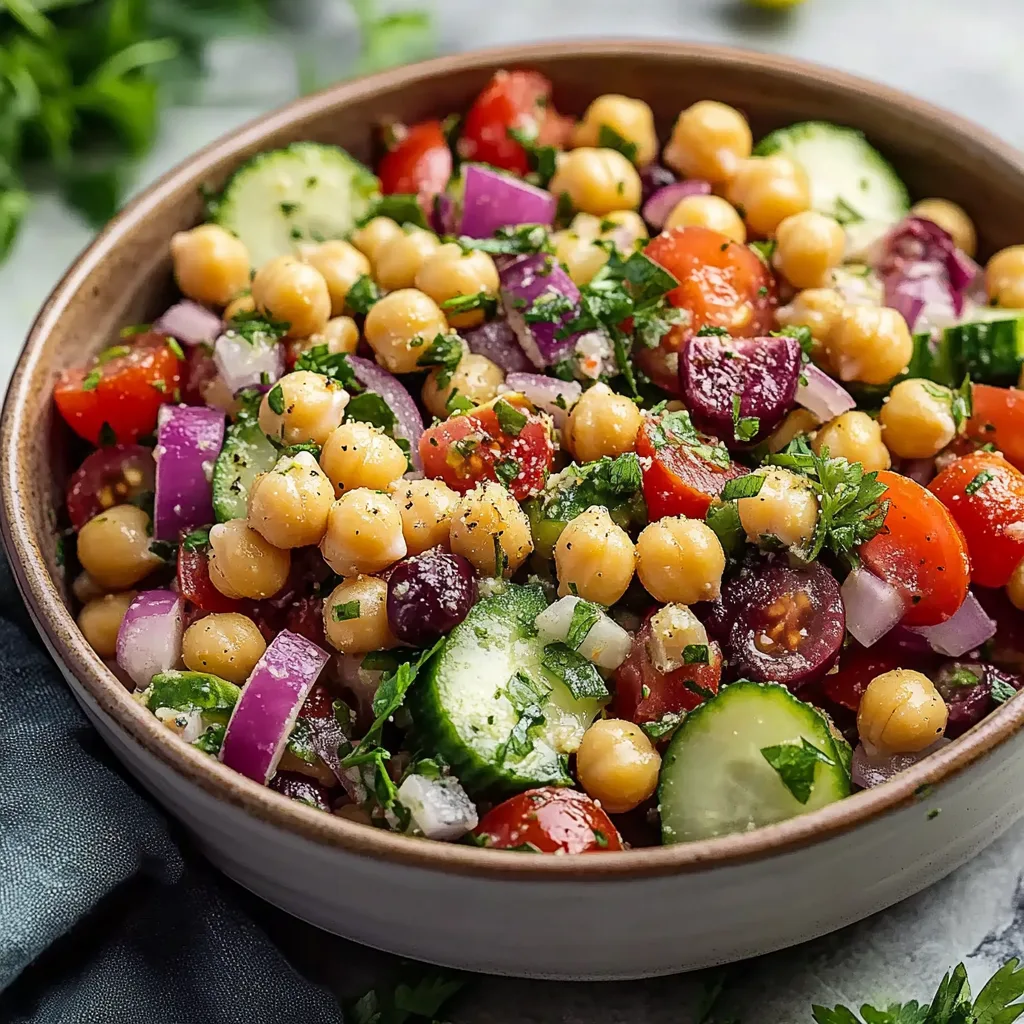
Classic Mediterranean Chickpea Salad is more than just a meal—it’s a vibrant celebration of fresh, sun-soaked flavors that feel like a holiday for the senses. Imagine the slight crunch of cucumbers, the tang of ripe tomatoes, the richness of crumbled feta, and the aromatic depth of roasted olives coming together in a single bite. This salad doesn’t just satiate hunger; it nourishes, comforts, and brings a piece of the Mediterranean coastline into your kitchen. Whether you’re a longtime fan or new to this iconic dish, its simplicity and bold tastes are bound to leave you reaching for seconds. What makes it truly standout? The way each ingredient carefully plays its role, balancing textures and savory contrasts with bright, herbaceous notes.
In a world full of complex recipes, the Classic Mediterranean Chickpea Salad reminds us that clarity comes with intention. Chickpeas—the star of this dish—offer a gentle, earthy base that lifts the vibrant herbs and tangy dressings into harmony. This dish isn’t just about what you see on the plate but about crafting a moment of mindful eating, where every sprinkle of salt and swirl of olive oil grounds you in the present. Perfect for summer afternoons or any time you crave a burst of vitality, this salad invites you to savor, pause, and nourish your body with ingredients that work in sync with it, not against it.
The beauty of the Classic Mediterranean Chickpea Salad lies in its simplicity—making it ideal for the busy homemaker, the mindful eater, or anyone craving something deliciously effortless. What continues to draw people back to this dish is the dynamic symphony of textures, the way feta melts slightly into the dressing, and how the herbs add a brightness that dances across your palate. Whether served as the main event or a side, it’s a testament to the power of natural ingredients working in harmony, offering a meal that feels both indulgent and outrageously good for you.
What is Classic Mediterranean Chickpea Salad?
Rooted in the time-honored traditions of Mediterranean cuisines, the Classic Mediterranean Chickpea Salad is a refreshing, protein-packed dish that bridges the gap between a hearty main meal and a vibrant side. Its origins can be traced to the coastal regions of Greece and the Levant, where chickpeas were historically one of the most accessible and versatile protein sources. This salad is essentially an homage to the power of wholesome, simple staples like chickpeas, feta cheese, and fresh herbs, effortlessly brought together with a zesty olive oil and vinegar dressing.
At its core, the dish revolves around a few essential components: tender, well-seasoned chickpeas as the foundation, layered with crisp cucumbers, juicy tomatoes, and pitted olives for added depth. Fresh herbs like oregano, parsley, and cilantro give it a lively, aromatic edge, while crumbled feta adds a creamy richness that beautifully balances out the tanginess of the dressing. The star of the flavor profile is the dressing, a blend of red wine vinegar, olive oil, and a touch of sweetness from honey and mustard, grounded by warm spices like cumin and oregano.
What makes this dish truly remarkable is its ability to feel both rustic and refined—at once comforting and exciting. The ingredients are unpretentious, but their combination gives rise to an experience that feels gourmet without a large kitchen equipment list. For those who emphasize clean eating, it’s a testament to how natural, unprocessed ingredients can harmonize into something so deeply satisfying and nourishing.
Reasons to Try Classic Mediterranean Chickpea Salad
There are many compelling reasons to give this dish a try. First and foremost, it’s incredibly healthy. Chickpeas are a powerhouse of plant-based protein and fiber, making this salad a filling, digestion-friendly choice that aligns with many dietary principles, from wellness-focused regimens to general clean eating habits. Beyond its nutritional profile, this dish is also ultra versatile—its base can be customized to suit your preferences or what you happen to have in your kitchen.
What further makes this salad an appealing choice is its simplicity and speed of preparation. From start to finish, you’ll need less than an hour and a half, with the majority of the time just spent marinating and resting. It’s a great recipe for meal prepping, as the flavors actually deepen and develop in the refrigerator over time. This also makes it an ideal dish for meal planning, particularly when hosting friends or putting on a quick, nourishing spread for family even on the busiest of days.
Another reason to love this salad is the way it caters to a wide array of palates. Love kicky, bold flavors? Add more red pepper flakes to give it a spicy edge. Prefer something heartier? Toss in some avocado or grilled zucchini. Want to keep it light and fresh for a summer lunch? This salad is also perfect for that. Its adaptability means it easily becomes a staple in your meals, no matter your recipe preferences or the time of year.
Ingredients Needed to Make Classic Mediterranean Chickpea Salad
15 oz dried or canned chickpeas (Goya recommended for consistency)
1 whole cucumber, diced into 1/2-inch cubes
1/2 cup red onion, finely diced into 1/4-inch pieces
1 pint of fresh tomatoes, halved lengthwise
6 oz pitted kalamata olives
6 oz crumbled feta cheese (President brand is preferred for a quality texture)
1.5 tbsp fresh parsley, minced (use a microplane or the coarsely ground blade of your food processor)
1.5 tbsp fresh cilantro, coarsely chopped
1.5 tbsp minced garlic (you can either press it or finely chop it by hand)
1/2 tsp red pepper flakes (leave this out if you prefer a milder finish)
1/4 tsp salt (or to taste, depending on the saltiness of your feta and olives)
1/8 tsp freshly ground black pepper
For the zesty dressing:
2.5 tbsp red wine vinegar
1 tbsp freshly squeezed lemon juice (a splash more if available)
3 tbsp olive oil (Pompeian Robust is a favorite for its peppery profile)
1 tsp Dijon mustard (this helps emulsify the dressing for better texture)
2 tsp raw or wildflower honey (offers a natural, subtle sweetness)
1/2 tsp dried oregano (use crushed rosemary if oregano is unavailable)
1/2 tsp ground cumin (ideally sourced from freshly ground cumin seeds for deeper flavor)
Instructions to Make Classic Mediterranean Chickpea Salad – Step by Step
Step 1:
Begin by preparing your vegetables—start by peeling the cucumber, then cut it into 1/2-inch pieces. You want the cubes to be evenly cut so they maintain shape and evenly absorb the dressing. Next, take the red onion and carefully dice it into 1/4-inch pieces. Smaller cubes help the onion mellow quickly in the dressing and integrate evenly into the salad. Make sure to work efficiently here, as raw onions can become a tear source after a while, so completing this step early in the salad preparation will make the rest of the process more comfortable.
Step 2:
Now, handle the tomatoes. Use a sharp paring knife to carefully halve them lengthwise so you can remove the seeds if desired. While optional, seedless tomatoes can help reduce excess moisture in the salad, which can otherwise make the dressing a bit watered down. Toss the seeds or set aside for another use. Next, prepare your kalamata olives. If they’re not already pitted, take the time to remove the pits manually with a pair of kitchen tweezers—they’re notoriously tough to remove with a knife and can often split the olive in the process, which isn’t appetizing. This step is especially important if you plan on serving the salad as an appetizer or a main dish on a platter.
Step 3:
Move on to mincing your herbs and garlic. Combine the fresh cilantro and parsley in a small knife or use a mortar and pestle to pound the mixture until it forms a loose paste. The garlic can be added in this step for greater flavor synergy—its natural oils will better release into the herbs, both enhancing the dress and making it easier to distribute evenly throughout the dish. Chop the garlic finely by hand or press it with a garlic press. Once you’ve done this, you’ll notice a more potent garlic aroma forming, which is a good indication that the spices will carry more of that earthy undertone into the salad.
Step 4:
Next, work on the feta cheese. It should be crumbled not cut. Take the cheese block and use your fingers—starting from the corners—to break it into irregular, bite-sized chunks. This texture makes for a more visually appealing dish, with feta sitting on top of the chickpeas than blending into them. It also ensures the feta doesn’t melt into the dressing, keeping a distinct texture for each ingredient. Take your time with this step, as it more naturally releases the cheese’s flavor when crumbled by hand instead of shredded by knife.
Chef’s Tips for a Perfect Result
- Drain and rinse canned chickpeas promptly: Canned chickpeas often have a sodium residue that can make the final dish overly salty if not rinsed thoroughly. Use cold water and run the chickpeas under the stream until they are clean and dry on the surface.
- Prep your vegetables early: Give your tomatoes and cucumbers a bit of time to sit with salt if you want them to express some water. This step ensures that no added water is reintroduced unexpectedly into the salad after the dressing is applied, which can dilute the flavors.
- Adjust the dressing to your taste: Start with the amount of dressing listed in the recipe, then adjust based on your preference. Some people like a lighter dressing, while others love a more saturated and assertive flavor. Keep a little extra in reserve.
- Use full-bodied ingredients for optimal flavor: A robust olive oil like Pompeian Robust can really elevate the dish to a gourmet level. Similarly, fresh lemon juice (not bottled) gives a sharp, clean tang that bottled varieties often lack.
- Give the salad time to rest: While you can technically eat this immediately, it really benefits from a few hours in the refrigerator. Consider making it a day ahead for the best tasting experience—chickpeas will soften slightly, and dress will penetrate deeper into the texture of the ingredients.
Variations and Substitutions
Lets explore some delightful twists on the classic:
- Gluten-Free Alternative: Use certified gluten-free feta cheese and ensure the dressing ingredients are also gluten-free. Sub the canned chickpeas with freshly cooked ones made with gluten-free ingredients if necessary.
- Vegan Option: Swap the feta for a vegan crumble, such as a cashew or tofu-based option. Replace honey with a small amount of maple syrup so the recipe remains vegan.
- Low-Carb Version: Limit or exclude the added sweetener. Boost the herbs slightly to add volume without carbohydrates, and consider including a handful of chopped dill or parsley for extra greenery and crunch.
- Budget Swap: Use locally grown southern tomatoes instead of imported ones—they are often less expensive and can add a more natural, fresh flavor unique to your region.
- Protein Boost: For a more substantial meal, add a source of lean protein like grilled chicken or canned tuna drained and flaked into the salad for extra heartiness.
How to Serve and Pair
Pair this vibrant Classic Mediterranean Chickpea Salad with crusty whole wheat or sourdough bread for a refreshing, protein-rich snack or lunch. Serve it alongside grilled fish, shrimp, or even falafel for a full Mediterranean-inspired meal. If you want to lean into the salad’s zesty profile, consider garnishing with a few drops of extra virgin olive oil and a sprinkle of za’atar before serving.
When it comes to presentation, opt for white or natural-toned serving bowls or wooden boards to let the colorful ingredients contrast beautifully. If you’re entertaining, consider arranging it in a mosaic-style layout using a large platter for an eye-catching and inviting appearance. For gatherings, keeping the portions separate until serving preserves the quality and texture of each component, especially if the salad will be sitting out for a while.
This dish is also an excellent side to include at summer barbecues or backyard parties. It pairs especially well with other light Mediterranean dishes like hummus, baba ganoush, and tabbouleh. The salad can be frozen nicely at colder weather or prepped ahead of time for those who enjoy having a quality, plant-based meal ready for anytime.
Storage and Reheating
Refrigerator
Keep your Classic Mediterranean Chickpea Salad in an airtight container in the coldest part of the refrigerator for up to four days. This is typically in the back of the main compartment rather than the door area. Stir the salad gently before serving to ensure the ingredients have not settled into layers, and do a simple taste test to adjust the seasoning if needed. The chickpeas may slightly firm up after storage, so adding a splash of your reserved dressing back in may help restore their creamy texture.
Freezer
It is not recommended to freeze this salad for long periods, as the texture of the vegetables and herbs can suffer. Freezing may also affect the crumbled feta, making it more likely to clump or become rubbery. While you could try freezing it in a tightly sealed container for up to one month, monitor it closely and use it when you prefer a less fresh tasting version, perhaps incorporating it into cooked dishes like stews or grain bowls after thawing.
Room Temperature
If you choose to serve this salad immediately without refrigeration, it’s best to do so within 1–2 hours of preparation. The dressing, especially when made with fresh lemon juice and olive oil, can separate and become a bit runny in warm environments if left out too long—this affects both the flavor and the moisture content of the salad ingredients. Consider serving it in smaller batches and prepping just enough for each meal or event to maintain optimal quality.
Reheating
This salad is best served cold. However, if you choose to serve it at room temperature, simply remove from the fridge, let it sit for 10–15 minutes, and give it a stir before serving. If taken out in separate portions, laying them in a shallow dish with a paper towel underneath can help absorb any excess moisture from sweating, helping you maintain a more visually pleasing, dry texture. You can also warm it gently (not hot) in the oven or a double boiler, which helps soften feta slightly and restore the salad to a more tender, moist state. However, this process is not necessary, and the cold version is the preferred version in most Mediterranean culinary traditions.
Nutritional Values
- Calories: 1275 kcal
- Protein: 34 g
- Carbohydrates: 160 g
- Fat: 70 g
- Fiber: 30 g
Approximate values.
Frequently Asked Questions
Can I substitute garbanzo beans with another bean for this salad?
Yes, you can use any firm bean like cannellini or green lentils as a substitute. However, chickpeas offer a unique, nutty flavor that enhances the Mediterranean profile, so any substitute may alter the taste slightly.
How do I know when the salad is done?
The salad is ready when all the ingredients are well coated in the dressing and the flavors have settled and mellowed. It should have a consistent texture with the dressing emulsified, and the flavors should taste balanced and vibrant but not overpowering.
Why do the red onions become watery after marinating in the dressing?
Red onions naturally release water, which is why they become slightly transparent after marinating. To reduce this, you can gently press them with a paper towel after marination to remove excess moisture and achieve a crisper texture.
Can I make the dressing ahead of time?
Yes, the dressing can be made up to a day in advance and stored in an airtight container in the refrigerator. Just stir it well before adding to the rest of the salad ingredients, as the dressing may separate over time.
Can I serve this salad warm or cold?
While it’s best served at room temperature or cold, you can also gently warm it if you prefer a warmer version. Just be careful with the feta cheese, which may melt slightly if overheated, changing the texture of the dish.
Conclusion
The Classic Mediterranean Chickpea Salad offers a perfect blend of simplicity and sophistication, making it a dish that’s as nutritious as it is satisfying. Its vibrant mix of textures, fresh herbs, and perfectly balanced dressing make it a deliciously versatile addition to any meal plan. Now is the perfect time to prepare this dish and experience the joy of putting together a light, nourishing meal that brings a touch of the Mediterranean into your home. The true magic lies in the combination of ingredients and the effortless balance of flavors, making each bite an unforgettable culinary journey.
Print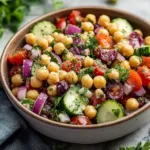
Classic Mediterranean Chickpea Salad: A Fresh, Flavorful Light Dish
- Prep Time: 15
- Total Time: 15
- Yield: 4 servings
- Category: Dinner
- Method: Tossing
- Cuisine: Mediterranean
- Diet: Vegetarian
Description
A vibrant, protein-rich salad celebrating Mediterranean flavors with chickpeas, crisp veggies, tangy feta, and aromatic herbs. Perfect for summer or a quick meal.
Ingredients
2 cups cooked chickpeas (or 1 can, drained)
2 medium cucumbers, diced
1 large tomato, chopped
1/2 cup pitted olives
1/4 cup crumbled feta cheese
2 tbsp chopped fresh parsley
1 tbsp chopped fresh oregano
1 tbsp olive oil
1 tbsp red wine vinegar
1 small red onion, finely chopped (optional)
Instructions
Combine chickpeas, cucumbers, tomatoes, olives, red onion (if using), parsley, and oregano in a large bowl.
Whisk olive oil and vinegar in a small bowl. Pour dressing over the salad and toss gently to coat.
Stir in feta cheese just before serving to avoid softening it.
Notes
For extra brightness, add a squeeze of fresh lemon juice.
Store in an airtight container in the fridge for up to 3 days.
Substitute feta with halal goat cheese or omit for vegan version.