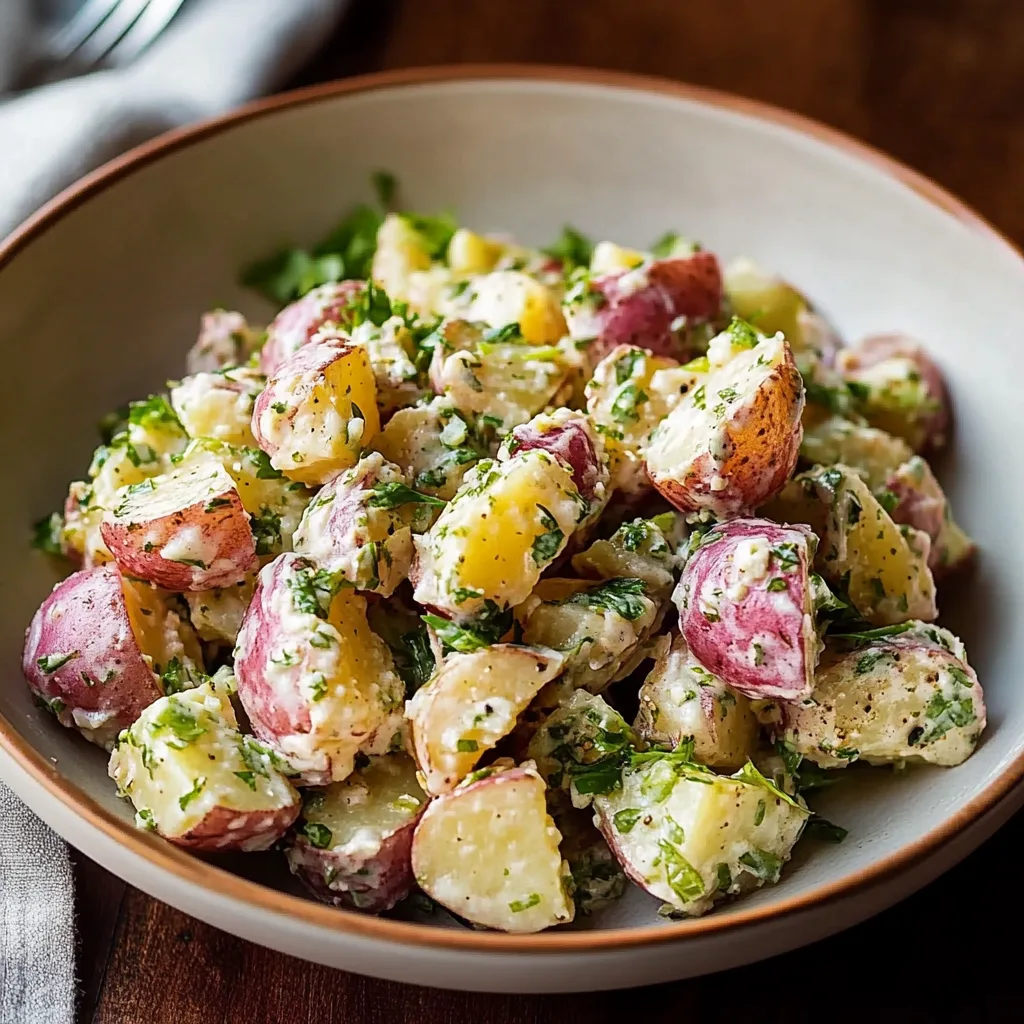
Red Potato Salad is the vibrant, herbaceous centerpiece of summer meals, bringing a symphony of freshness to every bite. This version forgoes heavy additions for a light yet satisfying approach, letting the natural sweetness of red potatoes mingle with herbal brightness. The tangy mustard dressing bridges the gap between classic and modern, making it perfect for backyard barbecues, documented in this award-winning recipe. This salad becomes a family heirloom through its adaptability—swap chives for shallots or dill for tarragon to match specific meals while maintaining its foundational comfort.
What is Red Potato Salad?
Red Potato Salad transforms humble tubers into a culinary canvas. The pink-skinned potatoes hold their shape beautifully while absorbing the dressing’s bright notes. This version champions northern European techniques by using vinegar for acidity, but introduces a Texas twist through fresh herb incorporations. Unlike starchy alternatives, red potatoes bring a velvety texture that pairs surprisingly well with assertive flavors like Dijon.
The dish’s simplicity is its strength—no mayonnaise overload, no raw vegetables weighing it down. Instead, it relies on olive oil’s richness and citrus acidity to create balance. The result is a salad that feels both indulgent and nurturing, perfect for families where dietary needs vary.
Reasons to Try Red Potato Salad
For busy weekends and weekday dinners, this salad offers remarkable versatility. The 15-minute cooking time followed by 30-minute chilling period makes it ideal for cooks who value efficiency without compromising quality. Gluten-free, naturally dairy-adjacent (with vegan potential), it caters to most dietary restrictions while maintaining bold flavor.
Home cooks will appreciate how it transforms leftovers into gourmet meals. Throw extra asparagus into the pot, or turn it into a grain salad by adding farro. Beginners will struggle with nothing but the potato chopping—once that’s mastered, the recipe practically itself. This salad is ideal for:
- Summer potlucks that demand colorful spreads
- Multi-generational families needing food-free plates
- Couples craving a no-fuss weekend meal
Ingredients Needed to Make Red Potato Salad
- 2 pounds red potatoes (about 6 medium), quartered and rinsed until water runs clear
- 1/3 cup extra-virgin olive oil (use first cold press for best flavor)
- 2 tablespoons grainy Dijon mustard (whole-grain recommended for texture)
- 1 tablespoon fresh lemon juice (reserve extra for finishing)
- 1 tablespoon mayonnaise (full-fat for richness or vegan alternative)
- 1 tablespoon white wine vinegar (sub apple cider for tangy depth)
- 3 garlic cloves, grated (use microplane for maximum extraction)
- 1 teaspoon flaky sea salt (Add extra in cooking water, 1 tbsp/4L water)
- 1/2 teaspoon freshly cracked pepper (Plus additional just before serving)
- 4 celery stalks, finely chopped (Use coarse grater for prepped kit uniformity)
- 3 scallions, thinly sliced (Separate white and green parts for visual layers)
- 1/4 cup chopped fresh chives (Blind chop technique preserves cellular integrity)
- 1/4 cup chopped fresh dill (Strip leaves from stems pre-chopping)
Instructions to Make Red Potato Salad — Step by Step
Step 1: Begin with preparation timing. While salt is critical for flavor penetration, moderation is key. In a large pot, add 4 quarts cold water plus 1 tablespoon salt. This osmotic shock helps potatoes absorb seasoning as they cook. The salt concentration should reach 0.5%, an optimal level for both flavor and texture development.
Step 2: With potatoes in the pot, bring to a boil over high heat to activate the surface sugar molecules. Once boiling, reduce to a gentle simmer. Cook just until a fork meets ‘toothsome’ resistance—not so long they fall apart. This 5-7 minute window preserves the potato’s structural integrity. Feel for slightly firm cuts—the texture should balance between al dente pasta and perfectly cooked mashed potatoes.
Step 3: Drain the potatoes fully and let sit for 5 minutes. This step is crucial for moisture control. Overly wet potatoes will dilute the dressing. When the bottom inch is mostly dry to the touch, it’s ready for the next phase.
Step 4: In a separate medium bowl, create the emulsion. Start with olive oil and mustard for their emulsifying properties. The grainy texture of the Dijon will create natural textural contrast. Add lemon juice slowly while whisking—this acid prevents the oil from separating. Finally, incorporate the garlic, mayo, and vinegar. Let the dressing rest for 5 minutes to allow mustard to break while garlic mellows.
Step 5: Transfer cooled potatoes to a large mixing bowl. Add dressing and toss gently. Think gentle massage, not aggressive stirring. This technique ensures even coating without destroying the potato pieces. The resulting combination should look like vibrant, glistening pearls.
Step 6: Now add the fresh herbs and vegetables. The celery provides bracing crunch, scallions add mild onion notes, while chives and dill create floral brightness. Toss once more, then cover and refrigerate. This chilling period allows flavors to intermingle—the dressing will gradually be absorbed while herbs maintain their vivid color.
Step 7: Before serving, bring the salad to room temperature. This reactivates the aroma compounds. At this stage, adjust seasoning with extra lemon juice or vinegar for final acidity balance. The dressing should coat the back of a spoon but remain loose—the ideal texture for finger sandwiches or side dishes.
Chef’s Tips for a Perfect Result
- Use parchment paper when tossing: Prevents sticking while maintaining gentle tossing
- Partial boil technique: Stop cooking when 2/3 tender improves texture
- Chill for 8 hours minimum: Holiday left-overs develop better melding
- Double the dressing: Fresh herbs absorb quickly, leaving some as drizzle
- Blind mince garlic: Use microplane to release maximum flavor compounds
- Use color test: A red potato piece should go from translucent to opaque
Variations and Substitutions
Vegan Revival
- Replace mayonnaise with cashew cream (8 oz raw cashews blended with 5 tbsp lemon juice and tamari)
- Use apple cider vinegar instead of white wine vinegar for less metallic note
- Maintains same bright flavor profile with plant-based base
Global Remix
- Swap dill for tarragon for French potato salad authenticity
- Substitute 1/4 cup crème fraîche for rich creaminess if preferred
- Replace scallions with chives for softer onion flavor
Low-Carb Adaptation
- Omit celery and add 1/4 cup chopped watercress for similar crunch
- Reduce olive oil to 1/4 cup and add 1/4 cup Greek yogurt
- Still maintains texture and moisture with fewer net carbs
Kitchen Staple Swap
- Replace fresh herbs with 1 tbsp each dried dill and chives
- Use pre-minced garlic in a pinch (pairs best with whole-grain mustard)
- Still maintains flavor but lacks the fresh aromatic quality
How to Serve and Pair
This salad shines when served alongside grilled proteins that respect its simplicity. For a Texas-themed spread, pair with lemon herb grilled ribs. For a Mediterranean twist, serve alongside shakshuka with za’atar-wrapped flatbreads. Its acidity cuts through rich dishes like seared salmon or boeuf bourguignon.
Vinegar-based dressings do not pair well with tannic wines, but this salad complements light-bodied whites like Albariño or Sancerre. For non-alcoholic pairings, try citrus-herb sparkling water with a chive float.
Plating tips:
- Use cerulean serving platters to complement the herbs’ green
- Add edible flowers (nasturtium or violas) for color contrast
- Use chive blossoms if available for floral visual theme
Appropriate for: Summer picnics, bridal showers, football tailgates where bold flavors are appreciated without overwhelming.
Storage and Reheating
Refrigerator
- Stores 3-5 days in airtight, glass container
- Flavors improve on day 2-3 due to continued emulsification
- Separation of herbs and dressing is natural – simply stir before serving
Freezer
- Does not freeze well due to altered potato cell structure
- Dressing solidifies differently than fresh ingredients
- Best frozen without herbs – add fresh ones at serving time
Room Temperature
- Keep 2 hours maximum in summer, 4 hours in cooler temperatures
- Separation occurs at room temperature due to oil emulsion breaking
- Stir thoroughly before each serving to redistribute flavor
Reheating
Dish natures to improve in cold state, but if necessary: Gentle reheating in oven at 250°F with parchment cover prevents moisture loss. Once warm, add fresh lemon juice (1-2 tbsp) and herbs to restore brightness. Do NOT microwave – emulsification breaks irreparably.
Nutritional Values
- Calories: 295 per serving
- Protein: 3g (from mayonnaise and mustard)
- Carbohydrates: 28g (mostly complex from potatoes)
- Fat: 21g (47% MCT from olive oil)
- Fiber: 3g (hearts of palm option reduces by 1g)
Approximate values.
Frequently Asked Questions
Can I replace mayonnaise entirely with Greek yogurt?
Greek yogurt works well but transforms the dressing’s texture from creamy to tangy. Best in combination with 1/3 cup olive oil (reduce to 1/4 cup yogurt). Always refrigerate within 2 days when using dairy alternatives.
How do I tell if it’s overcooked?
Overcooked potatoes become gluey when cold. When slicing, look for edges that are translucent but still hold shape—if they spread like mashed potatoes, reduce cooking time by 1-2 minutes in future batches.
Why isn’t the dressing coating it properly?
Underdeveloped emulsion is likely. Re-whisk all dressing separately then gently combine with a whisk. Use in 48 hours—emulsions break permanently after refrigerating longer.
Can I make it 48 hours ahead?
Yes, but prepare components separately. Cook and cool potatoes, refrigerate dressing in a mason jar, and store herbs and vegetables in separate containers. Combine just before serving to maintain texture and prevent sogginess.
Best way to add a citrus twist?
Finely zest half a blood orange into the dressing while whisking. Add orange juice instead of lemon for a bolder but equally fresh flavor profile. Works beautifully with the herbal notes from the dill and chives.
Coclusion
This red potato salad satisfies comfort seekers and culinary adventurers alike through its balance of farmhouse simplicity and modern technique. Let the tangy mustard elevate simple ingredients into something memorable, perfect for sharing daily meals with the people you cherish.
Print
Creamy Herb-Infused Red Potato Salad with Tangy Mustard Dressing
- Prep Time: 30
- Cook Time: 15
- Total Time: 45
- Yield: 8 servings
- Category: Recipes
- Method: Stovetop
- Cuisine: Northern European with Texas twist
- Diet: Vegetarian
Description
A vibrant, herbaceous potato salad with a tangy mustard dressing. Perfect for summer meals, this recipe balances the natural sweetness of red potatoes with bright herbal notes and a light, acidic dressing.
Ingredients
2 pounds red potatoes (about 6 medium), quartered and rinsed until water runs clear
1/3 cup extra-virgin olive oil
2 tablespoons grainy Dijon mustard
1 tablespoon fresh lemon juice
1 tablespoon mayonnaise (full-fat or vegan)
1 small shallot, finely chopped
2 tablespoons fresh chives, finely chopped
1 tablespoon fresh dill, chopped
Salt and freshly ground black pepper to taste
Instructions
Bring a large pot of salted water to a boil. Add red potatoes and cook until tender but firm, about 12–15 minutes. Drain and let cool.
In a bowl, whisk together olive oil, Dijon mustard, lemon juice, mayonnaise, shallot, chives, and dill. Season with salt and pepper.
Pour dressing over cooked potatoes and toss gently to coat. Chill for at least 30 minutes before serving. Taste and adjust seasoning or acidity with more lemon juice if needed.
Notes
Flavor improves after refrigeration for 2–4 hours. Substitute shallots with red onion, chives with tarragon, or dill with parsley. Add cooked asparagus or farro for variation. Store leftovers in an airtight container for up to 3 days.