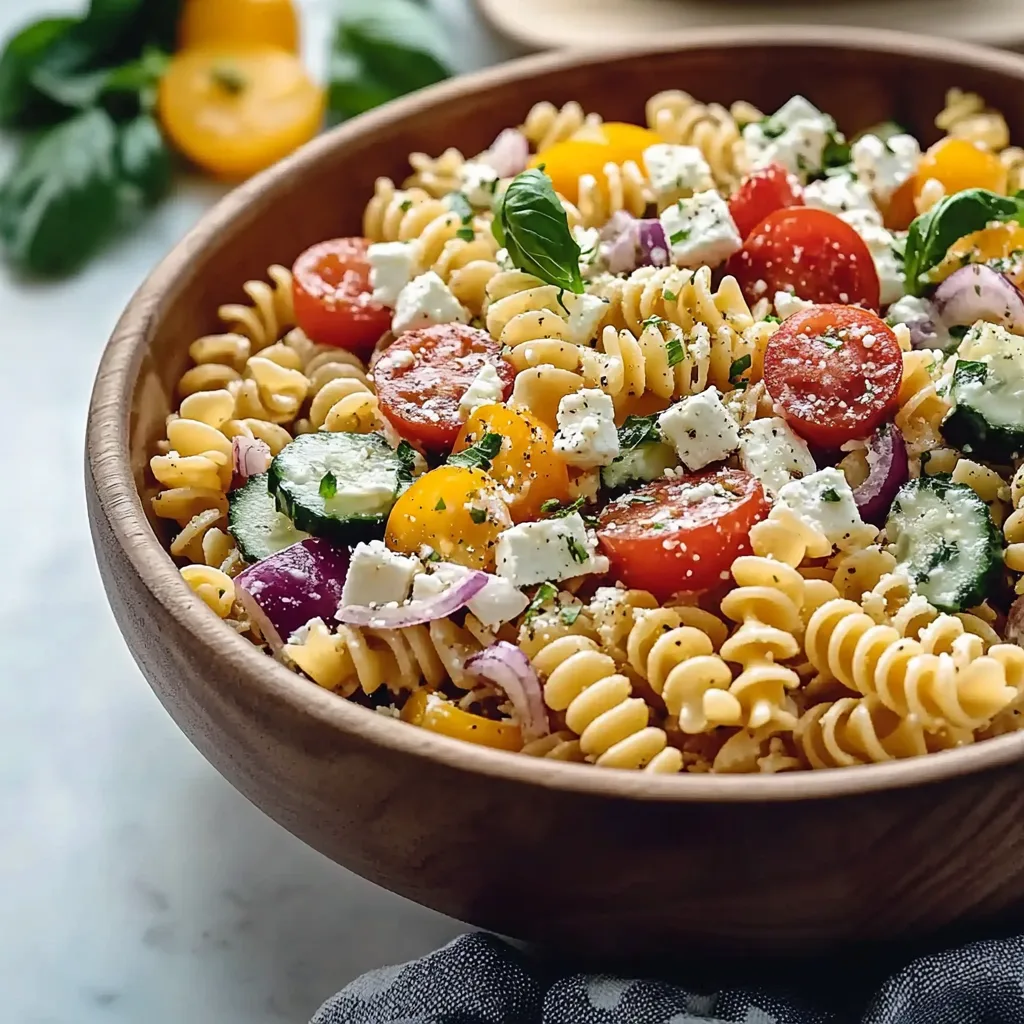
High Protein Greek Pasta Salad is my go-to meal for summer days when I want something light yet satisfying. This refreshing dish combines protein-rich pasta with crisp vegetables, tangy feta, and zesty herbs for a meal that nourishes every bite. What draws me most is how it transforms humble ingredients into a vibrant symphony of Mediterranean flavors. Whether you’re hosting a picnic or need a post-workout recovery meal, this recipe keeps the protein content high while maintaining the refreshing character of a classic Greek salad.
With Barilla Protein+ pasta as the base, this variation ensures you get more than twice the protein of regular pasta, making it an ideal choice for clean eating. The salad benefits from fresh dill’s bright aroma and feta’s briny depth, while the lemon-vinegar vinaigrette adds a tang that balances all the textures.
What is High Protein Greek Pasta Salad?
This dish is rooted in Greek culinary traditions that prioritize fresh produce, healthy fats, and protein sources like legumes or cheeses. In this version, we elevate it for modern health-conscious cooking by using protein-enriched pasta, which maintains the integrity of the classic while adding nutritional value. The salad features jewel-toned vegetables and Mediterranean herbs, creating a dish that’s both festive and functional.
Traditional Greek pasta salad relies on olive oil, vinegar, and lemon for dressing, emphasizing the natural flavors of ingredients without overpowering them. The protein boost comes from two main sources: the specialty pasta (which contains 14g protein per serving) and the crumbly feta, which adds essential amino acids. This combination creates a meal that’s perfect for muscle recovery or a satisfying plant-based protein fix, depending on your dietary needs.
Reasons to Try High Protein Greek Pasta Salad
My three growing boys often need something that’s easy on the digestion but hits their protein needs for active bodies. This salad offers that balance, with the fiber from veggies complementing the complex carbohydrates in pasta. It’s also incredibly adaptable—add grilled chicken or chickpeas for extra protein without overcomplicating the dish. The simple preparation means it’s just as great for meal prep as it is for lazy Sundays.
One of the most appealing qualities is how it brings a touch of Mediterranean warmth to any occasion. The dressing’s acidity cuts through the richness of the cheese, while the vegetables maintain their crunch when prepared properly. At only $12 per serving (when shopping seasonally), it’s an affordable solution for families looking to incorporate more whole-food proteins into their diet.
Ingredients Needed to Make High Protein Greek Pasta Salad
16 oz Barilla Protein+ pasta (for maximum 14g protein per serving)
1 large cucumber (peeled and sliced into 1/2-inch half-moons)
1 pint ripe vine-ripened tomatoes
1 red bell pepper (seeded and diced)
1 yellow bell pepper (seeded and diced)
1 small red onion (finely sliced)
5 oz Athenos crumbled feta
2 tbsp fresh dill (chopped, stems discarded)
For the dressing:
2/3 cup extra virgin olive oil (cold-pressed for superior flavor)
1/2 cup red wine vinegar (unpasteurized for probiotic benefits)
1 medium lemon (juiced by hand to retain maximum acidity)
1 tbsp dried oregano (preferably Greek for authenticity)
1/2 tsp garlic powder
1/4 tsp sea salt
1/4 tsp freshly ground pepper
Instructions to Make High Protein Greek Pasta Salad – Step by Step
Step 1: Begin by organizing your workspace—wash all produce, chop herbs, and measure dry ingredients before starting. This kitchen ritual I learned from my mother taught me to cook with calm precision. Peel the cucumber using a vegetable peeler, then slice into thin half-moons while the pasta begins boiling in salted water. Meanwhile, quarter the red onion and let it sit in a shallow bowl to gently develop sweetness while you finish chopping vegetables.
Step 2: Cook the pasta in generously salted water—a good rule is using 14g salt per liter. Watch closely as the pasta reaches al dente, which should require only 9-10 minutes. The water works like a warm bath, awakening that hidden protein in the noodles. Once cooked, I like to test a strand while the onions marinate—it should offer slight resistance to the bite and feel firm when squeezed between fingers.
Step 3: While the pasta cools, whisk the dressing over a small ceramic bowl. The lemon’s golden flesh should release tiny oils with each squeeze, adding depth and brightness. Start with the vinegar, then add oil in a slow stream while whisking. The emulsification process feels almost magical, as each ingredient finds its perfect rhythm with the others. This method preserves the vinegar’s sharpness while ensuring the oil integrates smoothly—no harsh separation on the tongue.
Step 4: Combine pasta, vegetables, and dressing in a large bowl. Think of this as a gentle dance between ingredients. Add the cooled pasta and toss it with the vegetables first in one direction, then reverse the direction with the dressing. The cold water rinse earlier prevents the pasta from becoming soggy while allowing it to absorb the dressing like a sponge. Taste for balance as you mix, adjusting seasoning with extra salt if your local water is softer.
Step 5: Let the salad rest in the fridge for at least an hour. This chill time works wonders: the proteins from the grains and cheese bind more harmoniously to the carbohydrates in the pasta, creating that satisfying meal balance we all crave. As it rests, I often take a quick walk with the kids through the neighborhood, bringing back the freshest herbs just before serving for that perfect burst of aroma.
Chef’s Tips for a Perfect Result
- Use room-temperature vinegar for better emulsification with olive oil
- Salt pasta water properly (1 tbsp water + 3g of sea salt)
- Freeze feta in an airtight container for long-term storage without losing crumble texture
- For extra flavor, let red onion marinate in dressing for 15 minutes before adding to salad
- Chill for at least 2 hours to allow proteins to meld with other flavors
- Adjust dressing ratio to 3 parts oil to 1 part vinegar depending on lemon juice strength
Variations and Substitutions
- Vegan Option: Replace feta with crumbled tofu or vegan queso blanco for plant-based protein. Use 5 oz nutritional yeast for umami depth
- Gluten-Free Alternative: Substitute Barilla Protein+ with chickpea pasta (rinse gently after cooling to preserve texture) or lentil-based varieties
- Low-Carb Version: Use zucchini noodles as base instead of pasta (add 1/4 tsp xanthan gum for structure) and increase fresh herbs
- Halal Adaptation: Choose halal-certified feta like Athenos Original, which maintains that perfect crumble consistency
- Budget Swap: Substitute cucumbers with chopped zucchini (seedless for best texture) and reduce herb quantity while maintaining flavor
How to Serve and Pair
Serve this dish in chilled, stemmed glasses for portion control, or in a rustic ceramic bowl for sharing. The vibrant colors make it a natural centerpiece on summer tables, and the feta creates that satisfying pop of flavor in each bite. To balance meals, pair with grilled lemon herb chicken marinated in olive oil and oregano, or warm pita flatbread made from sunflower seed flour for gluten-free eaters.
- Ideally serves as a main dish or side for grilled meat/fish
- Top with extra herbs just before serving for peak freshness
- Pair with crisp white herbal teas like oregano or mint for digestion
- Perfect for potlucks—store in a metal container to maintain temperature
- Complements Mediterranean lamb stew for holiday feasts
Storage and Reheating
Refrigerator: Store in a glass container with air-tight lid for up to 3 days. Add a paper towel layer to absorb excess moisture and preserve texture
Freezer: Freeze in flat containers (3-4mm thickness) for up to 2 months. Let thaw overnight in refrigerator before stirring
Room Temperature: Best served within 4 hours when kept in insulated bowls
Reheating: This dish is meant to be served cold. If warming, place in oven at 140°C until just warmed through (15-20 minutes), but avoid direct heat that might dry out vegetables. For best texture, prepare individual portions and warm separately
Nutritional Values
- Calories per serving: 300-325
- Protein per serving: 6.5-7g (primarily from pasta and feta)
- Carbohydrates per serving: 38-42g (mostly complex from pasta)
- Fats per serving: 12-14g (mainly healthy monounsaturated fats)
- Fiber per serving: 3.5-4g (from vegetables and pasta)
These values may vary slightly by brand. Approximate values.
Ingredient Substitution FAQ
How to replace protein pasta while maintaining nutritional value?
Use lentil-based pasta with 18g protein per 100g. Note that it requires less draining time to avoid overcooking and maintains firmer texture in storage.
Doneness Timing
How to ensure proteins haven’t curdled in the salad?
The al dente pasta should remain firm, and feta will maintain crumbly texture. The dressing emulsifies without heat, so no cooking required.
Common Issues
How to prevent pasta sogginess?
Never drain pasta completely—rinse briefly with cold water but retain a thin layer of starchy moisture. This creates a natural barrier against oil absorption.
Make-Ahead Guide
Can I assemble the salad a day ahead?
Yes, but prepare dressing and crumbled feta separately until ready to serve. Add these elements just before refrigerating to maintain texture and prevent sogginess.
Serving Suggestions
Best way to customize for family gatherings?
Double dressing for extra acidity. Add pre-cooked lentils (8 oz) for additional plant-based protein and pair with warm whole grain pita for complete meals.
CONCLUSION
High Protein Greek Pasta Salad brings clean nourishment without sacrificing Mediterranean vibrancy. I hope this recipe becomes a ritual you return to on hot days when you want to nourish without effort, knowing each bite supports your body’s balance. With lemon brightness and fresh herbs weaving through the pasta’s texture, it’s a meal that warms the spirit while caring for the body.
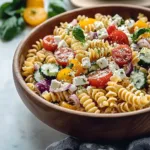
High Protein Greek Pasta Salad
- Prep Time: 20
- Cook Time: 10
- Total Time: 30
- Yield: 6 servings
- Category: Recipes
- Method: Cold Mixing
- Cuisine: Mediterranean
- Diet: Vegetarian
Description
A vibrant, protein-packed salad featuring Barilla Protein+ pasta, crisp vegetables, tangy feta, and a zesty lemon-flavored vinaigrette. Perfect for clean eating and Mediterranean-inspired meals.
Ingredients
16 oz Barilla Protein+ pasta (or other high-protein pasta)
1 large cucumber (peeled and sliced into 1/2-inch half-moons)
1 pint ripe vine-ripened tomatoes
1 red bell pepper (seeded and diced)
1 yellow bell pepper (seeded and diced)
1/2 red onion (sliced and soaked in water)
3 cups crumbled feta cheese (halal-certified if required)
1/2 cup kalamata olives
1/4 cup fresh dill (plus extra for garnish)
3 tablespoons extra virgin olive oil
2 tablespoons red wine vinegar
3 tablespoons fresh lemon juice (from 1 lemon)
1 teaspoon dried oregano
Salt and freshly ground black pepper to taste
Instructions
Cook the pasta according to package instructions. Drain and rinse under cold water to stop cooking.
In a large bowl, combine cooled pasta with cucumber, tomatoes, bell peppers, red onion (drained), feta, olives, and dill.
In a small bowl, whisk together olive oil, red wine vinegar, lemon juice, oregano, salt, and pepper.
Pour the dressing over the salad and toss gently to combine.
Chill for at least 30 minutes before serving for flavors to meld.
Garnish with additional dill and serve chilled.
Notes
Use halal-certified feta if dietary requirements dictate.
For non-alcoholic variations, ensure vinegar and lemon juice are unpasteurized but alcohol-free.
Chill for up to 8 hours for optimal flavor; store leftovers in an airtight container in the fridge for up to 2 days.