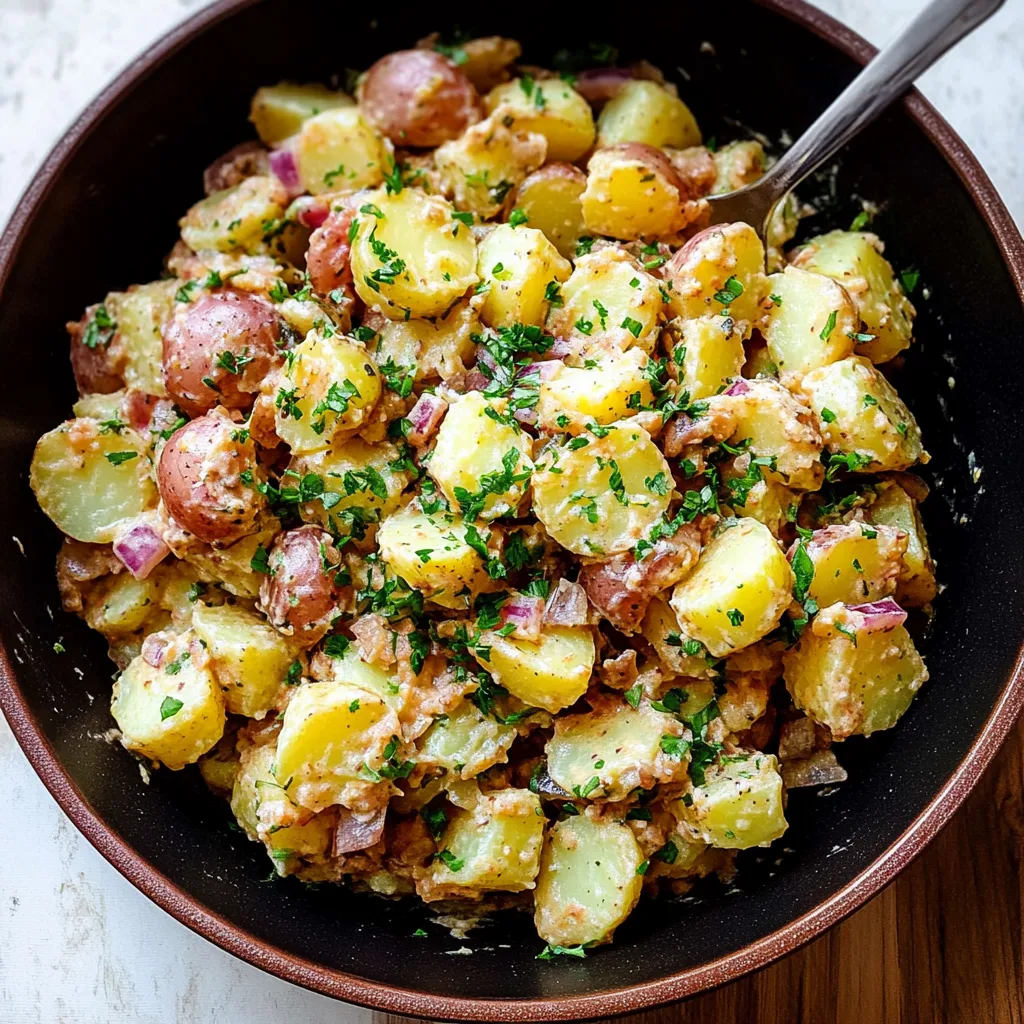
What is Old Fashioned German Potato Salad?
Old Fashioned German Potato Salad is a rustic, tangy, and deeply savory side dish rooted in Central European comfort cooking. Unlike its creamy American cousin, this version thrives on the bold interplay of vinegar, coarse mustard, and crisp bacon bits. Traditionally, it’s crafted with red potatoes boiled to a tender bite and tossed in a warm vinaigrette that clings to every nook. The dish’s origins trace back to hearty peasant fare, where simplicity and richness coexisted harmoniously. Key to its charm are the vinegar-broth dressing and caramelized bacon, which add layers of umami and acidity. It’s often dubbed “German potato salad” in the U.S., but this rendition stays true to the traditional structure while omitting alcohol (like wine or beer) to align with halal/non-pork dietary principles. The tangy mustard contrast against the bacon’s crunch is a hallmark that keeps this salad from the dinner table to the picnic basket.
This dish bridges seasons: in summer, it’s a no-heat-necessary component of a barbecue spread; in winter, it warms up alongside roasted meats. Its texture is a careful balance—potatoes remain al dente to stand up to acidic dressing, while the bacon delivers a satisfying crunch. Fresh herbs like parsley and dill are not just garnish but essential for brightening the dish’s savory backbone.
While recipes differ between German regions, the core remains the same: potatoes, vinegar, mustard, and aromatics. For those avoiding pork, this version substitutes crispy, smoky vegetables for bacon, ensuring the soul of the dish remains intact through its smoky aroma and depth of flavor.
Reasons to Try Old Fashioned German Potato Salad
Old Fashioned German Potato Salad is a recipe that whispers “weeknight magic.” With its straightforward steps and pantry-friendly ingredients, even novice cooks can whip it up while the evening sky turns orange over the porch. The combination of warm mustard-vinegar dressing and crispy texture feels simultaneously comforting and energizing, making it a secret weapon for family dinners or potlucks where bold flavors steal the show.
This salad is a masterclass in simplicity. You cook the bacon, reduce the dressing until glossy, then coat the hot potatoes with it—no complicated techniques or exotic spices. It’s also a versatile star: serve it warm to balance grilled meats, or chilled as a picnic staple. The recipe’s forgiving nature makes it perfect for busy days, and its robust flavor resists sogginess during storage, unlike creamy salads.
For mindfulness in the kitchen, this dish is a gift. Scrubbing potatoes, watching bacon sizzle, and blending herbs into the dressing create a meditative rhythm. When shared, it becomes a symbol of warmth and care—think summer backyard gatherings or post-school snack bowls. Plus, the use of apple cider vinegar and mustard aligns with gut-friendly cooking principles I appreciate in my own kitchen rituals.
Ingredients Needed to Make Old Fashioned German Potato Salad
- 2 pounds small red potatoes, halved (scrubbed well before boiling)
- 1 tablespoon salt (for boiling water)
- 12 ounces thick-cut bacon, cut into 1/2-inch strips (substitute halal-certified crispy vegetables for pork-free version)
- ½ large yellow onion, minced
- 3 cloves garlic, minced
- ½ cup low sodium chicken broth
- ½ cup apple cider vinegar (opt for unflavored for clarity of tang)
- 1 ½ tablespoons whole grain mustard (stoneground or coarse for texture)
- 1 tablespoon sugar (raw cane or coconut for nuanced sweetness)
- ½ teaspoon black pepper (freshly ground for aromatic impact)
- ¼ teaspoon each of salt and paprika (adjust to taste)
- 3 tablespoons fresh herbs (chopped parsley, dill, and chives; use seasonal alternatives if available)
- Optional: 1–2 tablespoons olive oil (for adjusting consistency if needed)
Instructions to Make Old Fashioned German Potato Salad – Step by Step
Step 1: Begin by selecting the right potatoes. Red potatoes hold their shape beautifully and absorb the dressing without becoming mushy. Scrub the skins thoroughly—no need to peel since the nutrients stay in. In a large Dutch oven, halve the potatoes and cover them with about an inch of water, adding 1 tablespoon salt. The salt enhances natural sweetness as they steam, not brute boil.
Step 2: Bring the water to a gentle simmer. Avoid rapid rolling boils; this ensures even cooking. Once the water breaks into a steady bubble, test the potatoes with a fork—ideal texture is tender but still firm. Drain them immediately to avoid overcooking, then return the pot to the stove. Let the residual heat keep them warm while you prepare the dressing. This technique mimics traditional “potato-in-the-dressing” methods where heat marries the ingredients.
Step 3: Cook the bacon in a cast iron skillet over medium heat. This method locks in smoky depth and allows the pan’s heat to caramelize the fat into a golden-rich base for the dressing. As the bacon curls and crispifies, resist the urge to overcrowd the pan—space allows Maillard reactions to develop. Once done, lift the bacon with a slotted spoon and set it on paper towels to drain, preserving its crunch.
Step 4: In the same bacon fat, sauté the onion until softened. Garlic follows briefly to avoid bitterness. The key is patience: low and slow cooking ensures sugars caramelize rather than burn. This step builds a foundation of sweetness that softens the vinegar’s bite later.
Step 5: Deglaze the pan with chicken broth to lift the browned bits. Add vinegar, whole grain mustard, sugar, and seasonings. Let the mixture reduce until it thickens, becoming a glossy, tangy coating. The balance here is crucial—apple cider vinegar’s sharpness should sing in harmony with mustard’s graininess, not overpower the dish. Taste and adjust: if too acidic, a pinch more sugar will smooth the edges.
Step 6: Return the hot potatoes to the pan with the dressing. Use a wooden spoon to toss them gently until fully coated, letting the heat infuse each halved spud with flavor. If ingredients seem dry, revive moisture with a splash of broth or olive oil, creating that “just the right amount” that makes the salad feel alive. Finish with fresh herbs, which add a bright, herbaceous counterpoint to the smoky, tangy base.
Step 7: For optimal flavor development, let the salad rest at room temperature for 10–15 minutes. This allows the mustard to mellow and the vinegar to seep into every corner. Serve warm for immediate gratification or let cool for leftovers. Never refrigerate with bacon mixed in—it softens the texture. Save herbs till the final serve to maintain their punch.
Chef’s Tips for a Perfect Result
- Use room-temperature herbs: chop parsley and chives only after the salad is cooked to preserve freshness and color.
- Cook bacon in a cast iron skillet: iron’s heat retention creates caramelized bacon bits that enrich the dressing’s flavor profile.
- Don’t over-salt boiling water: potatoes already soak up the dressing’s seasoning, so restraint here means balanced results.
- Test broth balance before reduction: taste the dressing after adding all liquids to adjust acidity or sweetness early.
- Rest the salad before serving: allow the warm ingredients to meld and the textures to stabilize for a more cohesive bite.
Variations and Substitutions
For a Vegan Option, swap bacon with crispy shallots or tofu bacon for umami. Use olive oil and reduce vinegar to ½ cup, adjusting sweetness with maple syrup. The texture will shift but retains its tangy warmth.
A Gluten-Free Alternative requires mustards certified gluten-free. Stoneground versions still deliver grainy texture without risk.
Add Root Vegetables: Include diced carrots or red bell peppers when roasting potatoes for sweetness and crunch. These substitutions align with seasonal foraging traditions.
Budget Swap: Use russet potatoes instead of reds and substitute regular yellow mustard for whole grain. The essence remains, though texture softens.
Low-Carb Version: Skip onions and garlic, using onion powder and garlic granules. Add arugula or spinach for leafy fiber without muddying the flavor.
How to Serve and Pair
Serve in a wide-rimmed bowl that showcases the red potatoes and allows herbs to catch the eye. Garnish with a final sprinkle of paprika and fresh dill for color. This salad pairs beautifully with grilled halal meats like lamb burgers or kebabs, where the acidity cuts richness. For vegetarian tables, pair with braised kale or a lemon-tahini chickpea salad. On the porch in Texas, I’ve served it beside zucchini bread and fresh corn-on-the-cob grilled with chili powder—a taste of earthiness and summer.
For gatherings, layer it under a glass dome with roasted beets and sauerkraut for a vibrant, hearty display. Leftovers are lovely with scrambled eggs for a midday comfort fix. Its warmth invites spontaneity—warm it in a cast iron skillet with a touch of thyme and garlic for a rustic “salad pasta” effect.
Storage and Reheating
Refrigerator: Store in an airtight container for up to 4 days. Separate cooked bacon to retain crunch when reheating.
Freezer: Portion in 1-2 serving sizes and freeze for 2–3 months (texture changes). For best results, refreeze without herbs and re-toss when thawing.
Room Temperature: Keep in a covered bowl for up to 4 hours, ideal for backyard gatherings. Avoid direct sunlight to maintain tangy freshness.
Reheating: Use a skillet over medium-low heat to avoid drying out the dressing. A drizzle of olive oil revives moisture during warming. Microwave works for small portions—heat in 20-second bursts while stirring to preserve texture. Add fresh herbs on top after reheating for a vibrant finish.
Nutritional Values
Per serving (approximate values):
- Calories: 340
- Protein: 12g
- Carbohydrates: 30g
- Fat: 22g (mostly healthy from vinegar and oil)
- Fiber: 4g
Frequently Asked Questions
Q1: Can I substitute the mustard for something else?
Whole grain mustard is non-negotiable for texture and flavor. Sub with coarse stoneground type if unavailable; avoid smooth mustards, which create a slick, one-dimensional dressing.
Q2: How do I know the potatoes are done without overcooking?
Test near the thickest part with a fork. They should be tender but resist the tines slightly. Overcooked potatoes will absorb dressing but fall apart, while undercooked ones remain stubbornly dry on the inside.
Q3: Why does my dressing taste too acidic?
Balance acidity with more chicken broth or a teaspoon of honey. Taste test the vinegar-broth mixture before adding mustard. The dressing should brighten, not sting.
Q4: Can I prepare ingredients ahead of time?
Boil and drain potatoes up to 3 days ahead. Store warm dressing in a heat-resistant container, then re-toss the potatoes just before serving. Add bacon and herbs fresh for optimal flavor and texture.
Q5: What sides pair best for a complete meal?
Classic combos include grilled lamb, roasted bratwurst, or simple crusty bread. For contrast, pair with a cool yogurt cucumber dip or lemon-basil arugula salad.
Conclusion
Old Fashioned German Potato Salad is a testament to how warmth, crunch, and tang can transform humble ingredients into a beloved family staple. Its mustard-vinegar dressing clings to the potatoes in a way that feels both playful and grounding. Try it tonight—let the kitchen’s rhythm calm your day-to-day rush, and savor each bite’s smoky punch followed by herbaceous brightness. Whether simmering on the stove or chilling in the fridge, this salad is a simple reminder that nourishment blooms from intention and care.
Print
Old Fashioned German Potato Salad
- Prep Time: 15
- Cook Time: 40
- Total Time: 55
- Yield: 6 servings
- Category: Recipes
- Method: Stovetop
- Cuisine: German
- Diet: Halal, Vegetarian
Description
A tangy, hearty side dish with red potatoes tossed in a warm vinegar-mustard dressing. This halal-friendly version uses crispy smoky vegetables instead of bacon, delivering bold flavor and satisfying crunch with herbs like parsley and dill.
Ingredients
2 lbs red potatoes, peeled and quartered
1 medium red onion, finely chopped
1 red bell pepper, sliced
2 tbsp olive oil
1 tbsp apple cider vinegar
1 tbsp coarse Dijon mustard
1 tsp smoked paprika
1/2 cup vegetable broth
1 clove garlic, minced
Salt to taste
Fresh parsley and dill, chopped
Instructions
Bring a large pot of salted water to a boil. Add potatoes and cook until tender but firm, about 7-10 minutes.
While potatoes cook, heat olive oil in a skillet. Sauté onions and red bell pepper until golden-brown and crispy; season with salt halfway through.
In a bowl, whisk vinegar, mustard, smoked paprika, garlic, and vegetable broth until emulsified.
Drain hot potatoes and add to the dressing. Gently toss to coat, then stir in sautéed vegetables.
Garnish with chopped parsley and dill before serving warm or at room temperature.
Notes
For extra smokiness, use smoked paprika or add a pinch of cumin.
Store in an airtight container in the refrigerator for up to 3 days.
This recipe is flexible with any crisp sautéed veggie, like carrots or zucchini.