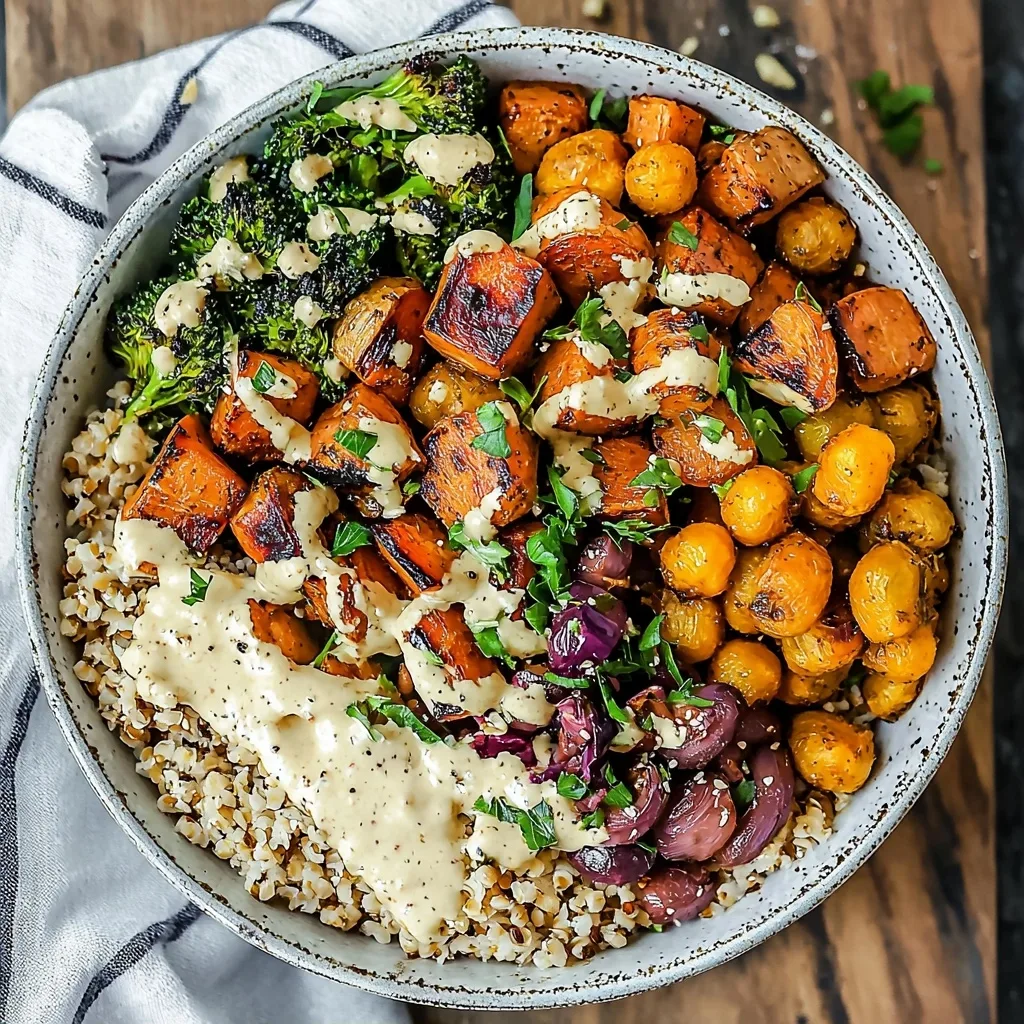
Roasted Winter Vegetable Buddha Bowl
Roasted Winter Vegetable Buddha Bowl is the perfect way to embrace the quiet, nurturing energy of the colder months. When the air turns crisp and the days grow short, there is something deeply grounding about pulling a sheet pan of caramelized, earthy vegetables from the oven. This vibrant bowl brings together the sweetness of roasted root vegetables, the crunch of crisped chickpeas, and the wholesome bite of fluffy quinoa to create a meal that truly respects your body’s need for real, clean nourishment.
Preparing a Roasted Winter Vegetable Buddha Bowl at home feels like a small act of self-care amidst a busy week. It offers a balance of complex carbohydrates, plant-based protein, and fiber that leaves you feeling energized rather than weighed down. Whether you are meal prepping for the days ahead or simply slowing down to enjoy a warm dinner, this bowl serves as a reminder that healthy cooking can be both restorative and incredibly delicious.
What is Roasted Winter Vegetable Buddha Bowl?
A Roasted Winter Vegetable Buddha Bowl is a curated collection of seasonal produce, legumes, and grains arranged to offer a complete nutritional profile in one elegant dish. The term Buddha bowl refers to a meal served in a bowl that is so full it resembles the belly of a Buddha, focusing on variety, color, and texture. While there is no single ancient origin, these bowls have become a modern staple for those seeking a plant-forward, mindful way of eating.
The magic of this recipe lies in the contrast of the components. You have the soft, natural sweetness of slow-roasted sweet potatoes paired with the slightly charred, nutty edges of Brussels sprouts. By adding chickpeas tossed in warming spices and finished with a creamy, bright tahini dressing, you create a depth of flavor that feels sophisticated yet entirely approachable for the everyday cook.
Reasons to Try Roasted Winter Vegetable Buddha Bowl
You will love this Roasted Winter Vegetable Buddha Bowl because it celebrates the best of seasonal eating without requiring complicated techniques. It is an ideal solution for busy weeknights when you want something that tastes like it came from a specialty cafe but is actually made with simple, wholesome pantry staples. The roasting process does most of the heavy lifting, concentrating flavors naturally to ensure every bite is deeply satisfying.
Beyond the flavor, this meal is exceptionally versatile and forgiving. It is perfect for families, beginners starting their wellness journey, or anyone who simply appreciates a well-rounded, plant-based meal. It holds up beautifully in the refrigerator, making it one of the most reliable lunch options when you need a quick, nutritious boost at the office or home.
Ingredients Needed to Make Roasted Winter Vegetable Buddha Bowl
- 1/2 cup dry quinoa (rinsed well before cooking)
- 2 cups Brussels sprouts (trimmed and halved)
- 1 to 2 large sweet potatoes (peeled and cut into small, uniform cubes)
- 1 can (15 ounces) chickpeas (thoroughly rinsed and patted dry)
- 2 cups fresh baby spinach
- 3 tablespoons extra virgin olive oil
- 1 teaspoon chili powder
- 1/2 teaspoon ground cumin
- 1/4 teaspoon sweet paprika
- A generous pinch of sea salt and freshly cracked black pepper
- Garnish: Toasted sesame seeds, sliced green onions, and fresh sprouts
Instructions to Make Roasted Winter Vegetable Buddha Bowl – Step by Step
Step 1: Start by preheating your oven to 400 degrees Fahrenheit. Line two large baking sheets with parchment paper to ensure easy cleanup and prevent sticking. This temperature is ideal for getting high-heat caramelization on your vegetables while keeping the chickpeas crisp.
Step 2: Place the diced sweet potatoes and halved Brussels sprouts onto one of the prepared baking sheets. Drizzle with 2 tablespoons of olive oil. On the second baking sheet, spread out your dried chickpeas and drizzle with the remaining tablespoon of oil. This separation ensures that everything cooks evenly and the moisture from the vegetables does not soften the chickpeas.
Step 3: In a small bowl, whisk together the chili powder, cumin, sweet paprika, salt, and black pepper. Divide this aromatic spice blend evenly over both baking sheets, tossing the vegetables and chickpeas thoroughly to ensure they are well-coated. For the best texture, cover the vegetable sheet with foil for the first 15 minutes of roasting to allow them to steam slightly before browning. Bake everything for a total of 30 minutes, or until the potatoes are tender and the sprouts have beautiful golden-brown edges.
Step 4: While the oven works its magic, prepare your quinoa. In a small saucepan, combine the rinsed quinoa with 1/2 cup of water. Bring the mixture to a gentle boil, then turn the heat to the lowest setting and place a tight-fitting lid on the pan. Let it simmer undisturbed for 15 minutes. Once the time is up, remove the pan from the heat, leave the lid on for an additional 5 minutes to steam, and finally fluff it gently with a fork to create light, airy grains.
Step 5: To prepare the dressing, whisk together the tahini, maple syrup, lemon juice, and a tablespoon of water at a time until you reach a smooth, creamy consistency. To assemble your bowls, divide the fresh spinach, warm quinoa, roasted vegetables, and crispy chickpeas into two bowls. Garnish with sesame seeds, green onions, and fresh sprouts, then generously drizzle your prepared tahini dressing over the top.
Chef’s Tips for a Perfect Result
- Pat your chickpeas completely dry: Excess moisture prevents them from getting crispy, so take an extra moment to dry them with a clean kitchen towel.
- Uniform cutting is key: Chop your sweet potatoes into similar-sized cubes so they cook through at the same rate and prevent uneven textures.
- Don’t skip the rest: Letting the quinoa sit covered for five minutes off the heat after cooking creates that perfect, fluffy texture that feels professional.
- Whisk your dressing gradually: Adding water one tablespoon at a time to the tahini ensures you can control the thickness and avoid a broken sauce.
- Use high-quality tahini: The quality of your tahini base significantly impacts the depth of the flavor, so choose one that is smooth and pourable.
Variations and Substitutions
- Gluten-Free Alternative: This recipe is naturally gluten-free; just ensure your spices are certified, as some blends can contain wheat-based anti-caking agents.
- Budget Swap: If you do not have quinoa on hand, brown rice or farro work beautifully to provide a similar nutty, hearty base.
- Lower-Carb Version: Substitute the sweet potatoes for cubes of roasted cauliflower or broccoli, which offer a lower glycemic index while maintaining great texture.
- Protein Boost: Add hemp seeds or toasted sunflower seeds to the topping mix for an extra dose of healthy fats and plant-based protein.
How to Serve and Pair
This Roasted Winter Vegetable Buddha Bowl is best served immediately while the vegetables are still warm. Present it in wide, shallow bowls to show off the vibrant colors of the greens, orange sweet potatoes, and earthy sprouts. For a complete dining experience, pair it with a cup of warm herbal tea or a ginger-infused water to highlight the warming spices in the dish. It makes for a soulful, quiet dinner or an impressive lunch that looks far more complex than it actually is.
Storage and Reheating
Refrigerator: Store the roasted components and the cooked quinoa in an airtight container for up to 4 days. Keep the fresh spinach and the dressing in separate small containers to maintain optimal freshness. Freezer: While the roasted vegetables can be frozen, they lose their texture; hence, it is best to enjoy this dish fresh from the fridge. Reheating: Warm the vegetables and quinoa in a skillet over low heat with a splash of water, or use the microwave in 30-second intervals until warmed through, adding the dressing after reheating.
Nutritional Values
- Calories: 420 kcal
- Protein: 14g
- Carbohydrates: 58g
- Fat: 16g
- Fiber: 9g
- Approximate values.
Frequently Asked Questions (FAQ)
Can I substitute the tahini for another base?
Yes, you can substitute tahini with almond butter or sunflower seed butter, though the flavor profile will shift slightly toward a nuttier or earthier taste.
How do I know when the sweet potatoes are perfectly roasted?
The sweet potatoes are done when they are easily pierced with a fork and show signs of deep caramelization or darkening on the edges.
My chickpeas turned out chewy instead of crispy, what happened?
The most common cause is excess moisture during roasting, so ensure they are bone-dry before you toss them with the oil and spices.
Can I prep parts of this bowl in advance?
Yes, you can roast the vegetables and cook the quinoa up to three days ahead of time, then simply assemble the bowl when you are ready to eat.
What is the best way to customize this for my family?
You can easily customize these bowls by setting out extra toppings like pickled red onions, sliced cucumbers, or crumbled plant-based feta for a fun, interactive meal.
CONCLUSION
Roasted Winter Vegetable Buddha Bowl is a testament to the idea that simple, plant-based food can be both deeply comforting and incredibly nourishing. By embracing the warmth of roasted seasonal vegetables, you are giving your body the fuel it needs to thrive through the cooler weather. We hope this recipe brings a sense of calm and clarity to your kitchen routine. Every bite is designed to balance your energy, soothe your palate, and remind you that intentional eating is the greatest form of self-care you can practice today.
Roasted Winter Vegetable Buddha Bowl
- Prep Time: 15
- Cook Time: 30
- Total Time: 45
- Yield: 2 servings
- Category: Dinner
- Method: Roasting and Steaming
- Cuisine: Modern Fusion
- Diet: Vegan, Gluten-Free
Description
Indulge in this nourishing Roasted Winter Vegetable Buddha Bowl, a seasonal blend of caramelized root vegetables, crispy chickpeas, and protein-packed quinoa. This plant-forward meal offers a beautiful balance of textures and earthy flavors, making it the perfect comforting dish for colder months. Drizzled with a creamy tahini sauce, it serves as a wholesome, self-care focused bowl that is as restorative as it is delicious, providing lasting energy for busy days.
Ingredients
1/2 cup dry quinoa, rinsed
1 cup vegetable broth or water
2 cups Brussels sprouts, halved
2 medium sweet potatoes, cubed
1 can (15 oz) chickpeas, drained and patted dry
2 tablespoons olive oil
1 teaspoon smoked paprika
1/2 teaspoon ground cumin
1/4 cup tahini
2 tablespoons lemon juice
1 tablespoon maple syrup
2-3 tablespoons warm water (to thin)
Instructions
Preheat your oven to 400°F (200°C).
On a large sheet pan, toss the sweet potatoes, Brussels sprouts, and chickpeas with olive oil, smoked paprika, cumin, and sea salt.
Spread in a single layer and roast for 25-30 minutes until vegetables are tender and chickpeas are crispy.
While vegetables roast, combine quinoa and broth in a small pot; bring to a boil, then reduce heat, cover, and simmer for 15 minutes before fluffing with a fork.
Whisk together tahini, lemon juice, maple syrup, and warm water until smooth to create the dressing.
Assemble bowls by dividing the fluffy quinoa and topping with the roasted vegetable mixture.
Drizzle generously with the tahini dressing before serving.
Notes
Store leftovers in an airtight container in the refrigerator for up to 4 days. You can add extra greens like kale or spinach to the base to increase fiber intake.