
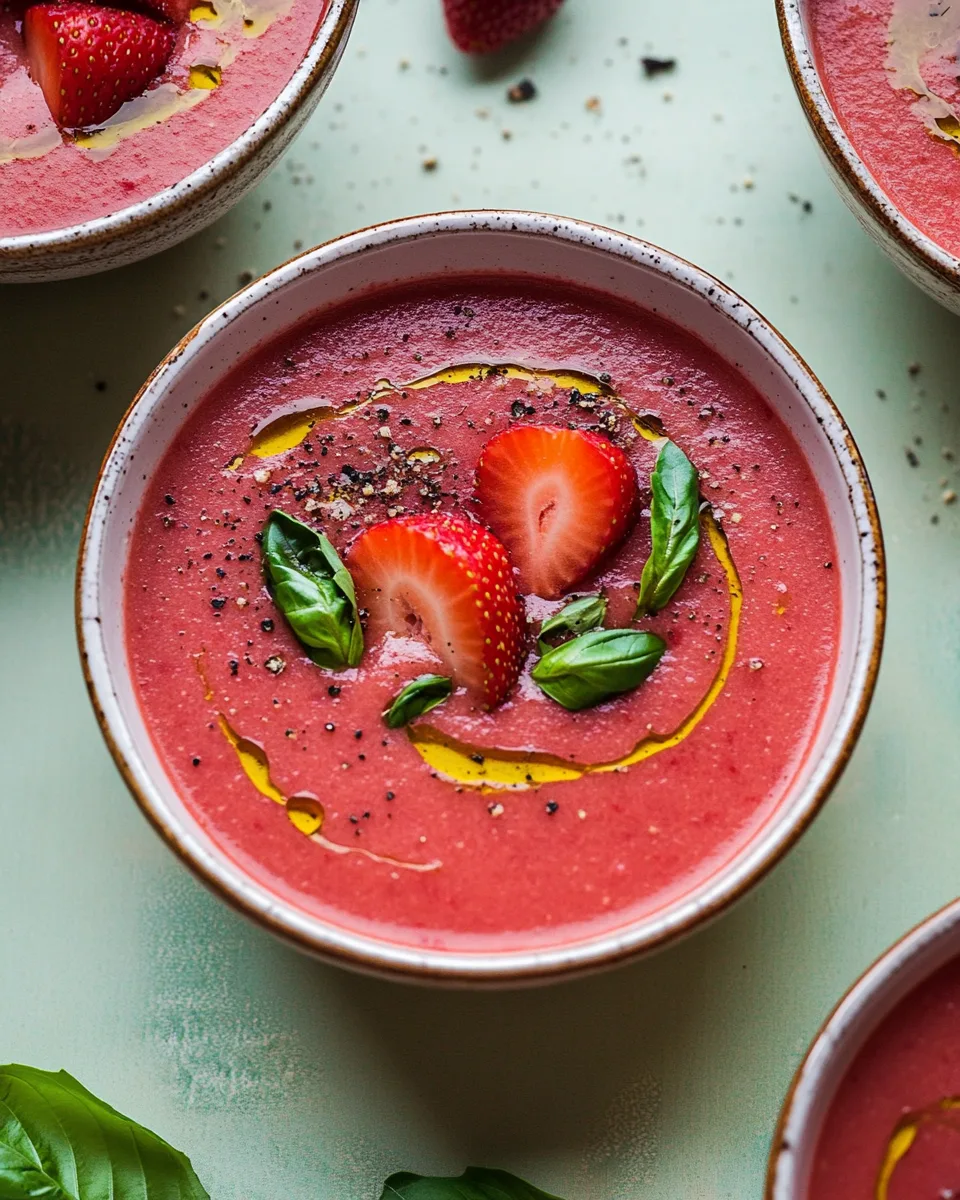
What is Strawberry Watermelon Gazpacho?
Strawberry watermelon gazpacho is a vibrant, cold soup blending the sweetness of fresh fruits with the zing of herbs and spices. Rooted in the classic Spanish gazpacho tradition, this modern twist swaps tomatoes for juicy watermelon and strawberries, creating a refreshing dish perfect for humid days. Unlike its traditional counterpart, this version skips the bread base, relying on the natural texture of blended produce for a silken finish. The roasted beet adds depth, while jalapeño introduces a gentle heat balanced by bright lime and mint. The result? A soup that’s equal parts nourishing and indulgent, ideal for summer entertaining or a light lunch.
This dish bridges two worlds: the vibrant energy of summer fruits and the cooling wisdom of traditional herbal soups. Its ingredients are chosen to support digestion, hydration, and antioxidant intake—strawberries and watermelon provide potassium and lycopene, while basil and mint aid in calming the body. The roasted beet, a subtle yet powerful addition, brings earthy sweetness and iron-boosting properties. What makes this gazpacho unique is its playful balance of flavors: the sweetness of the fruits is cut by tangy lime, the heat of jalapeño, and the earthiness of the beet, creating a symphony that delights the palate.
Reasons to Try Strawberry Watermelon Gazpacho
There are countless reasons to make this recipe your summer staple. First, it’s astonishingly easy to prepare. With just 15 minutes of active work and minimal cleanup, you’ll have a soup that feels restaurant-quality. The ingredients are all readily available at most grocery stores or farmers’ markets, and the recipe scales easily for larger gatherings. Whether you’re hosting a dinner party or need a quick, healthy lunch, this gazpacho delivers every time.
Second, it’s a win for every occasion. Busy parents will appreciate the one-step blender method that requires no stove use. Beginners will find the instructions straightforward, while adventurous cooks can experiment with texture and spice levels. The dish is naturally vegan and gluten-free, making it inclusive for dietary needs. Plus, its bright color and fresh aroma make it a visual standout at any table—perfect for impressing guests or energizing your own evening.
Most importantly, this gazpacho is a celebration of flavor and function. It keeps your body cool, replenishes electrolytes, and delights the senses with each spoonful. The strawberries and watermelon hydrate, the herbs refresh, and the slight tanginess of lime and vinegar stimulate digestion. It’s a dish that nourishes as much as it satisfies, embodying the joy of seasonal eating.
Ingredients Needed to Make Strawberry Watermelon Gazpacho
- 2 cups diced strawberries (fresh, hulled, and rinsed)
- 3 cups diced watermelon (seeds removed, for a smoother texture)
- 1 small beet, peeled and roasted (see note on pre-cooked beets)
- 1 medium cucumber, peeled and diced (discard the bitter center core for a sweeter flavor)
- 1 Roma tomato, quartered (cored for a smoother blend)
- 2–4 tablespoons finely minced jalapeño, seeds removed (adjust to taste)
- 1½ tablespoons freshly squeezed lime juice (about 1–2 limes, yields brightness and balance)
- 1½ tablespoons red wine vinegar (offers tanginess and acidity)
- ¾ cup diced red onion (to mellow, see tip in instructions)
- ½ cup fresh basil (packed, leaves only—stem removed to avoid bitterness)
- ¼ cup fresh mint (chopped, aromatic and cooling)
- 1¼ teaspoons fine kosher salt (enhances all flavors)
- ¼ cup olive oil (for a silky, emulsified finish)
Instructions to Make Strawberry Watermelon Gazpacho – Step by Step
Step 1: Roast the beet for depth of flavor. Preheat your oven to 375°F (190°C). Wash, peel, and dice the beet into 1-inch cubes. Toss with a drizzle of olive oil and a pinch of salt. Wrap the beet in aluminum foil, sealing tightly. Place on a baking sheet and roast for 15–20 minutes, until tender when pierced with a fork. Let it cool slightly; this step is skip-able if you prefer a sweeter, less complex flavor profile, but roasting enhances the earthiness of the beet.
Step 2: Prepare the base by blanching the onions. While the beet roasts, take the chopped red onion and rinse it under hot water for 35–40 seconds in a fine-mesh colander. This neutralizes the raw bite, leaving just a gentle sweetness. Rinse again under cold water to stop the cooking and drain thoroughly. Setting this aside now allows the flavors to develop fully without muddiness later.
Step 3: Blend everything for a silky texture. In a high-speed blender (or a Vitamix), add the strawberries, watermelon, roasted beet, cucumber, Roma tomato, jalapeño (seeds removed for mild heat), blanched red onion, lime juice, red wine vinegar, and salt. Pour water slowly (starting with ¼ cup) to help the blades move. Blend on medium-high for 1 minute, scraping down the sides as needed. The mixture will transition from chunky to smooth—keep blending until it’s homogeneous, with no large pieces. For a richer texture, work in small batches to avoid overloading the blender.
Step 4: Emulsify with oil for a restaurant-quality finish. With the blender on its lowest speed, pour in all the olive oil in a thin, slow stream. This step is crucial for creating a cohesive, velvety emulsion. Once the oil is fully incorporated, increase the speed and blend for an additional 30–60 seconds to ensure even dispersal. Open the lid and taste. Adjust salt or lime juice if needed, keeping in mind it’ll chill for several hours.
Step 5: Chill and balance the flavors. Transfer the gazpacho to a glass container with a lid and refrigerate for at least 2–3 hours. Cold temperatures mellow the jalapeño’s heat and allow the flavors to marry—think of this chill time as the soup’s resting period, letting aromatics and textures harmonize. Before serving, stir in the fresh basil and mint. These herbs add last-minute vibrancy, so adding them after chilling preserves their brightness. If chilling longer than a day, a garnish of whole basil leaves and mint sprigs at the table adds visual and textural appeal.
Step 6: Serve with a purpose. Ladle the gazpacho into chilled bowls or glasses. Drizzle with a few drops of extra virgin olive oil for a glistening finish and drizzle more lime juice over each serving. Serve with a sprinkle of salt, a scattering of torn basil and mint leaves, or a few crumbles of vegan feta if you’re feeling decadent. The contrast between cold soup and warm herbs is a sensory treat—serve like a salad, letting the garnishes express themselves on each spoonful.
Chef’s Tips for a Perfect Result
- Toast the beet for better flavor: Roasting intensifies its natural sweetness and caramelizes sugars, adding a layer of complexity your guests might not expect. It’s worth the extra 20 minutes.
- Use a high-speed blender for smoothness: Lower-powered blenders may leave chunks or struggle with emulsification. A powerful motor ensures a silky, restaurant-style texture.
- Balance the heat by tasting as you go: Jalapeño seeds contribute acidity and capsaicin. Remove them for a milder version, or keep one seed for a subtle kick—taste and adjust before chilling.
- Chill for 3+ hours before serving: Cold temperatures mellow sharpness and intensify undertones, allowing the soup to reach its full potential. Never serve immediately after blending.
Variations and Substitutions
Beetless Version: Skip the roasted beet entirely for a sweeter, fruit-forward gazpacho. This works well with additional strawberries (½ cup extra) or a splash of pomegranate molasses for depth.
Spicy Twist: Swap jalapeño for serrano or Thai chiles for a bolder heat. Add ½ teaspoon smoked paprika to enhance fire with smokiness.
How to Serve and Pair
This gazpacho is a star on its own but shines when paired thoughtfully. Serve in chilled mason jars for a rustic look, or delicate bowls for elegance. Garnish with microgreens, watermelon slices, or thin cucumber ribbons for texture contrast. The soup pairs beautifully with crusty sourdough, whole-grain flatbreads, or a tangy grain salad (quinoa or farro with lemon-tahini dressing). For a summer dinner, follow with zucchini noodles or a grain-free grain bowl. Leave the meats out for a vegan meal, or serve alongside marinated tofu or grilled corn on the cob for added protein. Save the dessert—this stellar combo of cooler textures and tropical warmth will satisfy.
Storage and Reheating
Refrigerator: Store in an airtight glass container for up to 4 days. Flavor diminishes after 24 hours, so smaller batches yield better results. Reblending before serving reintroduces air and emulsion after sitting.
Freezer: Freeze in silicone molds or airtight containers for up to 3 months. Layer herbs on top to preserve freshness before freezing. Thaw overnight in the fridge, then blend until smooth—remaining chunks will melt into the soup. Avoid freezing herbs with the soup, as texture degrades.
Room Temperature: Keep in a thermos or insulated container for up to 4 hours, but best served chilled for optimal taste.
Nutritional Values
- Calories: 220 per serving
- Protein: 2.7g
- Carbohydrates: 23.8g
- Fat: 14.6g
- Fiber: 4.2g
Approximate values.
Frequently Asked Questions
Q1: Can I substitute the red onion without adjusting the recipe?
Absolutely. Swap red onion for shallots or leeks for a milder bite. A shallot adds slight sweetness, while leeks bring a gentle, grassy note. Adjust quantity to match the original red onion’s volume (⅔ cup diced).
Q2: How do I tell when the gazpacho is chilled enough?
Aim for a temperature between 45–50°F (7–10°C). It should feel refreshingly cold and slightly viscous when spooned. Chilling allows flavors to settle and the heat from jalapeño to mellow. Taste at the 2-hour mark—preferences vary, but 3 hours yields the best balance.
Q3: Why doesn’t my gazpacho have a smooth texture? How can I fix it?
Blending time and ripeness are key. Under-blended produce or unripe fruit creates grit or lumps. Adjust by running the blender for an extra 20–30 seconds or using a tamper to push ingredients toward the blades. Frozen watermelon works in a pinch but increases thickness—thin it out with a splash of water or more lime juice.
Q4: Can I make the gazpacho the night before?
Yes, but refrigerate it before adding herbs. This soup improves in flavor when chilled. However, mint tends to wilt and basil browns in water over time. Prepare the base up to 24 hours in advance, then stir in fresh herbs 30 minutes before serving for maximum vibrancy.
Q5: What are the best seasonings to customize the flavor?
Experiment with crumbled vegan feta, a dash of chili oil, or a swirl of harissa for heat. To enhance herbal notes, add toasted and ground cumin or sumac for brightness. Lemon juice (¼ tsp per cup) sharpens the flavor if the soup feels flat after sitting.
Conclusion
This strawberry watermelon gazpacho is a summer essential—easy to make, packed with vibrant flavors, and nourishing to the core. Inspired by the joy of seasonal eating and the simplicity of mindful cooking, this recipe brings the warmth of the sun to your table in every spoonful. Give it a try this weekend, and let the sweet, spicy, herbaceous harmony of this dish transport you to a sun-dappled garden. You’ll return to it again and again, savoring its refreshing complexity and the gentle reminder that food, like summer, is meant to be enjoyed in full.
Print
Strawberry Watermelon Gazpacho
- Prep Time: 15
- Cook Time: 45
- Total Time: 60
- Yield: 4 servings
- Category: Recipes
- Method: Blending
- Cuisine: Spanish
- Diet: Vegan, Gluten-Free
Description
A vibrant, cold summer soup blending sweet strawberries and watermelon with zesty herbs, earthy roasted beet, and a hint of jalapeño. This vegan, gluten-free recipe is refreshing, hydrating, and packed with antioxidants—perfect for heatwaves or summer gatherings.
Ingredients
2 cups fresh strawberries, hulled and rinsed
3 cups seedless watermelon, diced
1 small beet, peeled and roasted
1 jalapeño pepper, seeded (optional)
Juice and zest from 1–2 limes
1/4 cup fresh mint leaves, chopped
1 tablespoon apple cider vinegar
1 tablespoon fresh basil, chopped
Salt, to taste
Instructions
Preheat oven to 400°F (200°C). Roast the beet until tender (45–50 minutes), then let cool and dice.
Dice strawberries, watermelon, and jalapeño.
In a blender, combine strawberries, watermelon, jalapeño, lime zest, mint, basil, and vinegar. Blend until smooth.
Add the roasted beet and pulse to fully incorporate.
Chill in the refrigerator for 1 hour before serving. Adjust seasoning with salt and additional lime juice if desired.
Notes
Use pre-cooked beet to save time.
For a smoother texture, remove watermelon seeds.
Adjust jalapeño quantity for spice level.
Store in an airtight container in the fridge for up to 2 days.
Garnish with fresh mint or sliced fruits before serving.