Tomato Basil Soup with Fresh Roasted Tomatoes
Tomato basil soup with fresh roasted tomatoes is a comforting classic, elevated by the sweetness and depth of flavor that comes from roasting the ingredients. This recipe transforms simple, wholesome ingredients into a velvety smooth soup that feels both familiar and incredibly special. It’s a dish that speaks to the soul, perfect for a quiet lunch or a heartwarming dinner. The gentle aroma that fills the kitchen as it simmers is a reminder of nature’s simple gifts.
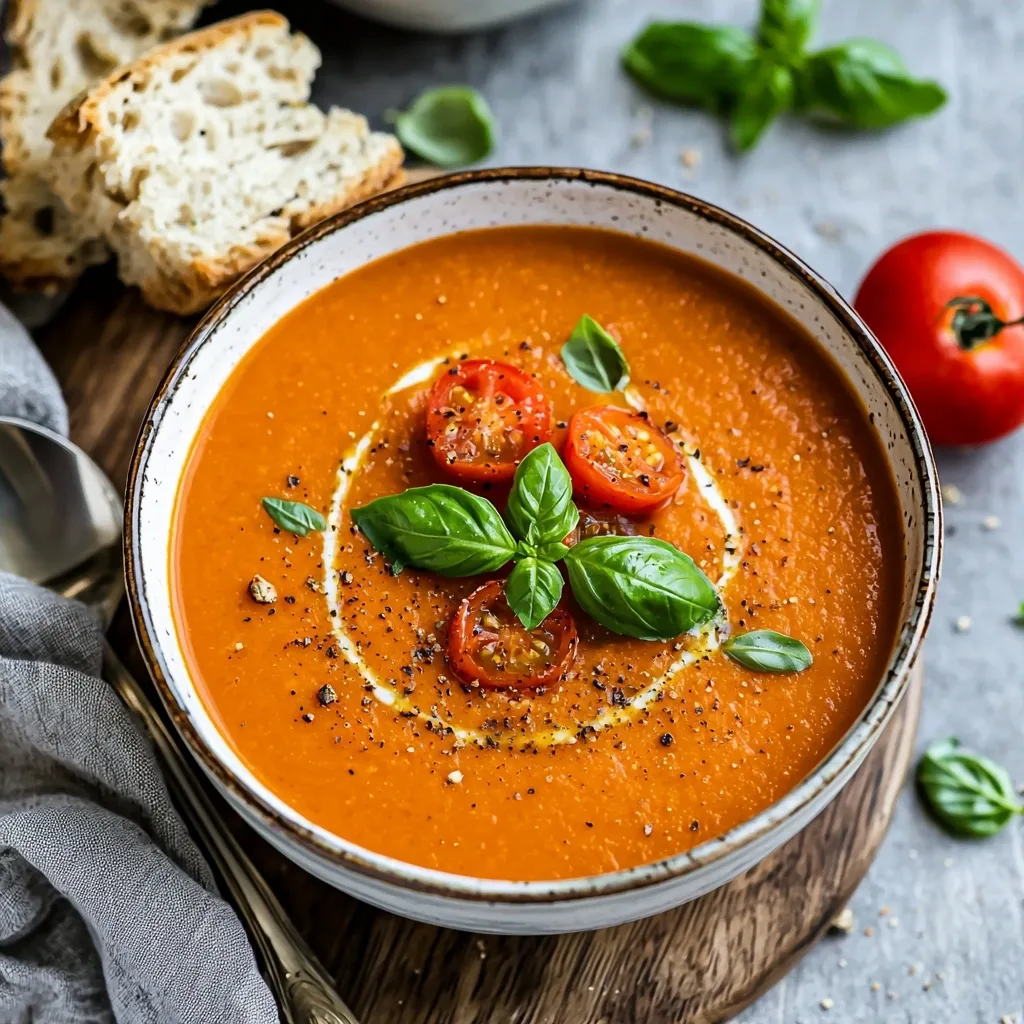
Imagine a bowl of vibrant, ruby-red soup, its surface glistening, topped with a swirl of cream and a few fresh basil leaves. This isn’t just soup; it’s a culinary hug, a taste of sunshine captured and preserved. The focus keyword, tomato basil soup with fresh roasted tomatoes, truly captures the essence of what makes this recipe so delightful and naturally enriching.
What is Tomato Basil Soup with Fresh Roasted Tomatoes?
This beloved soup is a celebration of peak-season tomatoes, bright basil, and the magic of roasting. Roasting the tomatoes and onions caramelizes their natural sugars, intensifying their sweetness and reducing their acidity. This process creates a soup base that is profoundly flavorful and wonderfully smooth, without needing an excessive amount of cooking time on the stovetop. It’s a technique that elevates the humble tomato to star status.
The addition of fresh basil right at the end of cooking preserves its vibrant color and aromatic, slightly peppery notes. Sometimes, a touch of cream is added for luxurious texture, but the heart of this soup is always the pure, unadulterated flavor of roasted tomatoes. This recipe is a testament to how simple cooking methods can unlock incredible taste, creating a dish that feels both rustic and refined.
Reasons to Try Tomato Basil Soup with Fresh Roasted Tomatoes
Making this tomato basil soup with fresh roasted tomatoes is a truly rewarding experience, especially when you’re craving something deeply satisfying yet surprisingly easy to prepare. The roasting process does much of the heavy lifting, infusing the soup with a rich sweetness that canned tomatoes often lack. It’s a beautiful way to embrace the bounty of fresh produce and create a meal that nourishes from the inside out.
This recipe is perfect for anyone seeking a comforting bowl of goodness without a lot of fuss. Beginners will find the steps manageable, while experienced cooks will appreciate the depth of flavor achieved with minimal effort. It’s ideal for busy weeknights when you want a wholesome meal, or for cozy weekend afternoons when you have a little more time to savor the process and the delicious results. The resulting soup is a comforting embrace, a reminder of the simple joys of home cooking.
Ingredients Needed to Make Tomato Basil Soup with Fresh Roasted Tomatoes
- 3 lbs (1.4 kg) fresh, ripe tomatoes (Plum/Roma or vine-ripened work best), halved or quartered
- 1 large sweet onion, peeled and cut into thick wedges
- 3 Tablespoons extra virgin olive oil
- 1 teaspoon kosher salt, plus more to taste
- Freshly cracked black pepper to taste
- 1 Tablespoon salted butter
- 1 Tablespoon minced fresh garlic
- 2 ½ cups (591 ml) good quality chicken broth (or vegetable broth for a vegetarian option)
- ½ cup (about 1 oz) coarsely chopped or torn fresh basil leaves
- 1 sprig fresh thyme (or ½ teaspoon dried thyme)
- ¼ cup (60 ml) heavy cream (or coconut cream for a dairy-free option)
- ⅛ teaspoon baking soda (optional, but recommended for acidity balance)
Instructions to Make Tomato Basil Soup with Fresh Roasted Tomatoes – Step by Step
Step 1: Prepare and Roast the Vegetables
Begin by preheating your oven to a warm 425°F (220°C). This high heat is key to caramelizing the vegetables beautifully. You’ll want to line a large baking sheet with parchment paper for easy cleanup – a little mindful preparation goes a long way. Arrange your halved or quartered fresh tomatoes, cut-side up, and the thick wedges of sweet onion onto the prepared baking sheet. Drizzle everything generously with olive oil, ensuring each piece is lightly coated. Sprinkle with kosher salt and freshly cracked black pepper. Place the baking sheet into the preheated oven and let the vegetables roast for approximately 45 to 60 minutes. You’re looking for the tomatoes to become wonderfully softened, juicy, and just beginning to turn golden at the edges, while the onions should be tender and sweet. The kitchen will start to smell amazing!
Step 2: Sauté the Garlic and Combine Ingredients
While your roasted vegetables are resting slightly after coming out of the oven, turn your attention to the soup pot. Use a large, nonreactive pot or a Dutch oven; avoid reactive metals like aluminum or unenameled cast iron, which can impart a metallic taste to the soup. Melt the salted butter over medium heat. Once the butter is melted and shimmering, add the minced garlic and cook it gently, stirring frequently until it becomes wonderfully fragrant, about 1 to 2 minutes. Be careful not to let it brown too much, as it can turn bitter. Then, carefully add the roasted tomatoes and onions from the baking sheet, along with any delicious juices that have accumulated. Pour in the chicken broth and stir everything together, making sure to incorporate all those lovely roasted flavors.
Step 3: Blend the Soup Until Smooth
Now it’s time to achieve that luxurious, velvety texture. If you have an immersion blender, this is the perfect tool for the job. Carefully insert it into the pot and blend the soup until it is completely smooth and uniform. If you don’t have an immersion blender, you can transfer the soup in batches to a regular blender. Be very cautious when blending hot liquids; fill the blender only about halfway, remove the center cap from the lid, and cover the opening with a folded kitchen towel while holding the lid down firmly. Blend until smooth, then return the pureed soup to the pot.
Step 4: Add Final Flavors and Simmer
Once your soup is beautifully smooth, stir in the fresh thyme sprig (or dried thyme if that’s what you have) and the heavy cream. The cream adds a lovely richness and silky mouthfeel. Bring the soup to a gentle simmer over medium-low heat. Let it simmer uncovered, stirring occasionally, for at least 30 minutes. This simmering time allows the flavors to meld and deepen beautifully. The aroma filling your home will be simply divine, a testament to the fresh ingredients and thoughtful preparation.
Step 5: Taste, Adjust, and Serve
After simmering, remove and discard the thyme sprig if you used a fresh one. Now comes the crucial step of tasting and adjusting the seasoning. Taste your tomato basil soup with fresh roasted tomatoes and add more salt and pepper if needed to bring out all the flavors. If your tomatoes were particularly acidic, you might consider stirring in the optional baking soda. This tiny pinch of baking soda acts as a natural alkali, gently mellowing the soup’s acidity and enhancing its sweetness without altering the flavor. Give it a final stir and then serve your gorgeous soup warm. It’s wonderful on its own or accompanied by your favorite toppings.
Chef’s Tips for a Perfect Result
- Choose Ripe, Flavorful Tomatoes: The quality of your tomatoes is paramount. Opt for ripe, in-season tomatoes for the best flavor; Roma or plum tomatoes are excellent choices due to their lower water content and concentrated sweetness.
- Don’t Skip the Roasting: Roasting the tomatoes and onions is what transforms this soup. It caramelizes their natural sugars, adding incredible depth and sweetness.
- Use a Nonreactive Pot: When cooking the soup, a stainless steel stock pot or enameled Dutch oven is essential. Reactive metals can cause the soup to develop an unpleasant metallic taste.
- Fresh Basil is Best: While dried basil can be used in a pinch, fresh basil offers a brighter, more vibrant flavor that truly complements the roasted tomatoes. Add it towards the end to preserve its freshness.
- Balance Acidity with Baking Soda: If your soup tastes a little too tart, a tiny pinch of baking soda can work wonders to neutralize excess acidity and enhance sweetness. Taste first, though, to ensure it’s necessary.
- Creamy or Dairy-Free: Heavy cream adds a luxurious finish. For a vegan or dairy-free version, unsweetened full-fat coconut cream or cashew cream offers a similar richness.
Variations and Substitutions
- Vegan Option: Substitute the salted butter with 1 tablespoon of olive oil or vegan butter. Use vegetable broth instead of chicken broth and opt for full-fat unsweetened coconut cream or cashew cream in place of heavy cream. The flavor remains rich and satisfying.
- Gluten-Free Alternative: This recipe is naturally gluten-free, assuming your broth is certified gluten-free. Ensure any croutons or garnishes you use are also gluten-free.
- Low-Carb Version: While tomatoes have natural sugars, the carb count is moderate. To lower it further, you could slightly reduce the quantity of tomatoes and increase the amount of broth, focusing on leaner protein additions as a side.
- Budget Swap: If fresh, ripe tomatoes are expensive or out of season, you can use good-quality canned whole peeled tomatoes (about three 28-oz cans). Drain some of the excess liquid before roasting them slightly with the onions to concentrate their flavor.
- Herb Variations: While basil is classic, consider adding a sprig of rosemary or a pinch of smoked paprika during the simmer stage for a different flavor profile. A touch of chili flake can also add a gentle warmth.
How to Serve and Pair
This luscious tomato basil soup with fresh roasted tomatoes is incredibly versatile and pairs beautifully with a variety of accompaniments. For a classic and comforting meal, serve it alongside a warm, gooey grilled cheese sandwich – the perfect dipper! Crusty artisanal bread, like a sourdough or baguette, is also ideal for soaking up every last drop of deliciousness. A sprinkle of toasted pine nuts, a dollop of pesto, or a few crisp croutons can add delightful texture and flavor to the top of the soup.
Presentation matters, and even simple garnishes elevate the experience. A drizzle of good quality olive oil, a swirl of cream (or coconut cream), and a few fresh basil leaves or a sprinkle of grated Parmesan cheese make the soup visually appealing and add an extra layer of flavor. This soup is perfect for a light lunch, a starter for a larger meal, or a comforting dinner on a cool evening. It’s also wonderful for a simple, nourishing family meal that everyone can enjoy.
Storage and Reheating
Refrigerator
Leftover tomato basil soup stores beautifully in the refrigerator. Ensure it has cooled completely before transferring it to an airtight container. It will keep well for up to 5 days, retaining its wonderful flavor and creamy texture. This makes it a perfect candidate for meal prep or planning ahead for busy days.
Freezer
To freeze, allow the soup to cool completely. Transfer it into freezer-safe containers, leaving a little headspace as liquids expand when frozen. You can also freeze it in individual portions using ice cube trays; once frozen, transfer the cubes to a freezer bag. Frozen soup is best consumed within 2-3 months for optimal quality.
Reheating
Reheating this soup is straightforward and gentle. On the stovetop, pour the desired amount into a saucepan and heat over medium-low heat, stirring occasionally, until warmed through. Avoid boiling, as this can affect the texture, especially if cream was added. If reheating from frozen, thaw it overnight in the refrigerator first or reheat gently from frozen, stirring frequently. You can also reheat individual portions in the microwave on a lower power setting, stirring every minute or so. If the soup seems a little thick after reheating, you can stir in a tablespoon or two of broth or water to reach your desired consistency.
Nutritional Values
- Calories: 179 kcal
- Protein: 4 g
- Carbohydrates: 14 g
- Fat: 13 g
- Fiber: 3 g
Approximate values.
Frequently Asked Questions (FAQ)
Can I substitute the fresh tomatoes in this soup?
Yes, good quality canned whole peeled tomatoes can be used if fresh tomatoes are unavailable or out of season. Use about three 28-ounce cans, draining some of the excess liquid before roasting them briefly with the onions to concentrate their flavor.
How do I know when the roasted vegetables are done?
The tomatoes should be softened, juicy, and beginning to show golden edges, indicating their sugars have caramelized. The onions should be tender and fork-tender, with a slightly softened and sweet appearance.
My soup tastes too acidic, what can I do?
If your soup tastes overly tart, a small pinch of baking soda (about ⅛ teaspoon) can help neutralize excess acidity. Stir it in gently after the soup has simmered and before serving. Always taste your soup first to see if this adjustment is truly needed.
Can I prepare parts of this soup ahead of time?
Absolutely. You can roast the tomatoes and onions a day in advance and store them in the refrigerator. You can also make the soup completely and refrigerate it for up to 5 days; reheating gently will revive its flavors beautifully.
What are the best ways to customize this tomato basil soup?
Enhance it with a swirl of pesto, a dollop of creamy burrata, or a sprinkle of sharp Parmesan cheese. For a heartier meal, add cooked pasta or white beans. A touch of chili flakes can also add a subtle, satisfying warmth.
CONCLUSION
This tomato basil soup with fresh roasted tomatoes is a deeply satisfying and wholesome dish, perfect for any occasion. It’s a comforting bowl that’s surprisingly simple to make, bringing a taste of homemade goodness to your table. The rich, sweet flavor of roasted tomatoes and fragrant basil is truly irresistible.