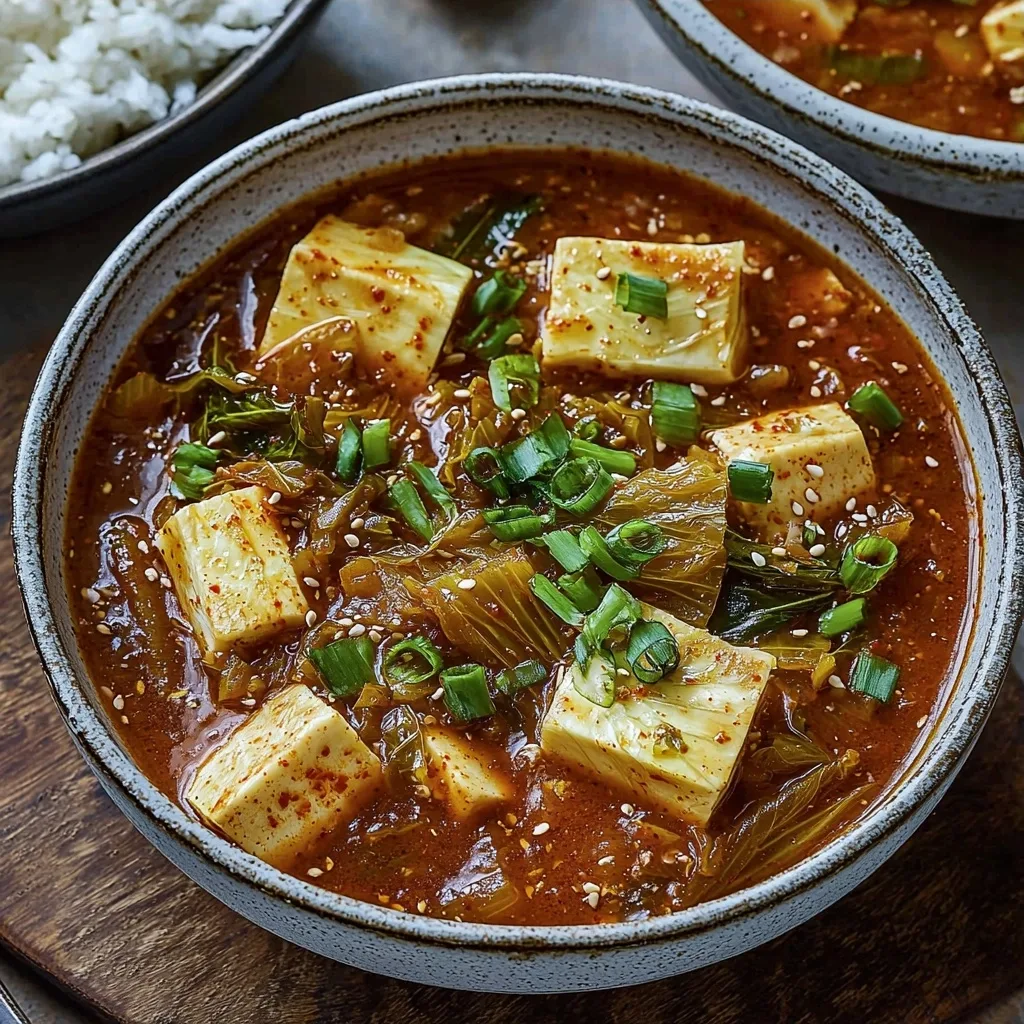
Vegetarian Kimchi Jjigae is the ultimate comfort food for those chilly evenings when you need something deeply nourishing, vibrant, and soul-warming. This traditional Korean stew is transformed through a plant-based lens, capturing that signature tang and spicy depth that makes it such an iconic dish in Korean culture. By focusing on high-quality fermented ingredients, you can create a restaurant-quality meal right in your own kitchen that leaves you feeling energized and satisfied.
Preparing this Vegetarian Kimchi Jjigae is a meditative process, watching the ingredients meld together into a glowing, aromatic pot of goodness. It is a wonderful way to bring wholesome, probiotic-rich fermented vegetables into your weekly rotation. Whether you are a long-time fan of Korean cuisine or someone looking to explore new flavors, this simple recipe will quickly become a favorite staple in your home.
What is Vegetarian Kimchi Jjigae?
Vegetarian Kimchi Jjigae is a hearty, spicy Korean stew centered around well-fermented cabbage kimchi. Traditionally, this dish might rely on pork belly or seafood stock, but this version uses a robust vegetable or dashi broth to achieve an incredible depth of flavor that is entirely plant-based. The hallmark of the dish is the balance between the pungent, sour notes of the fermented cabbage and the warmth of spicy Korean chili peppers.
The inclusion of soft or silken tofu adds a beautiful, delicate contrast to the chewy texture of the cabbage. It is a humble, rustic meal that is meant to be shared or enjoyed as a restorative solitary lunch. By skipping animal products, you allow the clean, bright acidity of the kimchi to truly shine, resulting in a cleaner flavor profile that feels light yet deeply sustaining.
Reasons to Try Vegetarian Kimchi Jjigae
This dish is a perfect solution for busy weeknights when you want to create something flavorful without spending hours at the stove. It comes together in approximately thirty minutes, yet it tastes as though it has been simmering all day. It is naturally healthy, packed with fiber and beneficial fermentation, which supports your digestion and overall well-being.
It is incredibly approachable for home cooks who are new to Korean flavors. Because the ingredients are simple and readily available at most supermarkets or specialty grocers, you won’t need to hunt for hard-to-find items. Whether you are feeding a family or batch-cooking for your own lunches, this stew reheats beautifully and actually tastes even better on the second day after the flavors have had more time to marry.
Ingredients Needed to Make Vegetarian Kimchi Jjigae
- 1 tablespoon gochujang (Korean red chili paste, ensure it is gluten-free if needed)
- 1 tablespoon gochugaru (Korean red chili flakes for that authentic heat)
- 1 tablespoon soy sauce (or tamari for a gluten-free option)
- 1 teaspoon granulated sugar (to balance the acidity of the fermented cabbage)
- A pinch of MSG (optional, as it enhances the savory umami quality)
- 1 tablespoon canola oil or avocado oil (for sautéing)
- 1 medium white onion, thinly sliced
- 2-3 cloves of garlic, minced
- 14-15 ounces (410g) vegan-friendly kimchi, cut into bite-sized pieces (use the juices too)
- 2 cups vegan dashi broth or high-quality vegetable broth
- 10 ounces (300g) soft or silken tofu, sliced into half-inch thick pieces
- 2 teaspoons toasted sesame oil (for finishing)
- Fresh green onion and sesame seeds for garnish
Instructions to Make Vegetarian Kimchi Jjigae – Step by Step
Step 1: Start by creating your flavor-packed seasoning paste. In a small mixing bowl, combine the soy sauce, gochujang paste, gochugaru, sugar, and the optional pinch of MSG. Whisk these together until they form a smooth, vibrant red paste, then set it aside so the flavors can begin to meld while you prepare the aromatics.
Step 2: Place a medium-sized pot over medium-high heat and add the oil. Once the oil begins to shimmer, add your sliced onions. Sauté them for about three to four minutes until they become translucent and slightly golden. Stir in the minced garlic and cook for another thirty seconds, until the kitchen is filled with a beautiful, fragrant aroma.
Step 3: Carefully add the chopped kimchi along with its juices into the pot. Pour the spicy seasoning paste you prepared earlier over the kimchi, followed by the vegetable broth. Give everything a good stir to ensure the paste is well incorporated. Bring the mixture to a gentle boil, then turn the heat down to a steady simmer.
Step 4: Cover the pot with a lid and let it simmer for fifteen minutes. This time allows the kimchi to soften and release its deep, fermented tang into the liquid. After the fifteen minutes, gently place the tofu slices on top of the stew. Cover again and simmer for another five to seven minutes so the tofu warms through and absorbs the broth.
Step 5: Finish the stew by drizzling the toasted sesame oil over the top for a nutty, aromatic finish. Carefully ladle the hot stew into individual bowls, and garnish liberally with fresh green onion slices and a sprinkle of toasted sesame seeds before serving.
Chef’s Tips for a Perfect Result
- Use well-fermented, older kimchi as it provides a much deeper, more complex sourness that defines a great stew.
- If your kimchi is young and fresh, you can leave the jar out on your counter for a day or two to speed up the fermentation process before cooking.
- Always use high-quality tofu designated as “soft” or “silken” to achieve that velvety, melt-in-your-mouth texture traditional to jjigae.
- Simmering your stew for longer than the recommended time is never a bad idea; like many soups, the flavors only deepen as they sit.
- Handle the tofu very gently when adding it to the pot to prevent the delicate pieces from breaking apart during the final stages of cooking.
Variations and Substitutions
- Vegan Option: Ensure your kimchi is labeled vegan, as some brands include shrimp paste or fish sauce. Check the label to ensure it is purely vegetable-based.
- Gluten-Free Alternative: Substitute traditional soy sauce with tamari or coconut aminos to ensure the dish remains completely gluten-free without sacrificing umami.
- Vegetable Boost: Enhance the nutritional profile by adding sliced shiitake mushrooms, enoki mushrooms, or strips of bok choy during the final five minutes of cooking.
- Low-Carb Version: Serve the stew with cauliflower rice instead of traditional white rice for a lighter, fiber-rich meal that keeps blood sugar levels balanced.
How to Serve and Pair
This stew is best served piping hot in a stone pot if you have one, as it keeps the temperature stable throughout the meal. Pair it with a bowl of steamed short-grain white or brown rice, which helps to soak up the spicy broth. For a traditional Korean spread, serve it alongside side dishes (banchan) like steamed broccoli, seasoned spinach, or shredded radish salad for a balanced, nourishing experience.
Storage and Reheating
Refrigerator: Transfer any leftovers to an airtight container once fully cooled. It will stay fresh for up to one week in the refrigerator. Freezer: For longer storage, you can freeze the stew in a freezer-safe bag or container for up to three months. Avoid freezing the tofu if possible, as the texture can become spongy upon thawing. Reheating: Gently reheat your portion on the stovetop over low heat until it reaches a simmer. You may need to add a splash of water or broth if the liquid has thickened too much during storage.
Nutritional Values
- Calories: 231 kcal
- Protein: 12g
- Carbohydrates: 18g
- Fat: 11g
- Fiber: 4g
Approximate values.
Frequently Asked Questions (FAQ)
Can I substitute the gochugaru?
Gochugaru is essential for the authentic taste and vibrant color of this stew. If you cannot find it, you can use a small amount of crushed red pepper flakes, though the heat profile and flavor will differ slightly.
How do I know when the stew is finished cooking?
The stew is done when the onions are soft, the kimchi has lost its raw crunch and become tender, and the broth has taken on a rich, deep red color with a harmonious, savory smell.
Why is my broth thin and watery?
Usually, a thin broth indicates it hasn’t simmered long enough for the kimchi to break down. If you prefer a richer, thicker consistency, allow it to simmer for an extra ten minutes.
Can I prepare this in advance?
Yes, preparing this stew ahead of time is actually recommended. The ingredients continue to marinate and develop flavor, making it taste even more robust when reheated the next day.
What is the best way to customize this meal?
You can customize the stew by adding your favorite hardy vegetables like zucchini or mushrooms. Adding a poached egg on top just before serving can also add a layer of richness.
Conclusion
Creating this Vegetarian Kimchi Jjigae is a beautiful exercise in mindful home cooking that proves how simple, clean ingredients can transform into a profound culinary experience. Every spoonful offers a perfect balance of spicy, sour, and savory notes that comfort the body and soothe the spirit. We encourage you to embrace this recipe as part of your weekly wellness routine for a nutritious meal that feels like a warm, supportive hug for your plate.
Print
Vegetarian Kimchi Jjigae
- Prep Time: 10
- Cook Time: 20
- Total Time: 30
- Yield: 2 servings
- Category: Dinner
- Method: Stovetop
- Cuisine: Korean
- Diet: Vegetarian
Description
Vegetarian Kimchi Jjigae is a vibrant, soul-warming Korean stew perfect for chilly evenings. This plant-based version captures the traditional bold, spicy, and tangy notes of well-fermented cabbage kimchi. By utilizing a robust vegetable broth and velvety soft tofu, this nourishing meal delivers a deep, satisfying flavor profile without the need for meat or seafood. It is quick to prepare, incredibly healthy, and naturally rich in probiotics, making it an ideal staple for any home cook looking for a restorative, flavorful meal.
Ingredients
2 cups well-fermented napa cabbage kimchi, chopped
1 block (14 oz) soft or silken tofu, sliced into pieces
1 tablespoon gochujang (Korean red chili paste)
1 tablespoon gochugaru (Korean red chili flakes)
1 tablespoon soy sauce
1 teaspoon granulated sugar
3 cups vegetable broth
2 cloves garlic, minced
1 small yellow onion, sliced
2 green onions, chopped for garnish
1 tablespoon sesame oil
Instructions
Heat the sesame oil in a pot over medium heat.
Add the onion and sauté until translucent, then add the kimchi and cook for 5 minutes until soft.
Stir in the gochujang, gochugaru, garlic, soy sauce, and sugar, cooking for another minute to bloom the spices.
Pour in the vegetable broth and bring to a gentle simmer for 15 minutes.
Gently place the soft tofu pieces into the stew and simmer for an additional 5 minutes.
Garnish with fresh green onions and serve hot with steamed rice.
Notes
Use the oldest, most pungent kimchi you have as it provides the best flavor for the stew. If you want extra protein, add sliced mushrooms alongside the tofu. Store leftovers in an airtight container for up to 3 days; the flavor often improves the next day.